A tiny superconducting sandwich could help computers use less energy
MIT scientists have built an ultrathin superconducting‑magnetic sandwich that acts as non‑volatile memory and a programmable diode, promising lower‑energy computing.
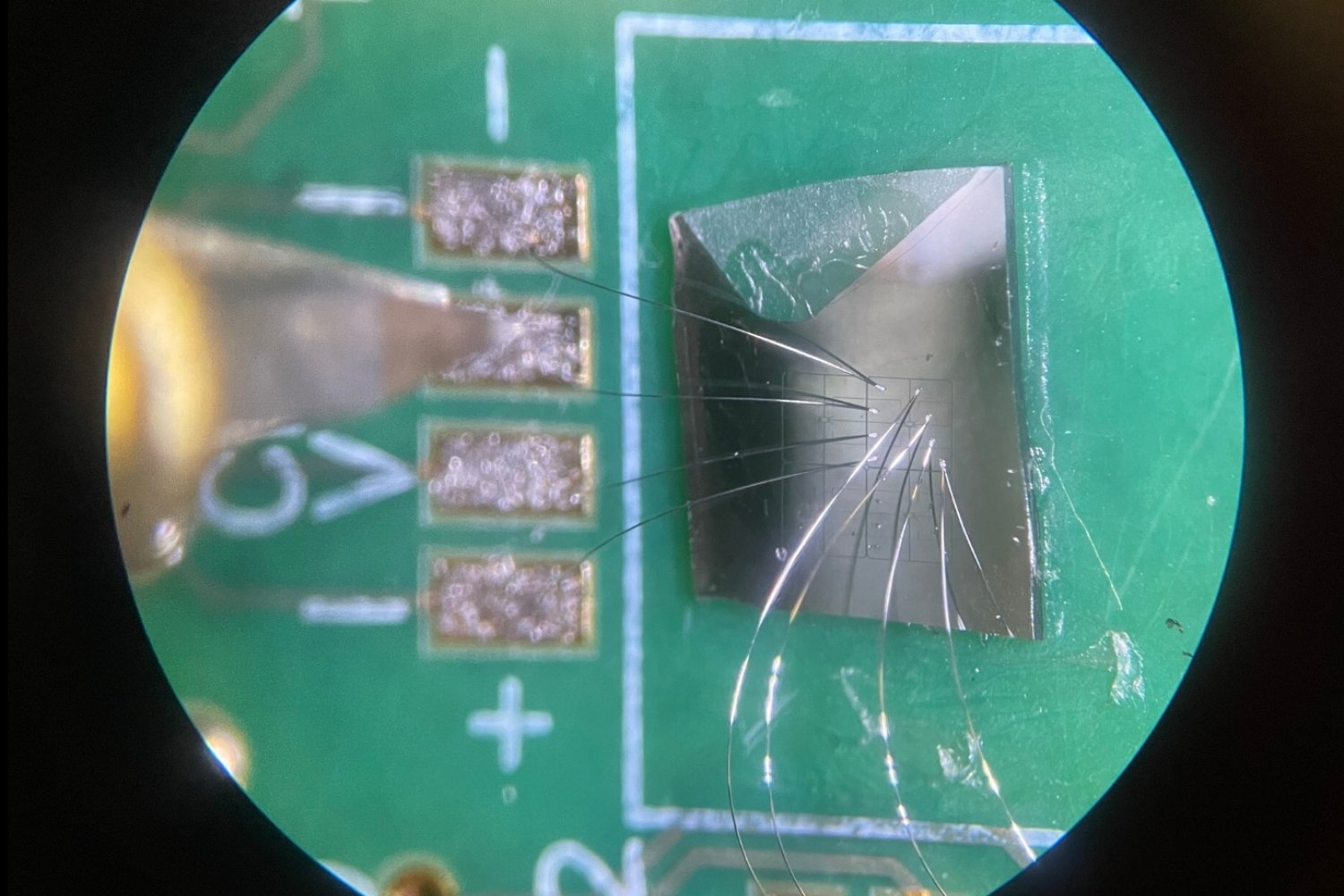
A Superconducting ‘Sandwich’ That May Cut Computing Power
MIT’s Plasma Science and Fusion Center has demonstrated a new cryogenic memory element that combines a thin superconducting film with two magnetic layers. The resulting “sandwich” can store a bit of information without power and can also act as a directional switch for electrical signals. By leveraging the zero‑resistance property of superconductors, the device aims to reduce the energy needed for both memory writes and signal routing in future high‑performance computers.
How the Device Works
The core of the device is an ultrathin superconducting layer sandwiched between two ferromagnetic films. The magnetic orientation of the layers determines whether the superconductor is in a zero‑resistance state (allowing current to flow) or a resistive state (blocking current). A brief heating pulse together with a small magnetic field flips the magnetic alignment, toggling the device between the two states. Once set, the magnetic configuration remains stable without any continuous power, giving the cell non‑volatile memory capability.
Memory and Signal Control in One Structure
Beyond storing a binary 0 or 1, the same structure can function as a superconducting diode. Within a specific current range, it conducts without resistance in one direction while presenting resistance in the opposite direction. Reversing the magnetic alignment flips the preferred direction, and a third magnetic configuration can turn the device completely off. This dual functionality opens the door to integrating memory and signal‑routing logic on a single cryogenic chip.
Why It Matters for Energy‑Efficient Computing
Current semiconductor‑based RAM consumes significant power, especially when scaling to the massive data‑center workloads of AI and scientific simulations. Superconducting processors promise faster operation with negligible heat, but they have lacked compatible cryogenic memory. The MIT sandwich addresses that gap by offering a low‑energy, non‑volatile memory cell that can be addressed individually—crucial for building larger arrays.
If future work succeeds in shrinking the cells and arranging them into dense arrays, the energy per bit‑write could be dramatically lower than in conventional DRAM or flash. Moreover, placing these devices close to superconducting processors would reduce the need for long, thermally‑conductive interconnects, further cutting heat loads on the cryogenic system.
Next Steps and Open Questions
The research team has shown that a single cell can be switched without disturbing a neighbor, a key requirement for scalable memory. The next milestones include:
- Miniaturization – Reducing the cell footprint to increase storage density.
- Array Integration – Demonstrating reliable operation of many cells together.
- Energy Quantification – Measuring the exact energy savings compared with existing cryogenic and semiconductor memories.
- System‑Level Testing – Embedding the devices in a prototype superconducting processor to assess real‑world performance.
While the concept is promising, the practical impact will depend on how quickly these engineering challenges are solved and whether the devices can be manufactured reproducibly at scale.
---
The MIT News article provides a clear overview of the device’s physics and potential applications, but quantitative benchmarks and independent verification are still pending.
Hype check
PartlyThe paper reports a novel cryogenic memory device with energy‑saving potential, but quantitative energy savings and independent replication are not provided.
- Peer-reviewed paper, or press release only?Paper — Paper published in Physical Review Letters
- Error-corrected (logical) qubits, or physical qubits only?Logical / not a qubit claim — Not a qubit‑count claim
- A new milestone, or a rebrand / restatement?New — First demonstration of superconducting‑magnetic memory cell
- Independent confirmation?Not yet — No external confirmation mentioned
- Does the headline claim match what the source shows?Matches — Headline reflects the device’s energy‑efficiency claim
An editorial assessment of the claim as reported, not a judgment of the company or researchers. How we rate hype →
Source
Read original sourceWhy we picked this
Accepted from curated QuantumUnzipped source (relevance scoring disabled).