Adelaide Researchers Develop Simpler Design for Highly Sensitive Quantum Sensors
Adelaide University scientists have created a simpler superconducting sensor that mimics an array of different‑size SQUID loops, boosting zero‑field detection while easing manufacturing.
Adelaide Researchers Simplify Quantum Sensors for Greater Sensitivity
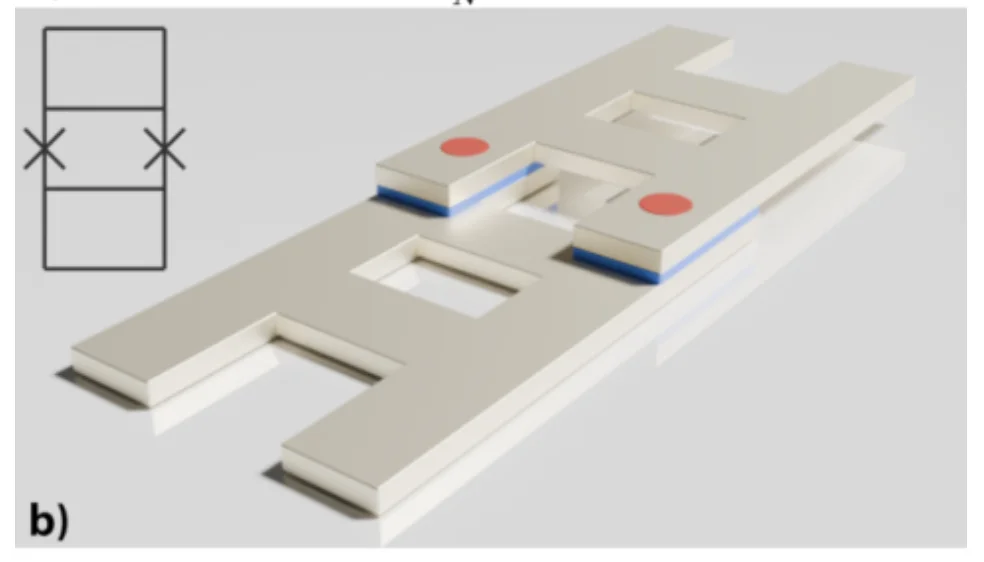
A team at the University of Adelaide has demonstrated a new superconducting sensor design that can pinpoint a zero magnetic field without sacrificing the ultra‑high sensitivity that makes SQUID (Superconducting Quantum Interference Device) sensors valuable. By replacing a subset of identical SQUID loops with "bare" superconducting loops—structures that lack the Josephson junctions central to conventional SQUID operation—the researchers generate a synthetic area spread that makes the circuit behave as though it contains many differently sized loops. The result is a sensor that is both easier to fabricate and capable of approaching the quantum limit of magnetic‑field detection.
---
From Complex Arrays to a Single‑Layer Solution
Traditional approaches to achieving absolute‑field detection in SQUID‑based sensors rely on building large arrays of loops, each with a distinct size. The differing loop areas create a spread of magnetic‑field responses, allowing the system to infer when the external field is exactly zero. While effective, this strategy introduces two major drawbacks:
- Reduced Sensitivity – Adding many loops dilutes the magnetic flux that each individual SQUID can sense, lowering the overall signal‑to‑noise ratio.
- Manufacturing Complexity – Fabricating hundreds or thousands of loops with precise, varying dimensions demands sophisticated lithography and tight process control, driving up cost and yield risk.
The Adelaide group, led by Associate Professor Giuseppe Tettamanzi, turned this paradigm on its head. Instead of varying loop sizes, they kept all loops the same size but strategically inserted bare loops that contain no Josephson junctions. These bare loops alter the distribution of circulating currents, effectively creating the same spread of magnetic‑field sensitivities that a multi‑size array would provide—hence the term synthetic area spread.
---
Experimental Validation
The researchers first derived a theoretical model describing how the bare loops modify the circuit’s inductive network. They then fabricated a two‑dimensional superconducting quantum interference filter (SQIF) array on a silicon substrate, integrating both conventional SQUID loops and the newly introduced bare loops. Operating the device at millikelvin temperatures, they measured its response to controlled magnetic fields.
Key observations included:
- Accurate Zero‑Field Identification – The sensor reliably reported a null magnetic field across a range of test conditions, matching the predictions of the synthetic‑area model.
- Preserved Sensitivity – Unlike traditional multi‑size arrays, the new design maintained the high flux‑to‑voltage conversion efficiency characteristic of single‑size SQUID loops.
- Simplified Layout – The uniform loop geometry reduced the number of lithographic steps, suggesting a more straightforward path to scalable production.
---
Potential Impact and Future Directions
If the approach scales to larger, application‑specific devices, it could transform several fields that depend on ultra‑sensitive magnetic detection:
- Brain Imaging & Diagnostics – Magnetoencephalography (MEG) and related techniques require sensors that can resolve femtotesla‑level signals. A simpler, higher‑performance SQUID could lower system cost and improve patient throughput.
- Quantum Communications – Low‑noise magnetic receivers are essential for reading out superconducting qubits and for secure microwave‑frequency communication links.
- Industrial & Defense Sensing – Detecting weak electromagnetic signatures in harsh environments benefits from sensors that combine robustness with quantum‑limited noise performance.
The team has filed an international patent covering the synthetic‑area concept and is already pursuing refinements such as optimizing the placement and number of bare loops, integrating the design with cryogenic readout electronics, and testing the sensor under realistic operating conditions.
---
Practical Takeaway
Adelaide’s breakthrough shows that clever circuit engineering can replace hardware complexity with functional elegance. By demonstrating that a uniform‑size SQUID array, augmented with strategically placed bare loops, can achieve the same zero‑field detection capability as a massive multi‑size array, the researchers have opened a pathway toward more manufacturable, cost‑effective quantum sensors. Continued development and real‑world testing will determine how quickly this concept moves from the laboratory to commercial devices that power the next generation of medical, communication, and defense technologies.
Source
Read original sourceWhy we picked this
Accepted from curated QuantumUnzipped source (relevance scoring disabled).