Advance Could Lead to Bigger, More Reliable Quantum Computers, University of Edinburgh Scientists Say
Edinburgh researchers have created an algorithm that lets ordinary computers simulate photonic quantum devices using only about 5% of the power previously required, promising cheaper, larger‑scale quantum research.
A New Way to Simulate Photonic Quantum Devices
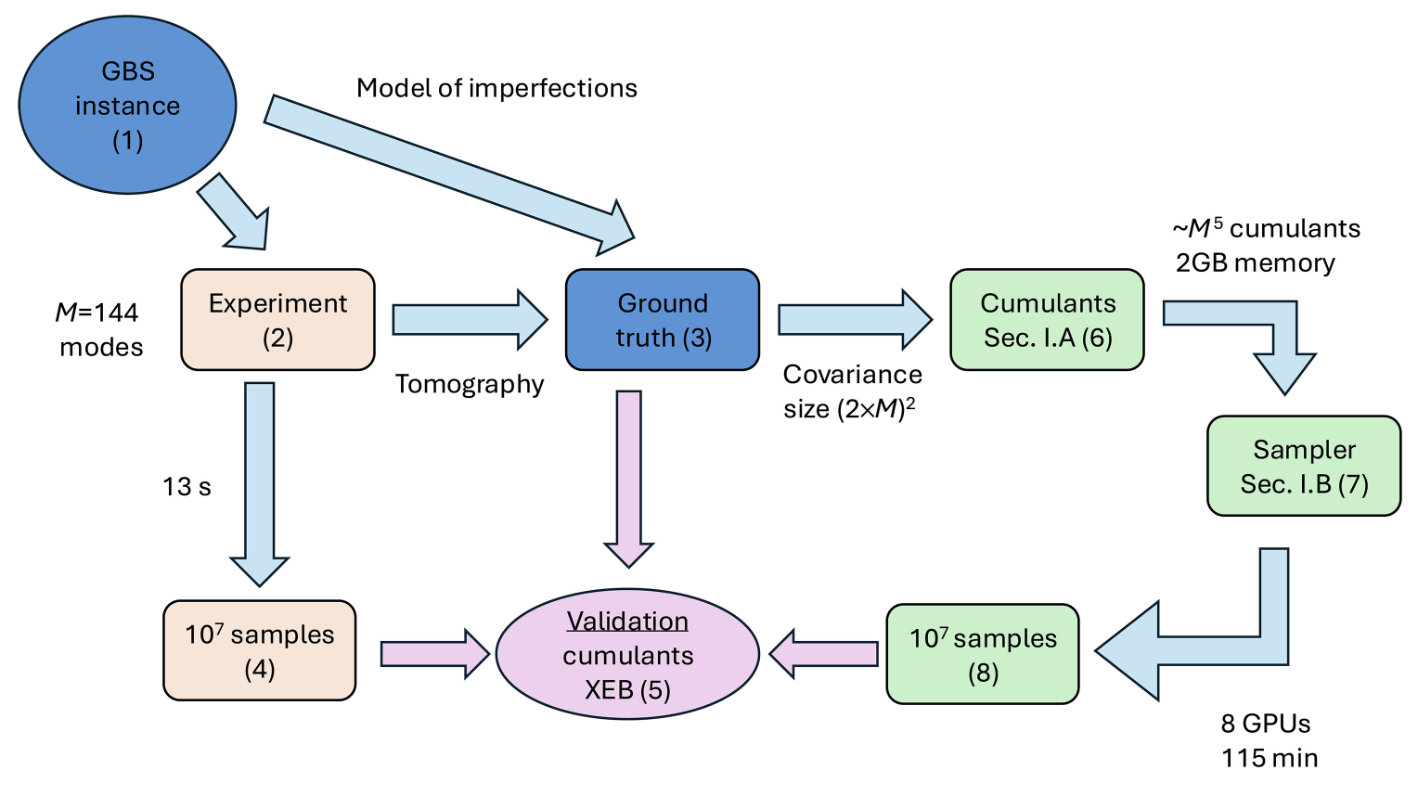
Researchers at the University of Edinburgh, in partnership with the UK’s national supercomputing centre EPCC, have unveiled an algorithm that dramatically reduces the computational resources needed to simulate photonic quantum computers. By cutting the required processing power to roughly five percent of what supercomputers previously demanded, the method makes detailed quantum‑device modelling accessible on standard, off‑the‑shelf hardware.
Why Photonic Quantum Computing Matters
Photonic quantum computers use light particles—photons—to encode and process information. Their inherent speed and low‑temperature operation make them an attractive alternative to superconducting qubits. However, building larger, more reliable photonic systems has been hampered by a lack of practical tools for testing designs before costly hardware fabrication. Accurate simulations are essential for:
- Identifying error sources and loss mechanisms.
- Optimising circuit layouts and component specifications.
- Guiding experimental efforts toward architectures that scale effectively.
The Algorithm’s Core Advantage
The new technique focuses on Gaussian boson sampling (GBS), a benchmark task that showcases the advantage of photonic quantum processors. Traditional GBS simulations required massive memory and processing time, limiting them to a few specialized facilities worldwide. The Edinburgh team’s approach improves three key metrics:
- Memory Efficiency – smarter data structures reduce the footprint of the quantum state representation.
- Runtime Speed – algorithmic refinements cut the number of required operations, accelerating each simulation step.
- Energy Consumption – lower computational load translates into reduced power usage, making the process greener and cheaper.
In head‑to‑head tests, conventional computers equipped with the algorithm matched, and in some cases outperformed, the output of existing photonic quantum prototypes.
Implications for Quantum Research and Industry
Faster, Cheaper Experimentation
Scientists can now run extensive virtual experiments without queuing on national supercomputers. This democratises access to high‑fidelity quantum modelling, enabling smaller labs and startups to iterate designs rapidly.
Accelerated Device Design
With the ability to simulate larger photonic circuits, researchers can explore scaling strategies that were previously out of reach. Detailed insights from these simulations will inform the next generation of low‑error, high‑capacity quantum processors.
Bridging the Classical‑Quantum Gap
The algorithm serves as a practical bridge, allowing classical computing resources to complement quantum hardware. By validating concepts classically, developers can focus quantum hardware development on truly novel regimes where classical simulation fails.
Looking Ahead
The team is already working on extending the algorithm to handle even bigger systems, aiming to keep the resource footprint low while expanding the size of simulatable circuits. Collaboration with international partners, including researchers from Polytechnique Montréal, and funding from the EPSRC and Canada’s NSERC, underpins this effort.
Practical Takeaway
For anyone involved in quantum technology—whether in academia, industry, or policy—this development signals a shift toward more accessible, cost‑effective quantum research. By lowering the barrier to high‑quality simulations, the Edinburgh algorithm could accelerate the path to larger, more reliable photonic quantum computers, bringing the promise of quantum advantage closer to reality.
Source
Read original sourceWhy we picked this
Accepted from curated QuantumUnzipped source (relevance scoring disabled).