Arqit Invests in Sirius to Scale Tactical Edge Quantum-Safe Networking Following NATO Contract Selection
Arqit’s investment in Sirius expands a joint quantum‑safe networking solution for NATO‑selected tactical edge communications, marrying software‑defined key orchestration with Sirius’s Crux SD‑N platform.
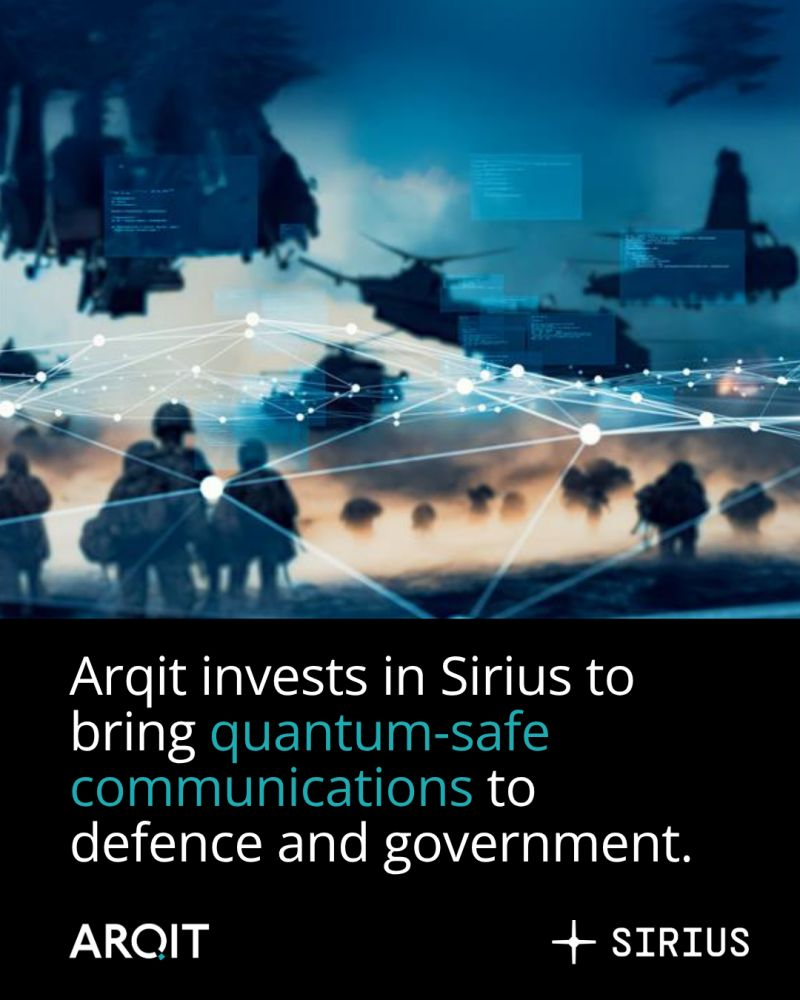
Arqit Boosts Tactical Edge Security with Sirius Investment
Arqit Quantum Inc. (NASDAQ: ARQQ) has announced a strategic investment in Sirius Computer, Inc., deepening a partnership that aims to deliver quantum‑safe networking for defense, intelligence, and edge‑computing environments. The move follows Arqit’s recent selection as part of a NATO consortium to provide secure networking services, positioning the two companies to address the critical need for resilient, low‑latency encryption on decentralized, mobile assets.
---
A Joint Architecture for the Tactical Edge
The collaboration combines two core technologies:
- Arqit Sovereign Key Platform (SKP) & NetworkSecure adapters – software‑defined, zero‑trust symmetric keys that eliminate reliance on traditional public‑key infrastructure (PKI) and mitigate its vulnerabilities.
- Sirius Crux software‑defined networking (SD‑N) platform – an infrastructure‑agnostic overlay that routes traffic securely across heterogeneous edge devices, from commercial‑off‑the‑shelf (COTS) radios to autonomous UAVs.
Together, they enable quantum‑safe encryption on existing hardware without costly retrofits. Keys generated by the SKP are injected into standard IPsec or transport‑layer tunnels, allowing coalition forces to establish encrypted links across differing equipment standards while preserving bandwidth on narrow tactical frequencies.
---
Why This Matters for Military Communications
Traditional quantum‑key‑distribution (QKD) solutions are hardware‑intensive and unsuitable for moving platforms such as aircraft, ground vehicles, or dismounted soldiers. Post‑quantum cryptography (PQC) algorithms, while more flexible, can introduce processing latency and larger ciphertexts that strain low‑bandwidth links.
Sirius’s Crux platform sidesteps these constraints by running as a lightweight software layer directly on edge devices. When paired with Arqit’s dynamic key injection, the solution offers:
- Real‑time, symmetric encryption that is resistant to both classical and quantum attacks.
- Hardware‑agnostic deployment, supporting a wide range of COTS radios, tactical radios, and autonomous platforms.
- Scalable key lifecycle management, reducing the operational burden of frequent key updates in contested environments.
---
Funding the Expansion and Future Roadmap
Arqit’s capital infusion will fund engineering expansion at Sirius’s facilities in the United States, United Kingdom, and Germany. Priorities include:
- Enhancing software performance for ultra‑low‑latency links.
- Developing specialized hardware acceleration modules for autonomous defense platforms.
- Extending the solution to additional NATO and allied procurement programs, including upcoming UK Ministry of Defence and US Department of Defense initiatives.
Arqit reports FY‑2026 revenues near $1 million and a cash reserve of roughly $51 million, providing a solid financial base to support the joint effort.
---
Practical Takeaways
- For defense planners: The Arqit‑Sirius solution offers a pragmatic path to quantum‑safe communications without overhauling existing hardware, aligning with NATO’s push for interoperable, secure networking.
- For technology vendors: The partnership illustrates a viable model for combining software‑defined key orchestration with SD‑N to meet the unique constraints of tactical edge environments.
- For policymakers: Supporting software‑centric quantum‑safe approaches can accelerate field deployment and reduce the logistical footprint compared to hardware‑heavy QKD deployments.
By marrying Arqit’s quantum‑ready key management with Sirius’s flexible networking stack, the alliance aims to safeguard the next generation of battlefield communications against the looming threat of quantum decryption.
Source
Read original sourceWhy we picked this
Accepted from curated QuantumUnzipped source (relevance scoring disabled).