Before the Qubit
Hybrid infrastructure that links quantum processors with existing IT is the practical path for enterprises to become quantum‑ready today.
Preparing for Quantum: Why Infrastructure Matters Now
Enterprises are often told to "wait for fault‑tolerant quantum hardware" before taking any action. The reality is different: the bottleneck is no longer the number of qubits but the ability to integrate isolated quantum processors with the rest of the IT stack. Building a neutral, low‑latency interconnection fabric lets organizations experiment with quantum‑enhanced workloads, develop operational fluency, and avoid a costly restart when production‑grade quantum computers finally arrive.
---
The Infrastructure Gap
Most quantum systems live in specialized research labs, accessed through narrow APIs that sit outside the usual data pipelines, security controls, and latency budgets of enterprise environments. Even when a company is eager to run a proof‑of‑concept, it must answer three questions:
- How do we connect a quantum processor to our existing compute resources without rebuilding the network?
- Can we do so securely and with the sub‑millisecond latency required for hybrid algorithms?
- Is the solution scalable across multiple geographic sites?
The answer lies in a neutral interconnection layer—software‑defined connectivity that treats quantum access the same way cloud services have been treated for the past decade. By placing the quantum fabric alongside HPC, AI, and traditional cloud links, enterprises can route workloads through a single, managed network rather than building bespoke point‑to‑point links.
---
A Real‑World Example: Qubit Pharmaceuticals
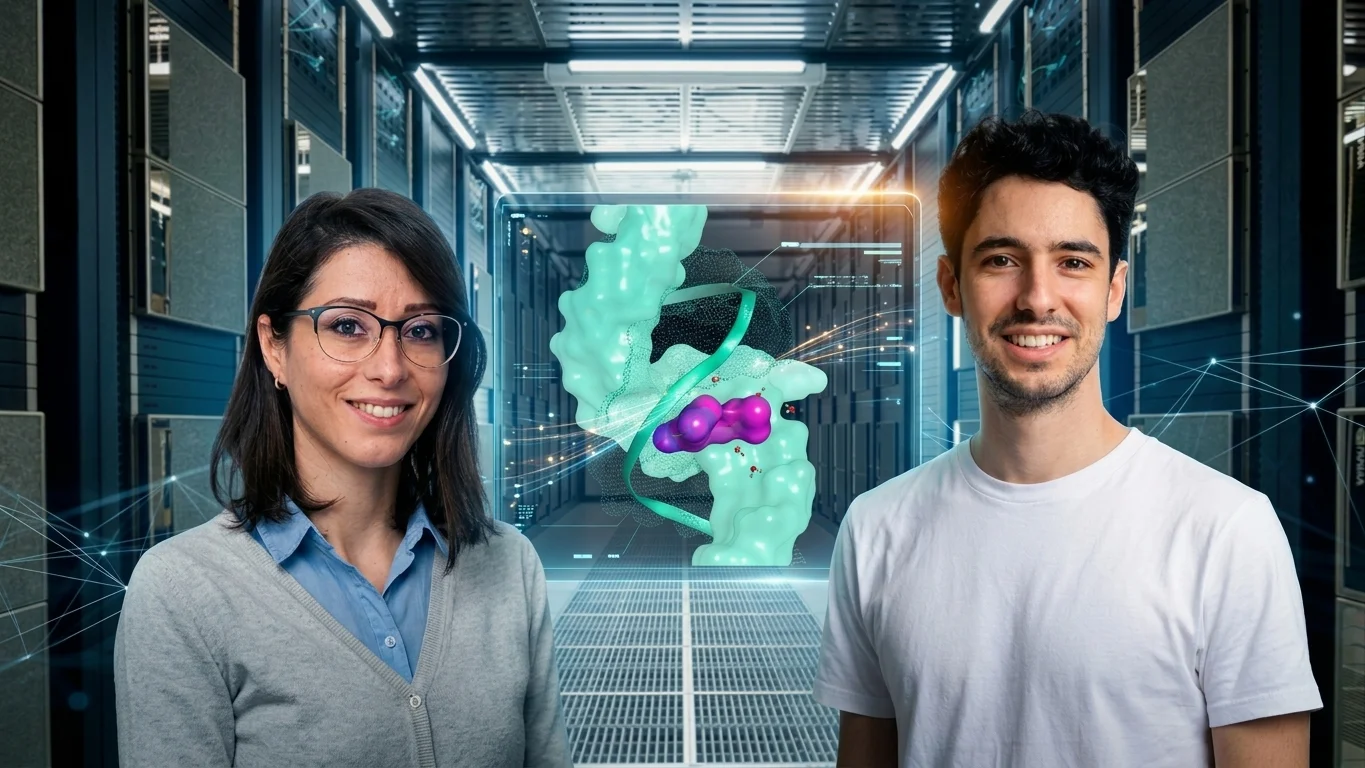
Paris‑based Qubit Pharmaceuticals illustrates how a hybrid approach can accelerate drug discovery while preparing for future quantum hardware. Their ATLAS platform consists of four layers:
- High‑fidelity physics simulation on a dedicated 192‑GPU cluster, delivering ~1,000 ns of polarizable molecular dynamics per day.
- Synthetic quantum‑chemistry data engine built with Sorbonne University, generating a large training set from first‑principles calculations on national supercomputers.
- FeNNix‑Bio1 foundation model, a quantum‑AI model trained on the synthetic data to predict binding free energies with quantum‑level accuracy at a fraction of the compute cost.
- Hyperion‑1 emulator, a GPU‑based simulator that reproduces up to 40 qubits, allowing algorithm development and validation before real‑device execution.
Crucially, Qubit does not rely solely on a single cloud provider. Production workloads run on the GPU cluster hosted at Equinix, while burst capacity and storage are accessed through AWS via Equinix’s cloud‑on‑ramp. This hybrid connectivity provides:
- Data sovereignty for sensitive molecular data.
- Cost‑effective utilization of high‑performance hardware that would be under‑used in a pure public‑cloud model.
- Seamless migration of quantum‑ready workloads to emerging QPU services without architectural overhaul.
---
Building a Quantum‑Ready Fabric
Enterprises looking to follow a similar path should consider three practical steps:
- Adopt a software‑defined interconnection platform (e.g., Equinix Fabric) that offers low‑latency, multi‑cloud, and on‑premise connectivity. This creates a common “fabric” for classical, AI, HPC, and future quantum workloads.
- Design hybrid workloads today by structuring pipelines that can run on GPUs or CPUs while exposing hooks for quantum accelerators. Frameworks such as CUDA‑Q or OpenQASM‑compatible libraries enable code reuse across modalities.
- Partner with ecosystem players—national supercomputing centers, quantum‑access providers, and AI model vendors—to populate the fabric with diverse compute options and avoid vendor lock‑in.
By treating quantum access as a service reachable through the same network layer as any other cloud resource, organizations gain operational experience, validate use cases, and build the security and latency posture required for eventual production quantum computing.
---
Closing Thoughts
Quantum advantage in domains like drug discovery, finance, and materials science will arrive when the hardware matures, but the preparatory work can begin now. The decisive factor will be the quality of the interconnection fabric that links quantum processors to the broader IT ecosystem. Companies that invest in neutral, low‑latency infrastructure today will be positioned to plug in fault‑tolerant qubits tomorrow without a disruptive rebuild, turning the "prepare for quantum" era into a competitive advantage.
Source
Read original sourceWhy we picked this
Accepted from curated QuantumUnzipped source (relevance scoring disabled).