BIRD Foundation Approves $7.4 Million for Seven U.S.-Israel R&D Projects
The BIRD Foundation has approved $7.4 million in conditional grants for seven U.S.–Israel R&D collaborations spanning quantum computing, satellite communications, semiconductors, AI‑driven healthcare, precision agriculture, digital pathology, and medical 3D printing.
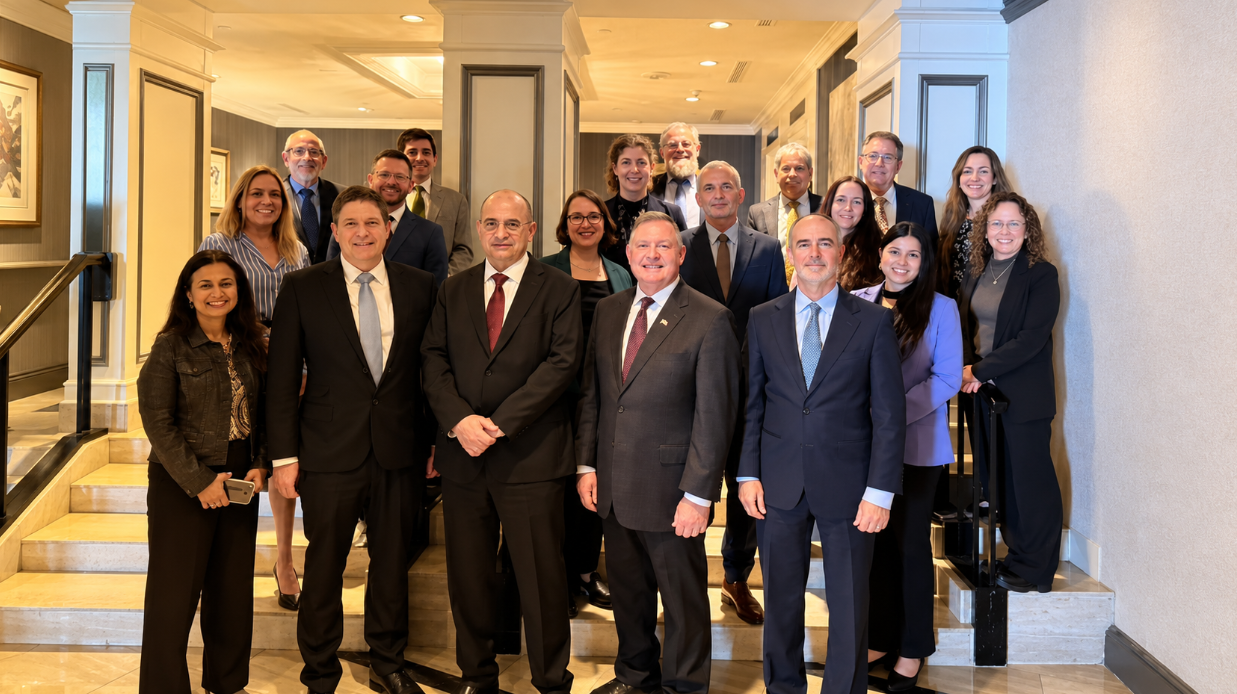
BIRD Foundation Announces $7.4 Million for Seven U.S.–Israel R&D Partnerships
The Israel‑U.S. Binational Industrial Research and Development (BIRD) Foundation has approved $7.4 million in conditional grants for seven joint research projects, bringing total anticipated investment—including private‑sector contributions—to $20 million. The selected initiatives cover a broad spectrum of deep‑tech fields, from quantum computing to AI‑enabled medical diagnostics, underscoring the foundation’s role in fostering cross‑border innovation.
A Snapshot of the Approved Projects
| Project | Israeli Partner | U.S. Partner | Focus Area | |---|---|---|---| | Quantum Catalysis Mapping | Qarakal Quantum (Tel Aviv) | Quantum Elements (Westlake Village, CA) | Develop a minimum‑viable product that uses quantum computing to map complex surface‑catalysis reactions | | Terabit Satellite Laser Terminal | NovaLink Space (Holon) | Ciena Corp. (Hanover, MD) | Create a compact, terabit‑class optical phased‑array communication terminal for satellite links | | AI‑Powered Precision Oncology | Ibex Medical Analytics (Tel Aviv) | Proscia (Philadelphia, PA) | Automate biomarker scoring and integrate AI into digital pathology workflows | | Next‑Gen On‑Chip Memory | RAAAM Memory Technologies (Petah Tikva) | GlobalFoundries (Malta, NY) | Qualify GCRAM technology that reduces area and power versus SRAM without extra process steps | | AI‑Dog Hybrid Cancer Detection | SpotitEarly (Kibbutz Hamaapil) | Fox Chase Cancer Center (Philadelphia, PA) | Combine AI with trained dogs’ olfactory detection to identify early‑stage cancers | | High‑Precision Seed Sorting | SeedX (Or Yehuda) | Illinois Foundation Seeds (Tolono, IL) | Deploy AI‑driven sorting for corn, sweet corn, and carrots to improve agricultural yields | | In‑Hospital 3D‑Printing System | CustoMED (Tel Aviv) | Myrava (Winston‑Salem, NC) | Build an automated 3D‑printer for custom orthopedic tools usable in emergency surgeries |
These projects collectively illustrate BIRD’s strategic emphasis on technologies that can reshape markets and address societal challenges.
Why BIRD’s Funding Model Matters
BIRD provides conditional grants of up to $1.5 million per project, matching private‑sector capital and sharing risk without taking equity or IP rights. The foundation also facilitates partner matchmaking and cross‑border collaboration, leveraging expertise from the U.S. National Institute of Standards and Technology (NIST) and the Israel Innovation Authority during the review process.
Since its inception in 1977, BIRD has supported more than 1,200 collaborations, investing roughly $470 million and generating over $10 billion in direct and indirect revenue. The current round adds to that legacy as the foundation approaches its 50th anniversary.
Looking Ahead
The approved projects are slated to begin development immediately, with milestones tied to the conditional grant agreements. Companies will report progress to BIRD, which monitors technical milestones and financial expenditures. The next round of executive summaries is due November 23 2026, with project approvals expected in March 2027.
Stakeholders—from venture capitalists tracking emerging deep‑tech to policymakers interested in binational innovation ecosystems—should watch these collaborations closely. Successes could accelerate commercialization pathways for quantum algorithms, satellite laser communications, and AI‑enhanced healthcare, while also delivering tangible benefits such as improved food security and faster, more precise medical interventions.
---
The BIRD Foundation continues to demonstrate how structured, government‑backed partnerships can de‑risk high‑impact research and bring transformative technologies to market faster than traditional funding models.
Source
Read original sourceWhy we picked this
Accepted from curated QuantumUnzipped source (relevance scoring disabled).