Brookhaven Lab Debuts Chip for Fusion Plasma Monitoring
Brookhaven Lab’s new superconducting neuromorphic chip can process fusion‑plasma data at gigahertz speeds, showing promise for real‑time disruption prediction in tokamaks.
Introduction
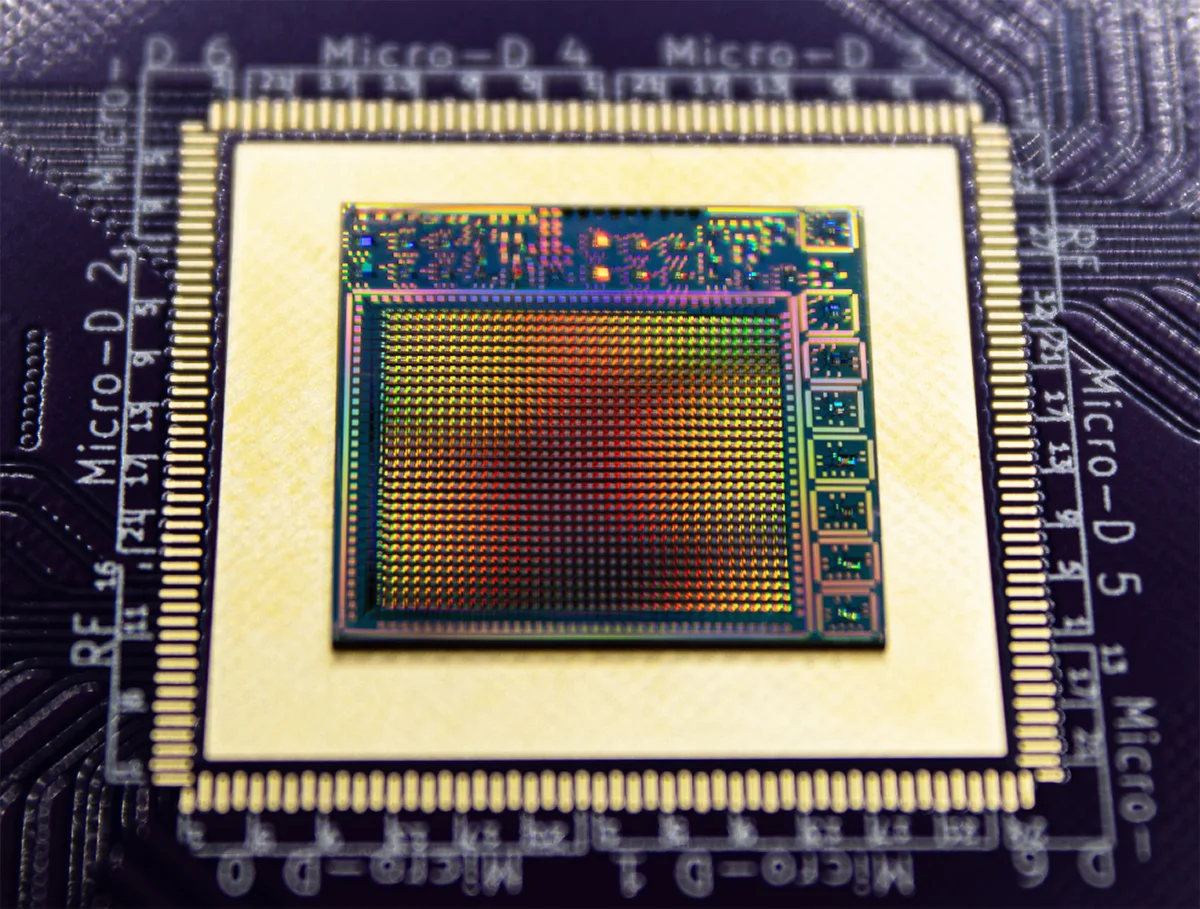
A collaborative team led by Brookhaven National Laboratory, supported by the U.S. Department of Energy and AI‑hardware startup Great Sky, has built a superconducting neuromorphic chip designed to monitor fusion plasma in real time. By embedding memory directly on a superconducting circuit and running a compact neural network at gigahertz frequencies, the prototype can keep pace with the rapid fluctuations recorded from a tokamak, offering a potential early‑warning system for the disruptive events that threaten fusion reactors.
Neuromorphic Design for Fusion Diagnostics
Traditional AI accelerators rely on external memory and operate at comparatively modest clock rates, limiting their usefulness for the sub‑microsecond dynamics of tokamak plasmas. The Brookhaven chip sidesteps these constraints by integrating memory onto the superconducting substrate, allowing data to be processed where it is stored. The on‑chip neural network mimics brain‑like parallelism, enabling it to evaluate millions of plasma samples per second. In tests that replayed data from the DIII‑D tokamak at its native one‑million‑samples‑per‑second rate, the chip successfully flagged anomalies and predicted imminent disruptions, demonstrating that neuromorphic hardware can meet the speed demands of fusion control systems.
Demonstration Results and Future Roadmap
During the demonstration phase, the chip was not yet connected to a live tokamak; instead, recorded plasma signals were streamed into the device. Despite this indirect setup, the system maintained synchronization with the data stream and executed its anomaly‑detection algorithms without lag. Researchers highlighted that existing tokamak control loops react after a disruption begins, whereas the chip’s predictive capability could intervene earlier, potentially preserving plasma stability. The current prototype hosts a neural network far smaller than contemporary large‑language models, but the team plans a next‑generation version with a network ten times larger, slated for early‑next‑year testing.
Challenges and Practical Implications
While the results are encouraging, several hurdles remain before the technology can be deployed in operational fusion plants. The chip must be ruggedized for the harsh electromagnetic environment of a tokamak, and integration with real‑time control hardware will require extensive validation. Moreover, scaling the neuromorphic architecture while preserving superconducting performance poses engineering challenges. Nonetheless, the ability to process plasma data at gigahertz speeds could complement existing diagnostics, offering a new layer of predictive control that reduces the risk of catastrophic disruptions—an existential concern for tokamak viability.
Conclusion
Brookhaven’s superconducting neuromorphic chip represents a compelling convergence of AI and fusion research. By delivering ultra‑fast, on‑chip analysis of plasma behavior, it opens a pathway toward more responsive and stable tokamak operation. Continued development and integration testing will determine whether this approach can become a standard component of future fusion power plants, helping to tame the plasma instabilities that have long limited the field.
Source
Read original sourceWhy we picked this
Accepted from curated QuantumUnzipped source (relevance scoring disabled).