Bryn Mawr expands its quantum center with a new $1.5M NV microscope
Bryn Mawr College has opened a new NSF‑funded scanning nitrogen‑vacancy microscope, expanding its quantum‑materials and sensing capabilities.
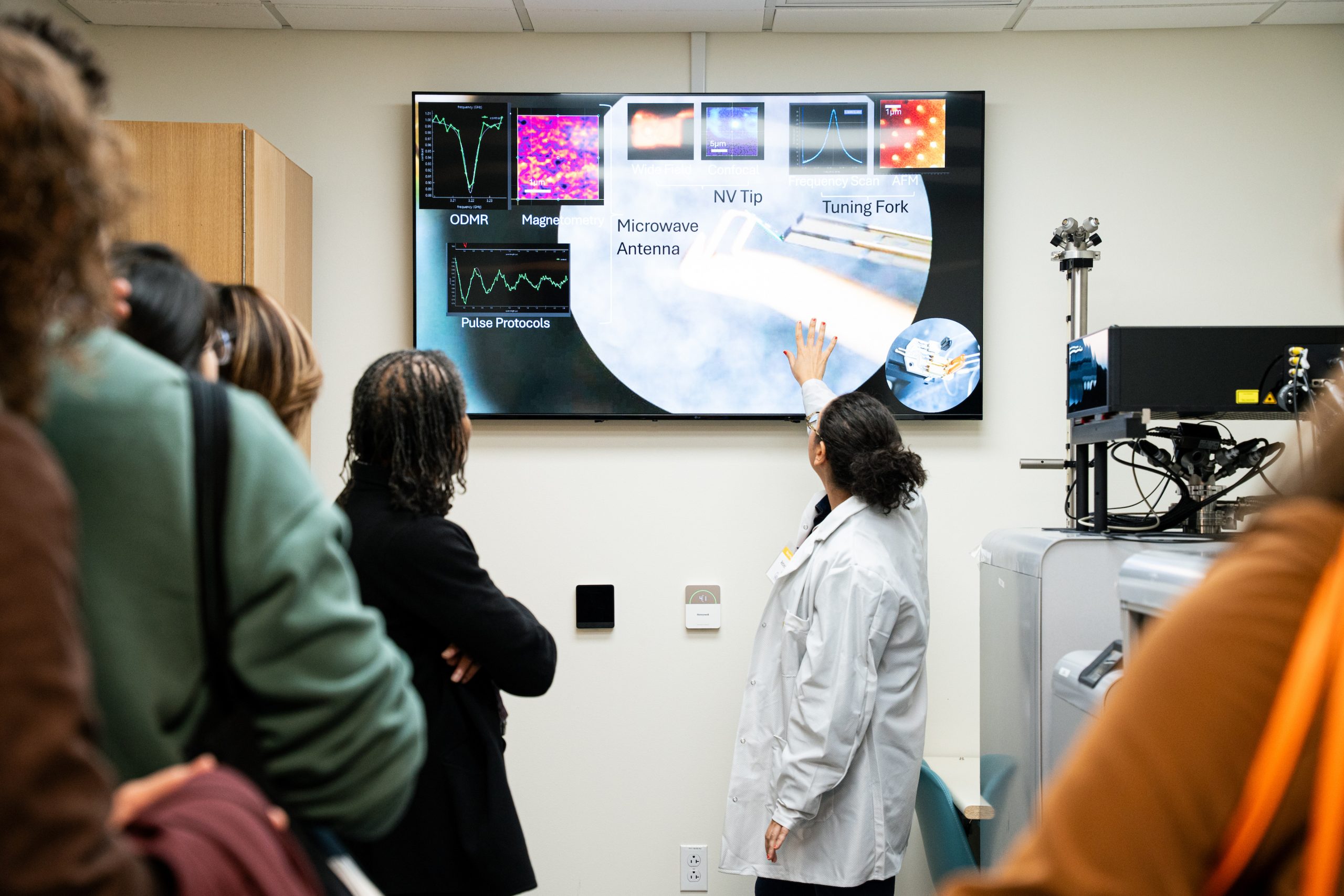
Bryn Mawr’s New Quantum Microscope Boosts Materials Research
Bryn Mawr College has just commissioned the first commercial scanning nitrogen‑vacancy magnetometer (SNVM) in the United States, funded by a $1.5 million National Science Foundation grant. Operating from 1.8 K to room temperature and capable of applying a vector magnetic field up to 1 T (9 T vertically), the instrument gives researchers nanometer‑scale magnetic imaging that was previously limited to specialized labs.
High‑Resolution Scanning NV Magnetometry
The SNVM uses a single nitrogen‑vacancy (NV) defect in a diamond tip to sense magnetic fields with tens‑of‑nanometers resolution. By mapping magnetic textures at this scale, scientists can probe the intricate spin structures of quantum materials, uncovering new phases and informing future quantum‑information storage strategies. Associate Professor Don Fahey notes that the precision of the SNVM stems directly from the quantum properties of the NV center, offering a clear advantage over conventional magnetic microscopy.
Complementary Wide‑Field Quantum Diamond Microscopy
Alongside the SNVM, Bryn Mawr has installed a quantum diamond microscope (QDM) that images larger areas using a dense ensemble of NV centers spread across a millimeter‑sized diamond. While the QDM’s resolution is limited by the wavelength of light—about a hundred times coarser than the SNVM—it excels at rapidly locating regions of interest. Researchers can first scan a sample with the QDM, then zoom in with the SNVM for detailed analysis, creating an efficient, tiered workflow.
Broader Impact and Educational Opportunities
Beyond quantum‑material studies, the QDM is already being applied to rock magnetism, revealing grain‑scale magnetic signatures that record Earth’s ancient magnetic field. The new facilities also provide hands‑on training for students, exposing them to cutting‑edge quantum‑sensing technology and preparing the next generation of quantum scientists.
Looking Ahead
The combination of high‑resolution scanning and wide‑field imaging positions Bryn Mawr’s Quantum Materials, Sensing and Education Center as a hub for interdisciplinary research. As the instruments become fully operational, they are expected to accelerate discoveries across condensed‑matter physics, materials science, and geophysics, while fostering collaborations with other institutions that lack direct access to such quantum‑sensing tools.
For more details, see the college’s announcement.
Source
Read original sourceWhy we picked this
Accepted from curated QuantumUnzipped source (relevance scoring disabled).