Chalmers joins European effort to unify quantum software
Chalmers joins the EU‑funded EuroQSS project to build a pan‑European open framework that unifies quantum software and enables hybrid quantum‑classical computing.
Introduction
Chalmers University of Technology has become a key partner in the European Union’s EuroQSS initiative, a three‑year, €5 million effort to create a unified, open‑source software stack for quantum computing across Europe. By leading the scheduling work package, Chalmers will help ensure that the framework runs on real quantum hardware and supports hybrid architectures that combine quantum processors with conventional high‑performance systems.
Why a Unified Quantum Software Stack Matters
Quantum hardware is rapidly diversifying—superconducting circuits, trapped ions, photonic chips, and more each require distinct programming models and toolchains. This fragmentation hampers collaboration, slows software development, and raises the barrier for newcomers. EuroQSS tackles the problem at its core by:
- Defining common abstractions that hide hardware‑specific details.
- Providing interoperable libraries for simulation, error mitigation, and resource management.
- Enabling developers to write code once and target multiple quantum back‑ends, much like classical software today.
The result is a more portable ecosystem that can keep pace with the fast‑evolving hardware landscape.
Hybrid Computing: Bridging Quantum and Classical Resources
A standout goal of EuroQSS is to support hybrid computing workflows where quantum processors act as accelerators for specific sub‑tasks within larger classical workloads. This approach leverages the strengths of each platform:
- Quantum processors excel at tackling certain combinatorial or linear‑algebra problems that are intractable for classical machines.
- Classical HPC systems handle data‑intensive preprocessing, post‑processing, and orchestration.
By integrating scheduling, resource allocation, and data movement into a single framework, developers can more easily partition workloads, experiment with different hardware configurations, and achieve optimal performance.
The Consortium and Chalmers’ Role
EuroQSS brings together thirteen partners from seven countries, spanning academia, industry, and research institutes. Notable members include Airbus, Qruise, and the Fraunhofer Gesellschaft, reflecting a blend of theoretical expertise and practical application.
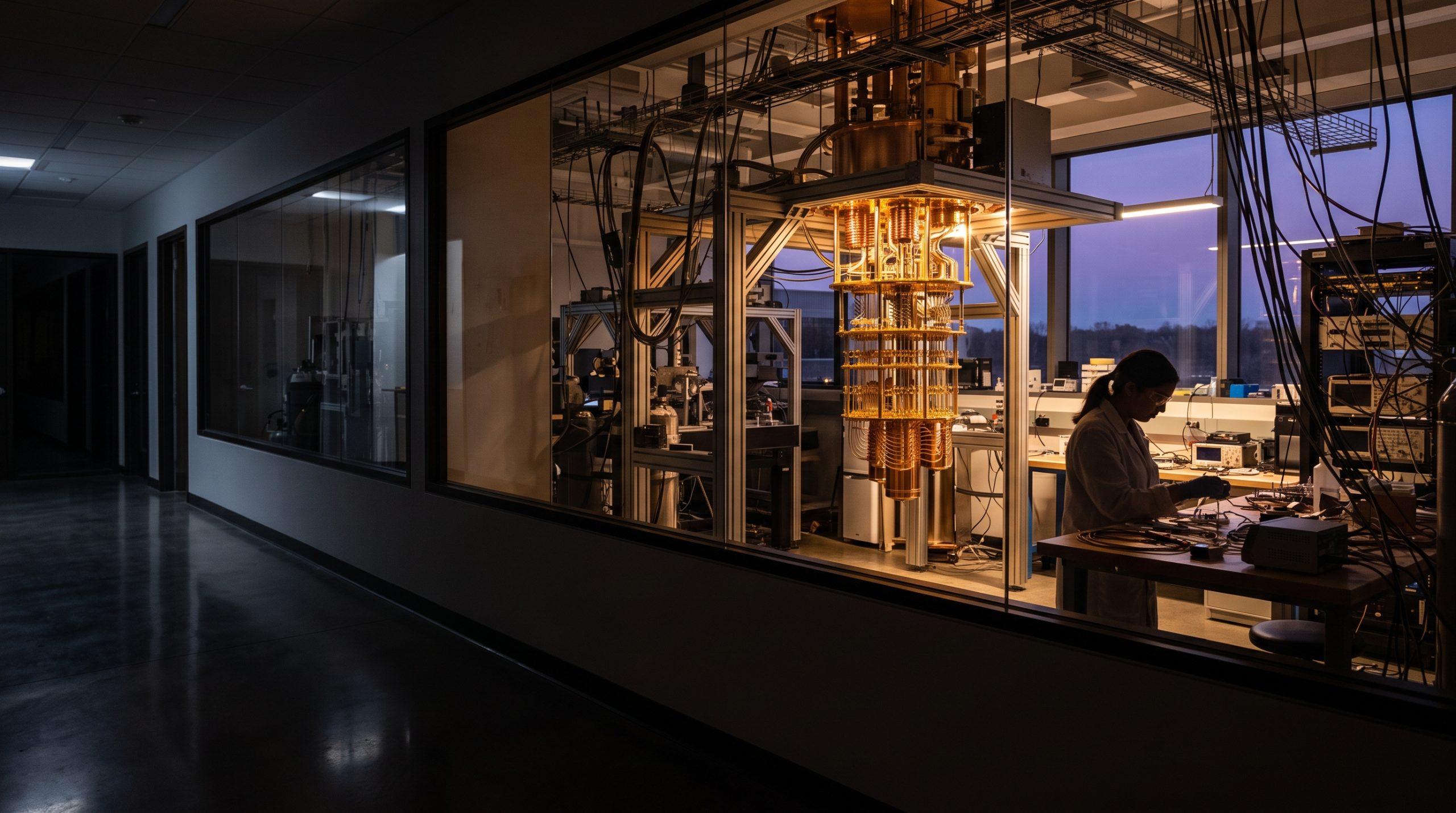
Chalmers’ contribution focuses on the scheduling work package. Leveraging its experience in building and operating superconducting quantum computers, the university will:
- Design scheduling algorithms that map quantum tasks onto available hardware while respecting coherence times and error rates.
- Validate the software stack on real quantum devices, ensuring that abstractions translate into reliable execution.
- Provide feedback loops that inform future hardware development, helping Europe stay ahead of the fault‑tolerant quantum era.
Looking Ahead
EuroQSS aims to deliver a functional, open framework by the end of its three‑year timeline, laying the groundwork for a robust European quantum software ecosystem. Success will accelerate the transition from isolated quantum experiments to production‑grade applications in fields such as materials science, cryptography, and optimization.
Practical Takeaway
For developers and researchers, EuroQSS promises a single, well‑documented entry point to experiment with multiple quantum platforms and to prototype hybrid algorithms without reinventing the wheel for each new device. Keeping an eye on the project’s milestones—especially the release of the scheduling module—will be essential for anyone looking to integrate quantum acceleration into existing high‑performance workflows.
Source
Read original sourceWhy we picked this
Accepted from curated QuantumUnzipped source (relevance scoring disabled).