Cornell engineers control quantum dot patterns during liquid evaporation
Cornell researchers demonstrated precise control over quantum‑dot self‑assembly by tuning solvent evaporation conditions.
Controlling Quantum‑Dot Patterns with Evaporation Dynamics
Cornell University engineers have shown that the self‑assembly of quantum dots—nanometer‑scale semiconductor clusters—can be steered into reproducible patterns simply by adjusting the concentration of the dots and the volatility of the solvent during liquid evaporation. The work, published on 14 November 2026 in Nature Communications, combines high‑resolution microscopy with a computational model that predicts the cascade of morphologies that appear as a droplet dries.
From Random Films to Predictable Cascades
Using a laser‑confocal microscope, the team deposited 10 nL droplets of ethylene glycol containing quantum dots onto a substrate. As each droplet evaporated, a “snail‑tail” film formed, revealing a sequence of structural changes—from disordered clusters to ribbon‑like and tiled arrangements. By systematically varying the dot concentration and the solvent’s evaporation rate, the researchers could reproducibly generate specific patterns rather than a random mixture.
Modeling the Self‑Assembly Process
Undergraduate researcher Anjali Asthagiri ’28 built a computational model that captures the interplay of convection, diffusion, and solvent‑driven forces. The model accurately reproduces the experimentally observed cascade of patterns, providing a quantitative framework for predicting how changes in experimental parameters will affect the final film morphology.
Implications for Nanoscale Devices
Controlled patterning of quantum dots opens pathways to engineered optical and electronic materials. Unlike traditional approaches that aim for large, perfect superlattices, this work embraces smaller clusters (≈20 dots) to explore a richer design space. Tailored patterns could be leveraged for photonic devices, sensors, or quantum‑enhanced optoelectronics where the spatial arrangement of emitters dictates performance.
Looking Ahead
The study demonstrates that modest changes in solvent volatility and concentration can shift the self‑assembly outcome dramatically. Future work will likely explore different solvent systems, substrate chemistries, and integration of these patterned films into functional devices. The combination of experiment and predictive modeling offers a powerful toolkit for engineering nanoscale architectures with bespoke properties.
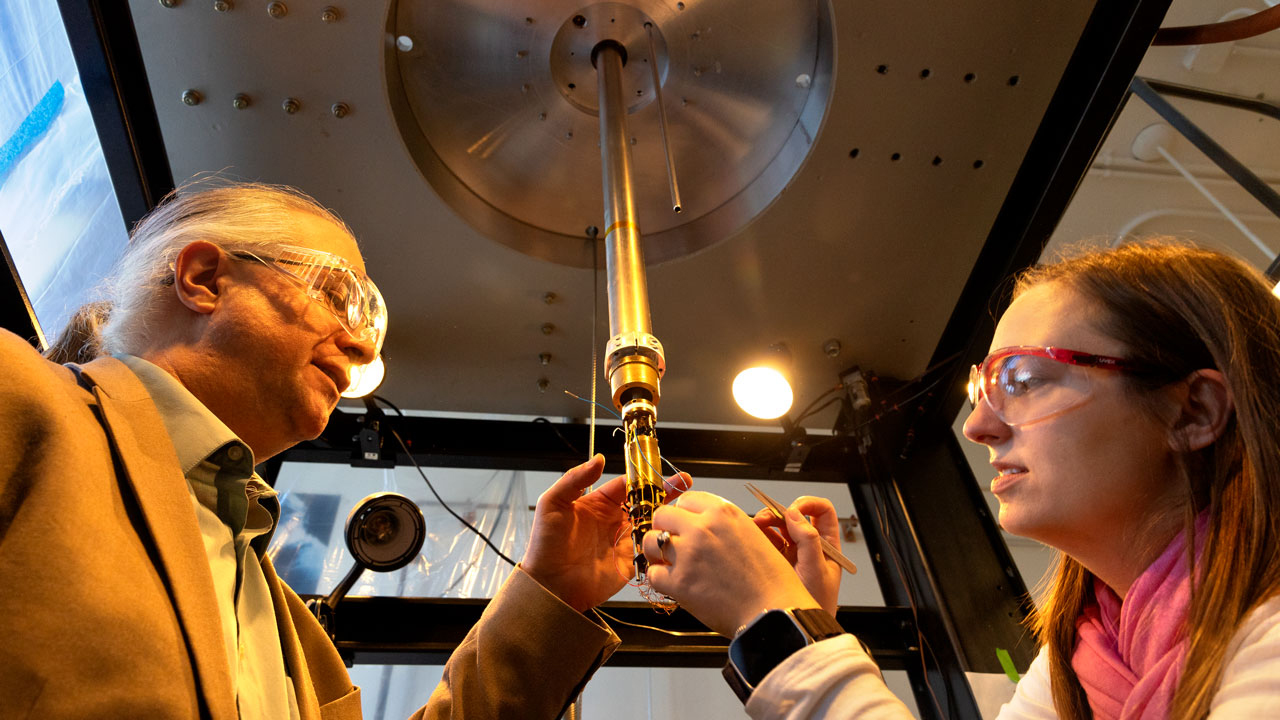
--- The research was conducted by Tobias Hanrath, the Croll Professor in Engineering, and his team, including graduate student Jonathan Palumbo and undergraduate Anjali Asthagiri. The findings are detailed in Nature Communications (14 Nov 2026).
Hype check
RealThe paper in Nature Communications provides experimental data and a validated model, confirming the claimed control over quantum‑dot patterns.
- Peer-reviewed paper, or press release only?Paper — Published in Nature Communications
- Error-corrected (logical) qubits, or physical qubits only?Logical / not a qubit claim — Not a qubit‑count claim
- A new milestone, or a rebrand / restatement?New — First demonstration of controllable pattern cascades
- Independent confirmation?Not yet — No external replication mentioned
- Does the headline claim match what the source shows?Matches — Headline reflects the reported experimental control
An editorial assessment of the claim as reported, not a judgment of the company or researchers. Checked against: news.cornell.edu. How we rate hype →
Source
Read original sourceWhy we picked this
Accepted from curated QuantumUnzipped source (relevance scoring disabled).