Delta Gold expands quantum sensing work at Penn State, Toronto
Delta Gold is allocating $500 k to Penn State and C$500 k to the University of Toronto to build quantum‑sensing hardware around gold nanoclusters.
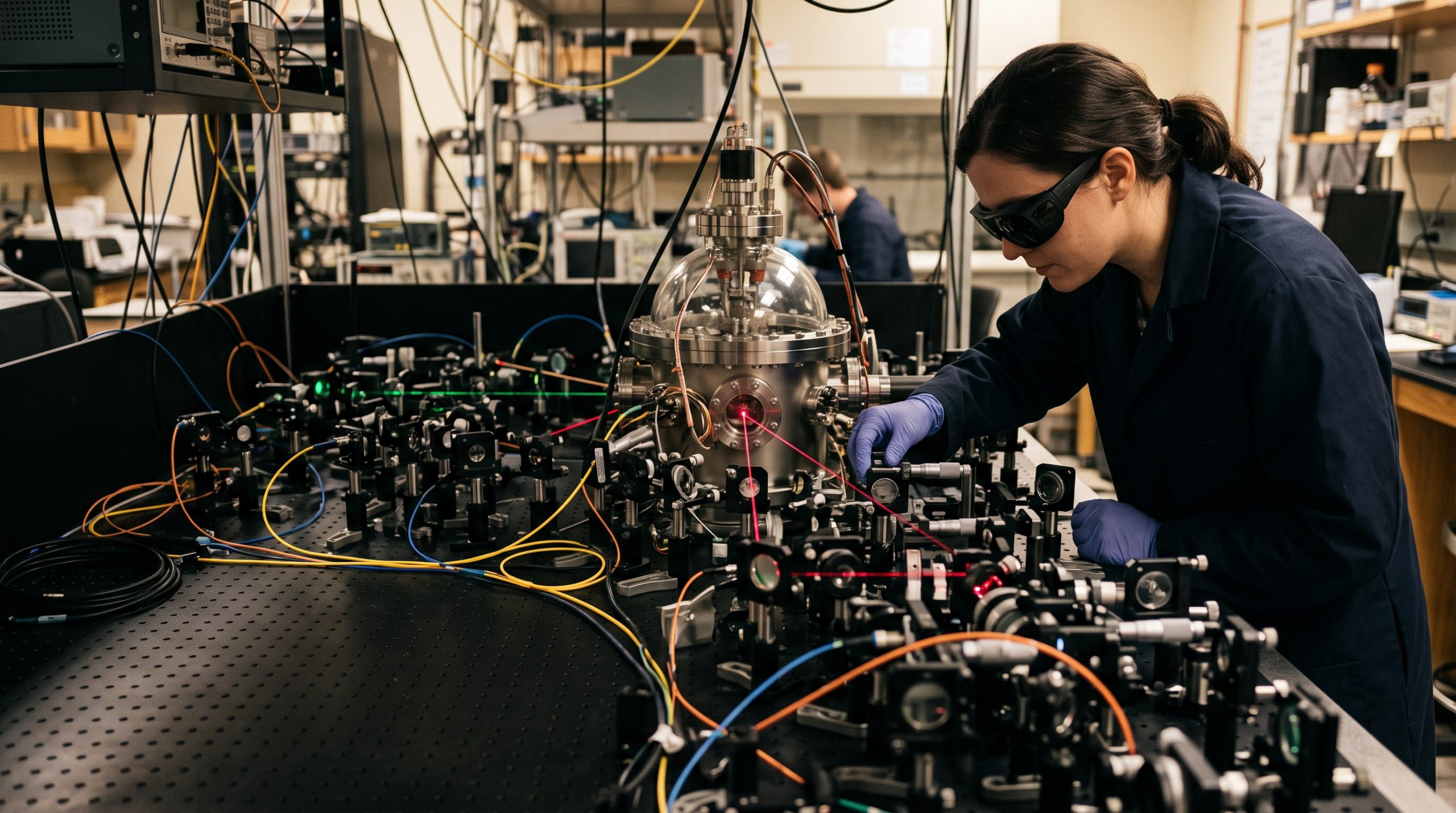
Delta Gold Boosts Quantum‑Sensing Research at Penn State and Toronto
Delta Gold Technologies has earmarked half a million U.S. dollars from its 2026 budget to fund a new magnetic‑field instrument at Penn State University. The equipment will enable researchers to manipulate three‑dimensional magnetic fields around gold nanoclusters, a platform the company believes could serve as a highly sensitive quantum sensor. A matching C$500 k amendment has been approved for the University of Toronto, extending an existing C$3 million sponsorship to purchase advanced fabrication and microscopy tools.
Why Gold Nanoclusters?
Gold nanoclusters exhibit stable, spin‑polarized light emission, a property that could translate into robust magnetometry. At Penn State, the focus is on the photonic behavior of these clusters, while Toronto investigators will explore their electronic characteristics. Together, the two labs aim to demonstrate that controlled magnetic‑field perturbations can be detected with high fidelity, paving the way for applications such as non‑GPS navigation that rely on the Earth’s magnetic field.
Funding Structure and Timeline
- Penn State: US$500 k for a magnetic‑field instrument that can generate and vary 3‑D fields around the nanoclusters. The device will be used in experiments designed to test sensor response and to file three related patents.
- University of Toronto: C$500 k for specialized fabrication equipment, supplementing a prior C$3 million commitment (C$2 million already disbursed). The new tools will support layered‑atom construction and high‑resolution microscopy of gold‑based sensing devices.
- Overall program: The investment is part of a six‑year, US$6 million research agenda that balances fundamental studies with near‑term intellectual‑property creation.
Expected Outcomes and Commercial Angle
Delta Gold’s leadership frames the work as a step toward commercial quantum‑sensing products. By demonstrating reliable magnetic‑field detection with gold nanoclusters, the company hopes to develop magnetometers that could be integrated into navigation systems, industrial monitoring, or security devices. The dual‑track approach—photonic studies at Penn State and electronic investigations at Toronto—aims to cover the full material‑property spectrum needed for a market‑ready sensor.
Community and Academic Perspective
Both universities have appointed senior faculty to oversee the projects. Professor Kenneth Knappenberger (Penn State) highlighted the nanoclusters’ “stable spin‑polarized emitters” as a promising basis for robust sensors. Professor Harry Ruda (University of Toronto) emphasized the synergy between the two institutions, noting that combined photonic and electronic insights will accelerate the path from laboratory experiments to prototype devices.
Outlook
While the funding announcements are clear, the scientific milestones remain to be demonstrated. The next phase will involve systematic testing of magnetic‑field sensitivity, calibration against existing magnetometer standards, and validation of any claimed advantages of gold nanoclusters over more conventional sensing materials. Success could position Delta Gold as a niche player in the emerging quantum‑sensing market, but the timeline for commercial products will depend on experimental results and subsequent patent filings.
--- Delta Gold’s quantum‑sensing program illustrates how corporate funding can steer academic research toward application‑focused outcomes, especially in the rapidly evolving field of quantum technologies.
Hype check
Not a research claimThe story reports funding for quantum‑sensing research; there is no technical result to evaluate, so it is a straightforward news item.
We rate research and technical results only. How we rate hype →
Source
Read original sourceWhy we picked this
Accepted from curated QuantumUnzipped source (relevance scoring disabled).