Did Life Begin in an RNA World?
The RNA‑world hypothesis remains plausible but faces significant experimental challenges and unanswered questions.
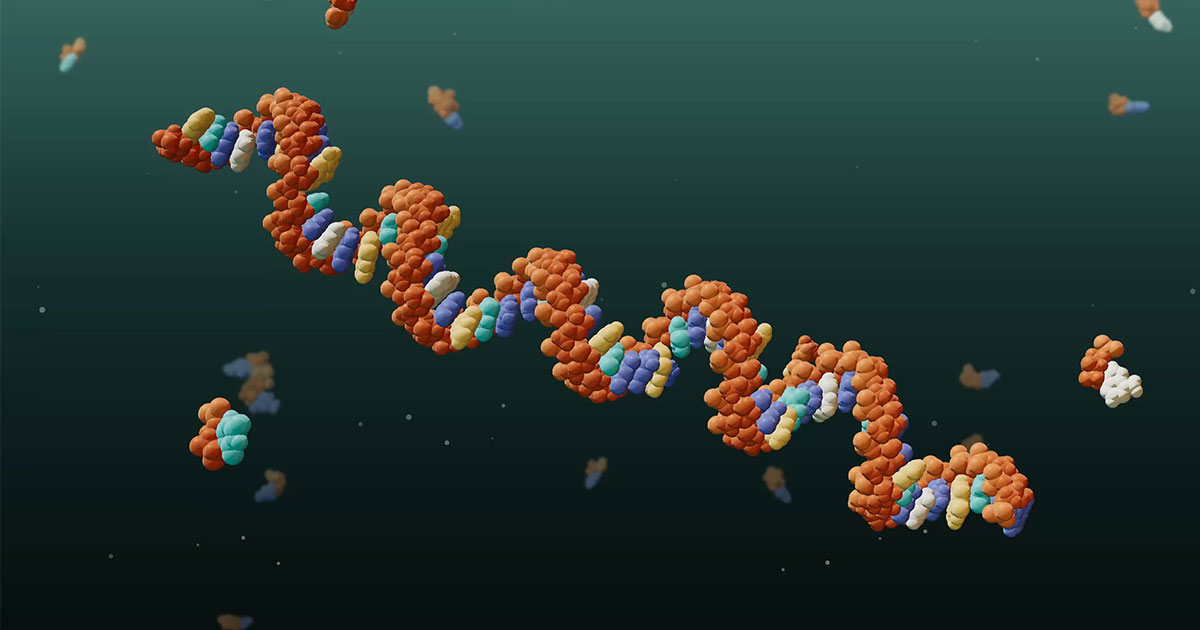
Did Life Begin in an RNA World?
An overview of the evidence, experiments, and open problems surrounding the RNA‑world hypothesis, as presented in Quanta Magazine’s November 9 2026 explainer.
---
Why RNA Is a Compelling Candidate
The central idea of an RNA world is that early life used ribonucleic acid both to store genetic information and to catalyze chemical reactions. Modern cells still rely on RNA as the intermediary between DNA and proteins, and the discovery of ribozymes in the late 1980s showed that RNA can act as a catalyst, breaking the “chicken‑and‑egg” problem that proteins appear to create a paradox for the origin of life.
Physicist‑turned‑biologist Walter Gilbert popularized the notion that a self‑replicating RNA molecule could have been the first “living” system. In 1996, researchers built a ribozyme capable of stitching nucleotides together, demonstrating that RNA can, in principle, copy itself.
---
Experimental Hurdles
Large Ribozymes and Mutational Fragility
Gerald Joyce’s work at the Salk Institute highlighted a key difficulty: when synthetic ribozymes were evolved in the lab, most mutations quickly destroyed catalytic activity. The ribozymes that did survive were large—hundreds of nucleotides long—far bigger than the short strands that spontaneously form in pre‑biotic simulations (10–15 nucleotides).
Small, Self‑Replicating RNAs
More recent experiments from Philipp Holliger’s group at the MRC Laboratory of Molecular Biology have identified much smaller functional RNAs. By screening a pool of ~10 trillion sequences, they isolated a 45‑nucleotide molecule, QT45, that can bind and copy another RNA strand. The team also found two other short RNAs with similar activity, suggesting that self‑copying ability may be more common than previously thought.
Even so, the experiments raise questions. The reported hit rate is still low relative to the astronomical number of possible sequences of that length, and it is unclear whether such molecules could sustain exponential growth under realistic early‑Earth conditions.
---
Plausible Pre‑biotic Environments
Holliger’s team demonstrated that cyclic changes in pH, combined with freeze‑thaw cycles, can drive exponential RNA replication in the lab. These cycles could plausibly occur at icy poles or in seasonal ponds on the early Earth, providing a niche where short RNAs might proliferate.
However, a viable RNA world would also need a source of metabolic energy to drive synthesis and maintain a stable environment long enough for evolution to take hold. The current evidence does not yet show how such metabolism could arise alongside RNA replication.
---
The Bigger Picture
The RNA‑world hypothesis remains a leading framework for thinking about life’s origins, but it is far from settled. Small, self‑replicating RNAs like QT45 demonstrate that the basic chemistry is possible, yet the transition from short, lab‑evolved molecules to robust, evolving protocells is still a major gap.
Future work will need to (1) identify realistic pathways for the emergence of longer functional RNAs, (2) integrate primitive metabolic cycles with RNA replication, and (3) test these ideas in geochemically plausible settings.
---
Bottom line: RNA offers a plausible bridge between genetics and catalysis, but experimental and theoretical challenges keep the RNA‑world hypothesis an open, actively debated question rather than a settled fact.
---
This article is a synthesis of the Quanta Magazine explainer by Philip Ball, November 9 2026.
Hype check
Not a research claimThe piece is an explainer on a scientific hypothesis, not a new experimental result, so hype assessment is not applicable.
We rate research and technical results only. How we rate hype →
Source
Read original sourceWhy we picked this
Accepted from curated QuantumUnzipped source (relevance scoring disabled).