Dutch HAIQ Consortium Awarded €7.4 Million ($8.1 Million USD) NWO Grant to Combine Human Intuition and AI for Quantum Control and Circuit Optimization
A Dutch consortium led by Leiden University secured €7.4 million from NWO to fuse human intuition with AI for quantum control and circuit optimization.
Funding the Human‑AI Fusion for Quantum Computing
A 28‑partner Dutch consortium, coordinated by Leiden University researchers Dr. Evert van Nieuwenburg and Prof. Julia Cramer, has been awarded €7.4 million (plus €50 k in‑kind) by the Dutch Research Council (NWO). The grant supports the Human and Artificial Intelligence Advancing Quantum Technology (HAIQ) project, which aims to combine gamified human‑in‑the‑loop methods with machine‑learning techniques to tackle hard optimization problems in quantum computing.
Consortium Landscape
The partnership brings together a broad mix of academic, industrial, and creative players:
- Academic hubs: QuTech (TU Delft), TU Eindhoven, and Leiden University.
- Infrastructure providers: SURF and Quantum Delta NL (the latter also contributes in‑kind funding).
- Hardware and control firms: Qblox, Orange Quantum Systems, Groove Quantum, and QuLearnLabs.
- Creative contributors: Several game studios that will help design the human‑centric interfaces.
By pooling expertise across quantum hardware, software, and user‑experience design, the consortium hopes to create a scalable platform where human intuition can guide AI algorithms in real‑time quantum tasks.
Human‑In‑The‑Loop Gamification Meets Machine Learning
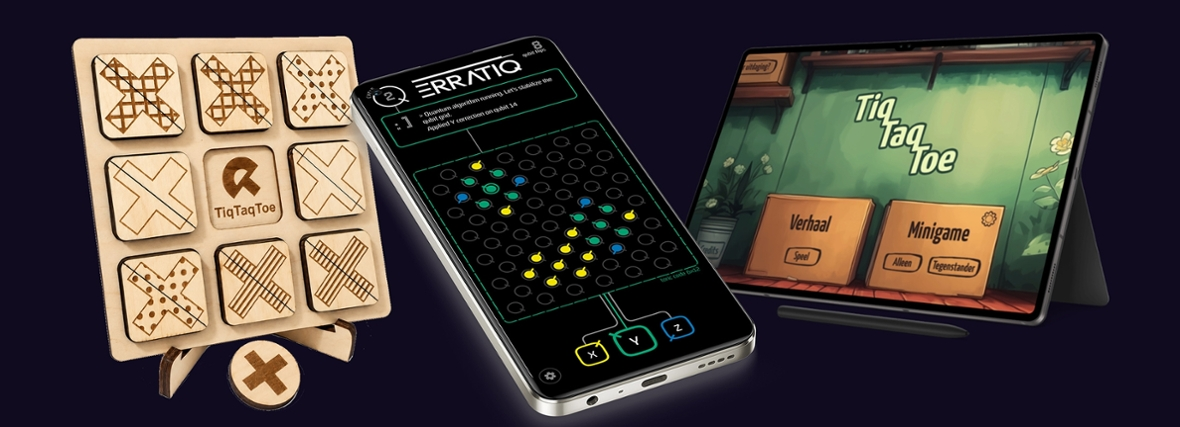
Building on earlier prototypes such as Leiden’s ERRATIQ game, the HAIQ project will develop a suite of tools that let participants:
- Design quantum circuits on QuTech’s cloud‑based Quantum Inspire platform.
- Run experiments directly on available quantum hardware, receiving immediate feedback.
- Guide reinforcement‑learning agents through intuitive gameplay, helping the AI discover efficient compilation strategies, calibration routines, and qubit‑stabilization policies.
Key researchers—including Sebastian Feld, Anasua Chatterjee, Eliška Greplová, and Vivek Sinha—will focus on three technical pillars: quantum circuit compilation, device calibration, and real‑time qubit stabilization. The integration of human‑generated data with reinforcement learning is expected to accelerate the discovery of optimization heuristics that are difficult for purely algorithmic approaches.
Potential Impact on the Quantum Ecosystem
If successful, the HAIQ platform could address several persistent bottlene‑cks:
- Unstructured optimization: Many quantum workflows involve combinatorial search spaces where conventional optimizers stall. Human intuition, captured via gamified tasks, may provide novel starting points for AI.
- Hardware‑agnostic control: By abstracting control strategies across superconducting, trapped‑ion, and neutral‑atom platforms, the consortium aims to produce reusable AI models.
- Workforce development: Engaging a broader public in quantum problem‑solving could nurture a new generation of quantum‑savvy talent.
The grant’s size signals strong governmental confidence in interdisciplinary approaches that blend social science, AI, and quantum engineering. While the project is still in its early stages, the collaborative model could become a template for future public‑private quantum initiatives.
---
The HAIQ consortium’s work will unfold over the next several years, with milestones expected to be announced as the platform matures.
Hype check
Not a research claimFunding announcement for a consortium; no technical result to evaluate.
We rate research and technical results only. How we rate hype →
Source
Read original sourceWhy we picked this
Accepted from curated QuantumUnzipped source (relevance scoring disabled).