Equal1, NVIDIA, and Dell Technologies Demonstrate Real-Time Hybrid Quantum-Classical Rack Integration at SC26
Equal1, NVIDIA, and Dell showcased a real‑time hybrid quantum‑classical rack at SC26, integrating a silicon spin‑qubit processor with data‑center servers and low‑latency GPU links.
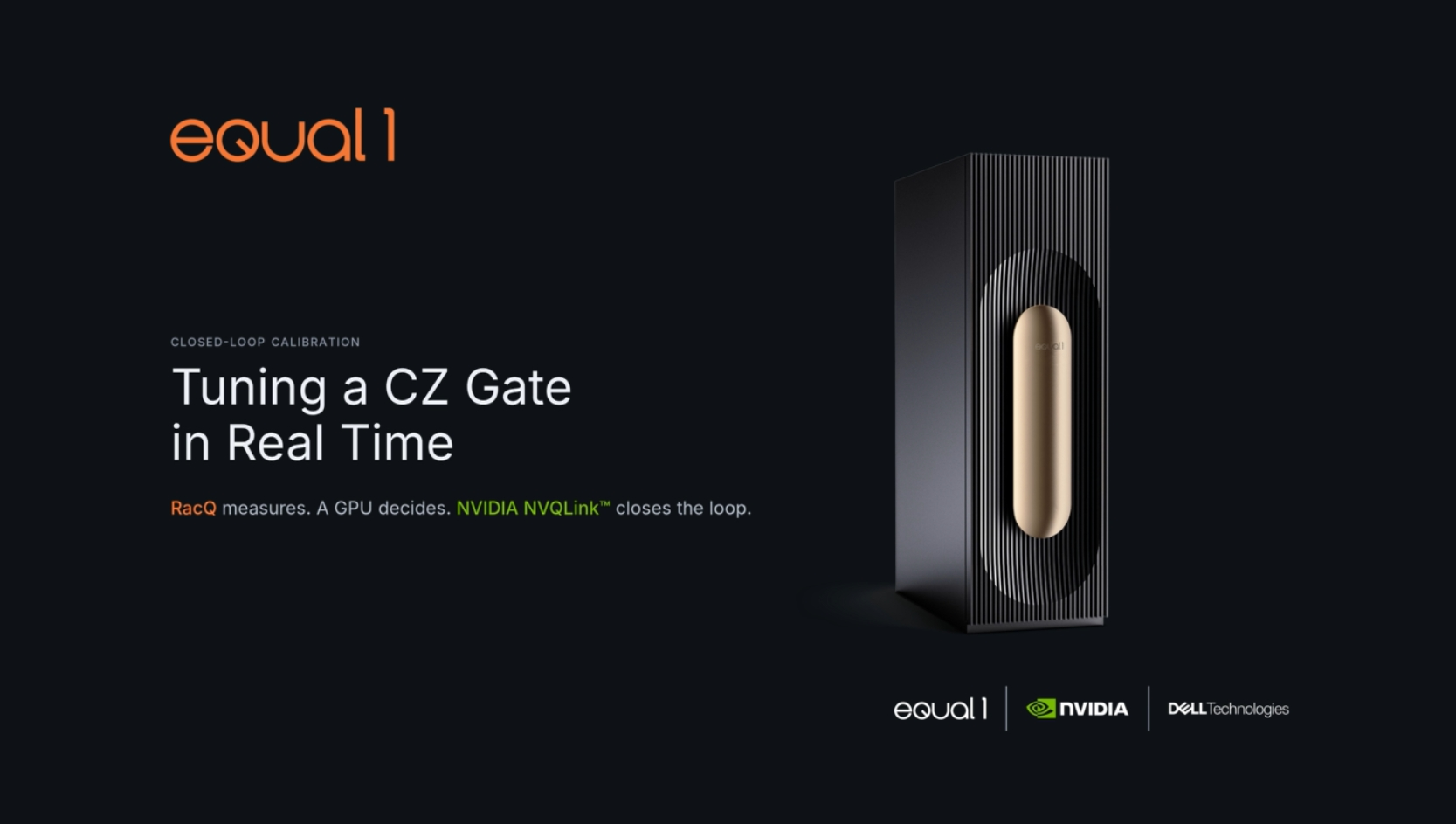
Hybrid Quantum‑Classical Rack Takes the Stage at SC26
Silicon‑spin‑qubit startup Equal1 joined forces with NVIDIA and Dell Technologies to demonstrate a fully integrated hybrid quantum‑classical computing rack at the SC26 supercomputing conference in Chicago. The exhibit, hosted at Dell’s booth, combined Equal1’s 1.6 kW rack‑mounted RacQ silicon quantum processor with Dell’s standard‑rack data‑center servers, all orchestrated by a prototype software stack that bridges quantum hardware, GPUs, and classical workloads in real time.
A Unified Hardware Stack
The rack‑level integration packs three distinct layers:
- Quantum layer – Equal1’s RacQ silicon spin‑qubit processor, designed for low‑power operation and scalable to larger qubit arrays.
- Classical layer – Dell PowerEdge servers that provide the traditional compute resources needed for pre‑ and post‑processing, error mitigation, and algorithmic control.
- Accelerator layer – NVIDIA GPUs linked to the quantum processor via the NVQLink interconnect, delivering ultra‑low‑latency round‑trip communication for gate‑level calibration and hybrid execution.
The physical footprint matches a standard 19‑inch rack, demonstrating that quantum hardware can coexist with conventional data‑center equipment without bespoke infrastructure.
Software Orchestration: Dell Quantum Intelligent Orchestrator
At the heart of the demo is Dell’s Quantum Intelligent Orchestrator (QIO), a prototype middleware that schedules tasks across the quantum processor, GPUs, and CPUs. QIO leverages NVIDIA’s Ising Calibration models to automate controlled‑Z (CZ) gate tuning in real time, reducing the manual overhead typically associated with spin‑qubit calibration. The orchestrator also manages data movement, ensuring that quantum results are streamed to GPUs for rapid post‑processing and fed back into the quantum control loop when needed.
Why Real‑Time Integration Matters
Hybrid quantum‑classical workflows often suffer from latency bottlenecks: quantum results must travel to a classical host, be processed, and then sent back for the next quantum operation. By embedding the quantum processor directly within a data‑center rack and using NVQLink’s sub‑microsecond latency, the demonstration showcases a path toward tighter feedback loops. This is crucial for algorithms that rely on iterative quantum subroutines, such as variational quantum eigensolvers (VQEs) and quantum‑enhanced machine‑learning pipelines.
Looking Ahead
While the SC26 showcase is a proof‑of‑concept rather than a performance benchmark, it signals a maturing ecosystem where hardware vendors, software providers, and system integrators collaborate on end‑to‑end solutions. Future steps will likely involve scaling the qubit count, extending the orchestration framework to multi‑rack deployments, and quantifying the latency and throughput gains in real‑world workloads.
For readers interested in the technical details, Equal1’s announcement and CEO Jason Lynch’s blog post provide deeper insight into the hardware design and economic rationale behind hybrid quantum‑AI workloads. The broader community can watch for follow‑up publications that benchmark the integrated stack against standalone quantum or classical systems.
--- This article is based on the press release and related blog posts linked in the source material.
Hype check
Not a research claimThe article describes a demo integration, not a measurable performance claim; thus no result to assess.
We rate research and technical results only. How we rate hype →
Source
Read original sourceWhy we picked this
Accepted from curated QuantumUnzipped source (relevance scoring disabled).