EV Group Helps Accelerate Qubit Scaling for Quantum Computing Through Advanced Packaging Expertise
EV Group is leveraging its advanced packaging and integration technologies to help quantum chip makers scale qubit production.
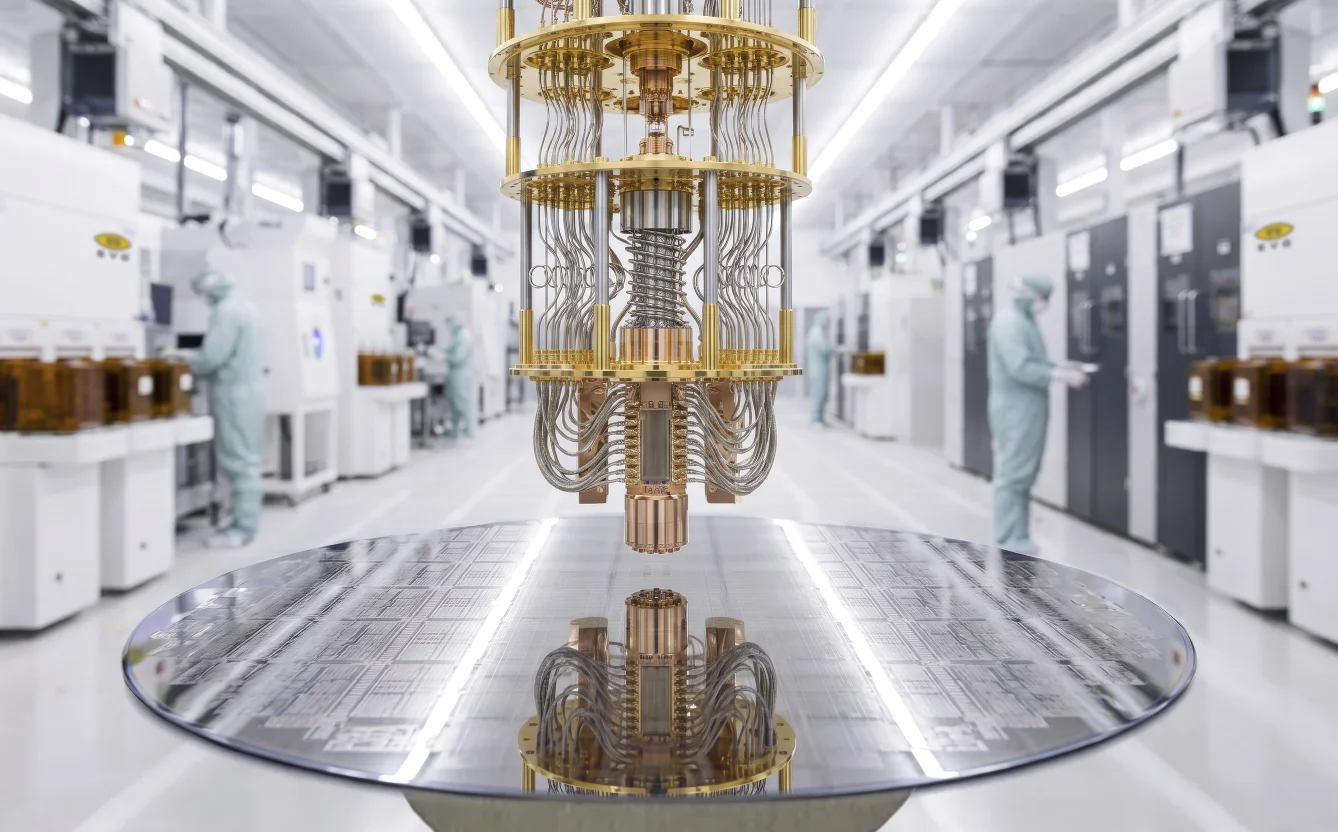
EV Group’s Role in Scaling Quantum Hardware
Advanced packaging, heterogeneous integration, and photonics have become critical enablers for the next generation of quantum computers. EV Group (EVG), a long‑standing supplier of semiconductor process solutions, is positioning its expertise to address the manufacturing bottlenecks that arise as quantum‑chip designers move from laboratory prototypes to larger, more complex systems.
Why Packaging Matters for Quantum Devices
Quantum bits (qubits) are extraordinarily sensitive to environmental disturbances. Whether the platform is superconducting, trapped‑ion, photonic, spin, neutral‑atom, or diamond‑based, each architecture demands precise alignment, ultra‑low‑loss interconnects, and material compatibility that traditional semiconductor fabs are not optimized for. Scaling the number of physical qubits therefore requires not only more chips but also more sophisticated ways to stack, bond, and route signals without degrading coherence.
EVG’s portfolio—fusion and hybrid bonding, oxide‑free bonding, digital and nano‑imprint lithography, and thin‑wafer processing—provides the sub‑micron alignment and high‑density interconnect capabilities needed across these diverse platforms. For example, oxide‑free bonding can create superconducting interconnects for 3‑D integration, while hybrid bonding supports the ultra‑dense routing required by emerging spin‑qubit designs.
Current Collaborations Highlight the Approach
- Xanadu partnership – EVG is working with the photonic‑quantum company to integrate III‑V materials onto silicon waveguides, a step that could improve on‑chip photon generation and detection.
- CHAMP‑ION pilot line with Silicon Austria Labs – This Europe‑first open‑access line aims to produce ion‑trap chips at industrial scale, using low‑temperature metal bonding developed by EVG to join disparate substrate materials.
Both projects illustrate how EVG’s process technologies can be adapted to the specific material stacks and thermal budgets of different qubit families, reducing the time required for design‑for‑manufacturing validation.
What This Means for the Quantum Ecosystem
- Accelerated prototyping – By offering ready‑made bonding and lithography solutions, EVG shortens the iteration cycle for quantum chip designers, allowing them to test new architectures faster.
- Reduced risk for scale‑up – Proven semiconductor‑grade processes bring higher yields and tighter tolerances, mitigating the yield‑penalties that have historically plagued early‑stage quantum hardware.
- Cross‑platform flexibility – Because EVG’s tools are not tied to a single qubit modality, they can serve a broad customer base, fostering a more heterogeneous quantum supply chain.
Looking Ahead
EVG will showcase its quantum‑focused capabilities at SEMICON Europa (Nov 10‑13, Munich). The event will give industry participants a chance to see demos of bonding equipment, lithography tools, and thin‑wafer handling systems tailored for quantum applications. As quantum computers transition from a handful of qubits to the hundreds‑or‑thousands needed for fault‑tolerant operation, the role of advanced packaging is set to become as strategic as the qubit itself.
In short, EV Group is not delivering a new quantum processor, but it is providing the manufacturing scaffolding that could make large‑scale quantum chips feasible sooner.
Hype check
Not a research claimThe article reports EV Group's partnerships and technology offerings; there is no performance claim to evaluate, so it is a factual industry‑news piece.
We rate research and technical results only. How we rate hype →
Source
Read original sourceWhy we picked this
Accepted from curated QuantumUnzipped source (relevance scoring disabled).