Florida’s first quantum-safe network links Palm Beach State, FAU
Palm Beach State College and FAU have launched Florida’s first quantum‑safe network segment using IonQ QKD over dark fiber, marking the start of a statewide secure communications infrastructure.
Introduction
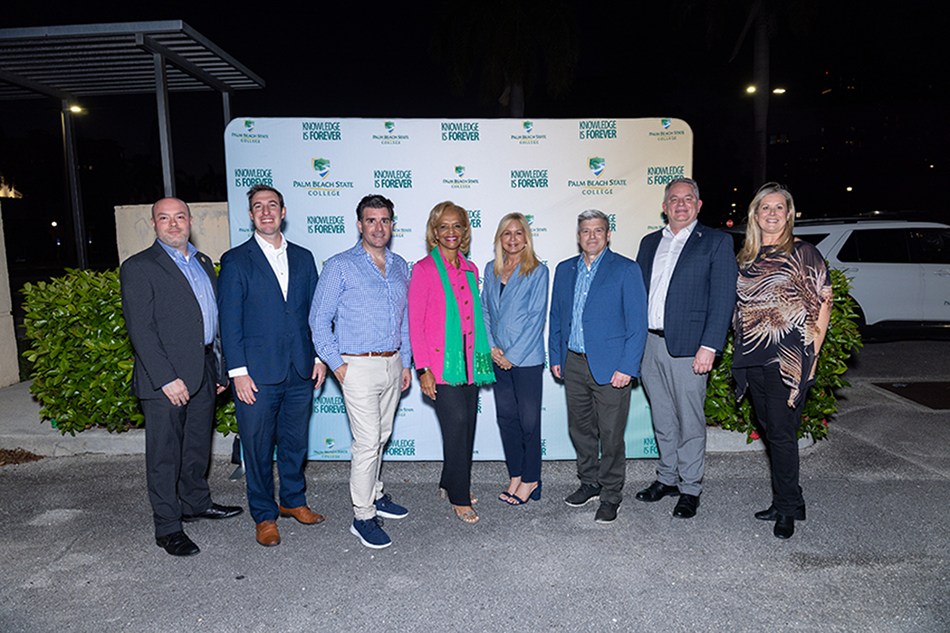
Florida’s higher‑education system took a significant step toward quantum‑grade cybersecurity on October 15, 2026. Palm Beach State College (PBSC) activated the state’s first quantum‑safe network segment, linking its campus to Florida Atlantic University (FAU) via existing dark‑fiber infrastructure in Palm Beach County. Funded by a $1 million defense‑infrastructure grant from FloridaCommerce, the link employs IonQ’s quantum key distribution (QKD) technology to protect data traffic against present and future cyber threats.
How Quantum Key Distribution Secures the Link
QKD leverages the fundamental properties of quantum mechanics to generate and share encryption keys. Any eavesdropping attempt inevitably disturbs the quantum states used to encode the key, instantly alerting the communicating parties to a breach. This physics‑based detection makes QKD far more robust than classical encryption, which can be vulnerable to advances in computing power—including future quantum computers. By integrating IonQ’s QKD modules into the dark‑fiber conduit, PBSC and FAU can exchange keys in real time, ensuring that all transmitted data—research results, student records, and administrative communications—remains confidential and tamper‑proof.
Building a Statewide Quantum‑Secure Network
The PBSC‑FAU segment is the inaugural node of a broader vision: a statewide quantum‑safe network that will eventually connect additional institutions such as Miami‑Dade College and FAU’s Jupiter campus, home to the Herbert Wertheim UF‑Scripps Institute for Biomedical Innovation & Technology. The rollout plan envisions a mesh of QKD‑enabled links spanning Florida’s public‑college system, creating a resilient backbone for secure data exchange across education, research, and government sectors.
Key benefits of this expanding network include:
- Enhanced protection for critical infrastructure data – government agencies and research labs can transmit sensitive information without fear of undetectable interception.
- Hands‑on training for the next generation of quantum engineers – students at PBSC, FAU, and partner colleges will gain practical experience with QKD hardware and protocols, aligning curricula with emerging industry needs.
- Catalyst for industry collaboration – the network provides a testbed for local tech firms and defense contractors to develop quantum‑ready applications, fostering economic growth in the state’s high‑tech sector.
Practical Implications for Stakeholders
For students and faculty, the network offers a living laboratory: coursework in quantum communications can move beyond theory to real‑world deployment, while research data benefits from unprecedented security. Administrators gain confidence that institutional data—financial records, enrollment information, and collaborative research outputs—are shielded against both current cyber‑attacks and future quantum threats. Policymakers and industry partners see a scalable model for public‑private collaboration, demonstrating how targeted grant funding can accelerate infrastructure that supports both national security and economic development.
Looking Ahead
The successful launch of the PBSC‑FAU quantum‑safe segment underscores Florida’s commitment to staying ahead of the cybersecurity curve. As additional nodes come online, the network will not only protect data but also serve as an incubator for talent and innovation in quantum technologies. Continued investment, interdisciplinary education, and partnerships with quantum hardware providers like IonQ will be essential to realize the full potential of a statewide quantum‑secure communications fabric.
--- This article synthesizes publicly available information about the PBSC‑FAU quantum‑safe network launch and its broader implications for Florida’s education and security landscape.
Source
Read original sourceWhy we picked this
Accepted from curated QuantumUnzipped source (relevance scoring disabled).