Four photons now interfere with high efficiency, a quantum dot first
Researchers have demonstrated high‑efficiency interference of up to four photons from a single quantum dot using deterministic demultiplexing, opening new routes for photonic quantum technologies.
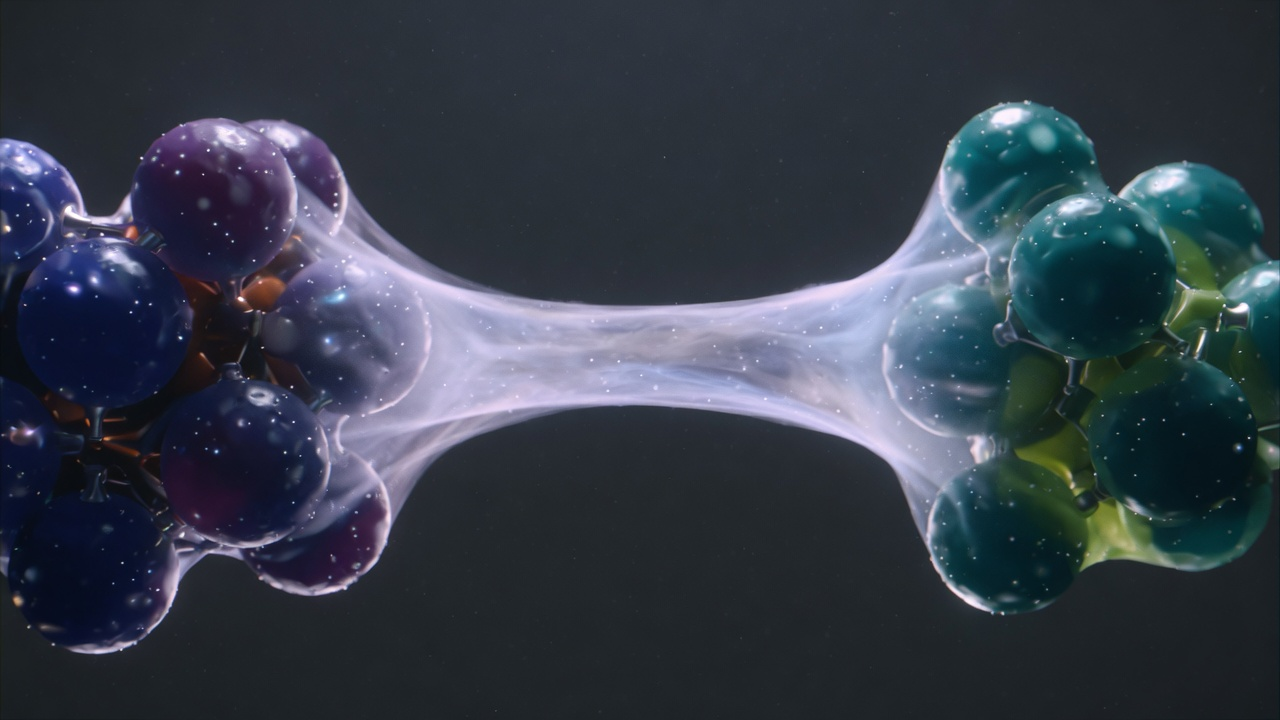
Four‑Photon Interference from a Single Quantum Dot
A collaborative team from the University of Sheffield, the University of Basel, and Ruhr‑Universität Bochum has reported the first direct observation of quantum interference involving four photons emitted by a single quantum dot. By pairing the dot with a deterministic demultiplexing scheme, the experiment overcomes the efficiency bottlenecks that previously limited quantum‑dot sources to two‑photon Hong‑Ou‑Mandel (HOM) tests. The result is a set of interference fringes with contrasts of 93 % for two photons and 84 % for four photons, indicating robust multi‑photon coherence.
---
Deterministic Demultiplexing Boosts Photon Rates
The core of the approach is a deterministic demultiplexer that routes successive photons from the quantum dot into separate spatial modes without sacrificing brightness. Integrated into an open microcavity, the dot emits on‑demand single photons with high purity. The demultiplexer then splits the photon stream into four channels that are recombined in a linear‑optics interferometer. This architecture delivers count rates up to 2.08 MHz, far exceeding what spontaneous parametric down‑conversion sources can provide for comparable multi‑photon experiments.
---
High‑Contrast Interference and “Deep Fringes”
When the four photons are interfered at a beamsplitter network, the observed fringe pattern exhibits a harmonic structure not seen in two‑photon HOM experiments. Notably, the minima of certain fringes—dubbed deep fringes—remain sharp even when the photons are partially distinguishable. This contrasts with the two‑photon case, where indistinguishability is essential for high contrast. The experimental data match a detailed theoretical model that attributes the robustness to the interplay between multi‑photon emission probabilities and system losses, while highlighting that multi‑photon emission, rather than distinguishability, limits the four‑photon contrast.
---
Implications for Quantum Metrology
A Fisher‑information analysis of the interference data shows phase sensitivities that surpass the standard quantum limit. In practical terms, the four‑photon fringes can be used to estimate optical phases with precision beyond what is achievable with classical light of comparable intensity. This points to immediate applications in quantum‑enhanced sensing and metrology, where the ability to generate bright, high‑contrast multi‑photon states is a critical resource.
---
Outlook: Scaling to Larger Photon Numbers
The authors argue that the demonstrated techniques—high‑efficiency quantum‑dot emission, deterministic demultiplexing, and low‑loss linear optics—provide a clear pathway to scaling beyond four photons. The theoretical framework predicts that the deep‑fringe robustness will persist for higher‑order interference, potentially enabling experiments with six or eight photons without a proportional loss in contrast. Such scaling would bring photonic platforms closer to the regime required for fault‑tolerant quantum computing and complex quantum simulations.
---
Practical Takeaway
For researchers and engineers working on photonic quantum technologies, this work offers a concrete blueprint:
- Integrate a quantum dot in an open microcavity to achieve on‑demand, high‑purity single photons.
- Employ deterministic demultiplexing to split the photon stream into multiple modes while preserving brightness.
- Use a well‑characterized linear‑optics network to probe multi‑photon interference and extract phase information.
- Leverage the deep‑fringe phenomenon to relax indistinguishability requirements, simplifying source engineering.
By following these steps, laboratories can move from two‑photon benchmarks to genuine multi‑photon experiments, unlocking new capabilities in quantum metrology, secure communication, and eventually, photonic quantum computation.
Source
Read original sourceWhy we picked this
Accepted from curated QuantumUnzipped source (relevance scoring disabled).