From Cat Pictures to DNA, Moth Quantum Reports Progress on Getting Everyday Data Into Quantum Computers
Moth Quantum demonstrated a method to load and retrieve 1,568 data values across an IBM quantum processor, far exceeding prior experiments.
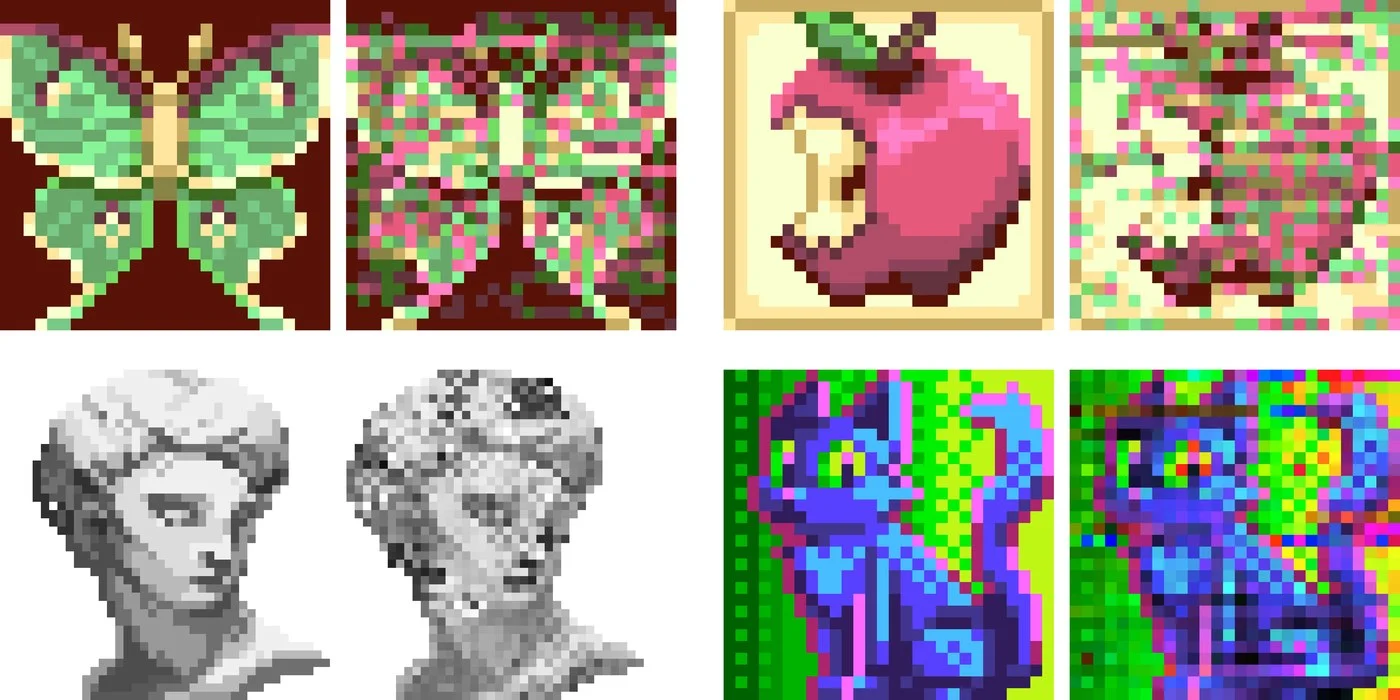
Loading Everyday Data onto Quantum Chips
Moth Quantum has unveiled Tessa, a technique that encodes and reads back large amounts of conventional data—images, audio, DNA sequences—directly on a superconducting quantum processor. By arranging data and address qubits in a checker‑board pattern, Tessa writes data in parallel without extra SWAP gates or ancilla qubits, keeping circuit depth low even as the number of qubits grows.
How Tessa Works
- Data‑address pairing: Each data qubit is surrounded by up to four neighboring address qubits. The number of address neighbors determines how many distinct numerical values a data qubit can represent (e.g., four neighbors → 16 values).
- Parallel encoding: The method exploits the existing wiring of the chip, allowing all data qubits to be written simultaneously. This avoids the long chains of operations that typically introduce noise.
- Phase‑based expansion: By also using the qubit’s phase, Moth doubled the amount of information stored, reaching 1,568 values on a 120‑qubit IBM Nighthawk r2 processor.
Experimental Highlights
- Image test: Two 28×28‑pixel grayscale images (784 values each) were encoded on the Nighthawk chip and recovered with a correlation of ≥ 0.95, preserving recognizable features without any error‑mitigation.
- Larger processor: On IBM’s 156‑qubit Heron r3 chip, 441 values were encoded and decoded, confirming the approach scales beyond a single device.
- Beyond pictures: The team demonstrated audio waveforms, musical scores, and a 784‑letter segment of mitochondrial DNA, achieving 92 % correct base calls for the latter.
- Circuit depth: The encoding required 19 layers of two‑qubit gates on the Nighthawk chip, and the depth remained constant as qubit count increased, a key advantage for near‑term hardware.
Trade‑offs and Practical Outlook
Tessa’s parallelism reduces the number of error‑prone operations, but higher‑resolution encoding demands more repeated measurements (shots) to achieve the same fidelity. The method therefore shifts some workload from gate execution to readout, a manageable compromise for many quantum‑machine‑learning workflows where data loading is a bottleneck.
Moth Quantum now offers Tessa through its Atlas platform (mql.ink/d), positioning the technique as a ready‑to‑use tool for researchers exploring quantum data processing, quantum‑enhanced machine learning, and bio‑informatics.
---
Takeaway: By rethinking how data maps onto a chip’s native connectivity, Tessa dramatically expands the amount of conventional information that can be loaded onto today’s superconducting processors, opening new avenues for quantum‑accelerated analysis of real‑world datasets.
Hype check
PartlyThe claim is backed by a company blog post but lacks peer‑reviewed documentation or independent verification; the reported increase over prior work appears plausible.
- Peer-reviewed paper, or press release only?Press release only — Only a company blog post is mentioned, no paper or preprint.
- Error-corrected (logical) qubits, or physical qubits only?Logical / not a qubit claim — The story is not about qubit‑count or logical qubits.
- A new milestone, or a rebrand / restatement?New — First demonstration of 1,568 values loaded on a superconducting chip.
- Independent confirmation?Not yet — No external labs or reviewers cited.
- Does the headline claim match what the source shows?Matches — Headline accurately reflects the reported experiment.
An editorial assessment of the claim as reported, not a judgment of the company or researchers. How we rate hype →
Source
Read original sourceWhy we picked this
Accepted from curated QuantumUnzipped source (relevance scoring disabled).