From MIT to IBM, expediting AI and quantum deployment
MIT‑IBM Computing Research Lab bridges theory and industry, enabling alumni to turn quantum, reinforcement‑learning and trustworthy‑AI research into real‑world IBM applications.
From MIT to IBM: Turning Theory into Impact
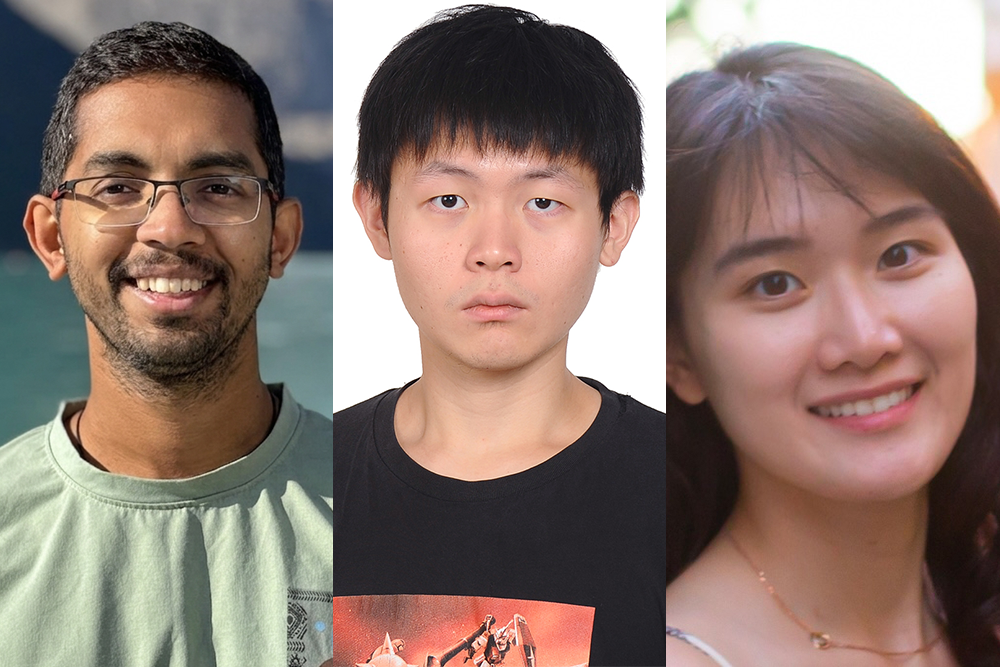
The MIT‑IBM Computing Research Lab (formerly the MIT‑IBM Watson AI Lab) has become a launchpad for researchers eager to move beyond academic papers and into production‑grade systems. Three recent alumni—Zhang‑Wei Hong, Irene Ko, and Srinivasan Arunachalam—illustrate how deep collaborations, shared mentorship, and a focus on practical constraints can accelerate the journey from graduate‑school ideas to enterprise‑ready AI and quantum solutions.
Reinforcement Learning for Real‑World Tasks
Zhang‑Wei Hong entered MIT’s EECS program fascinated by DeepMind’s Atari breakthroughs. Under the guidance of Professor Pulkit Agrawal and the MIT‑IBM Lab, he refined value‑function learning on notoriously hard games like Montezuma’s Revenge. The lab’s resources allowed him to experiment with curiosity‑driven exploration, a technique that encourages agents to seek novel data much like humans do.
At IBM, Hong now leads projects that embed these ideas into enterprise tools—chart reading, database query generation, and test‑case creation for large language models. By integrating evolutionary computing and neuroscience‑inspired updates, his team aims to create agents that can self‑evolve their weights during deployment, a capability that could dramatically reduce the need for manual model retraining.
Trustworthy AI from Lab to Production
Irene Ko’s PhD work on trustworthy AI was funded through the MIT‑IBM partnership from day one. Guided by MIT professor Luca Daniel and IBM principal researcher Pin‑Yu Chen, she focused on making AI systems robust, fair, and safe. After graduating, Ko joined IBM Research and tackled a persistent bottleneck: the difficulty of monitoring internal model signals during inference.
Her solution, the vLLM Hook, is a lightweight plugin that exposes hidden‑state activations and safety scores directly within the inference engine. This enables real‑time detection of prompt‑injection attacks and hallucinations without the overhead of low‑rank adapters. Ko describes the project as “the first bridge between deployment and development in trustworthy AI,” offering a cost‑effective path for enterprises to enforce safety standards.
Quantum Machine Learning with Near‑Term Devices
Srinivasan Arunachalam’s path weaves through quantum theory, learning theory, and practical algorithm design. A post‑doctoral stint with Professor Aram Harrow sparked his interest in quantum speed‑ups, while conversations with IBM’s Isaac Chuang opened doors to hardware‑aware research.
At IBM, Arunachalam concentrated on problems that could run on noisy, near‑term quantum processors—focusing on constraints like nearest‑neighbor connectivity and limited measurement fidelity. His work produced two notable contributions: a rigorous framework for Hamiltonian learning that guarantees accurate reconstruction of quantum dynamics, and a study of quantum kernels that demonstrates potential advantages over classical kernels under standard hardness assumptions. Both papers blend provable theory with hardware‑realistic considerations, exemplifying the lab’s mission to turn abstract quantum ideas into implementable tools.
A Shared Instinct: From Possibility to Utility
Despite operating in distinct subfields, Hong, Ko, and Arunachalam share a common instinct: they constantly probe the gap between what is theoretically possible and what is practically useful. The MIT‑IBM Computing Research Lab provides the connective tissue—access to industry‑scale datasets, engineering expertise, and a culture that rewards translational research. Their stories underscore a broader lesson for academia and industry alike: sustained, structured collaboration can accelerate the creation of “killer applications” that prove the commercial relevance of cutting‑edge research.
---
Takeaway: By fostering deep, cross‑disciplinary partnerships, the MIT‑IBM Computing Research Lab demonstrates how rigorous academic work can be rapidly transformed into AI and quantum technologies that address real‑world challenges.
Source
Read original sourceWhy we picked this
Accepted from curated QuantumUnzipped source (relevance scoring disabled).