Harvard gains $12 million to link quantum computing with artificial intelligence
Harvard has secured a $12 million DOE grant to develop AI‑enhanced quantum error correction with partners from academia and industry.
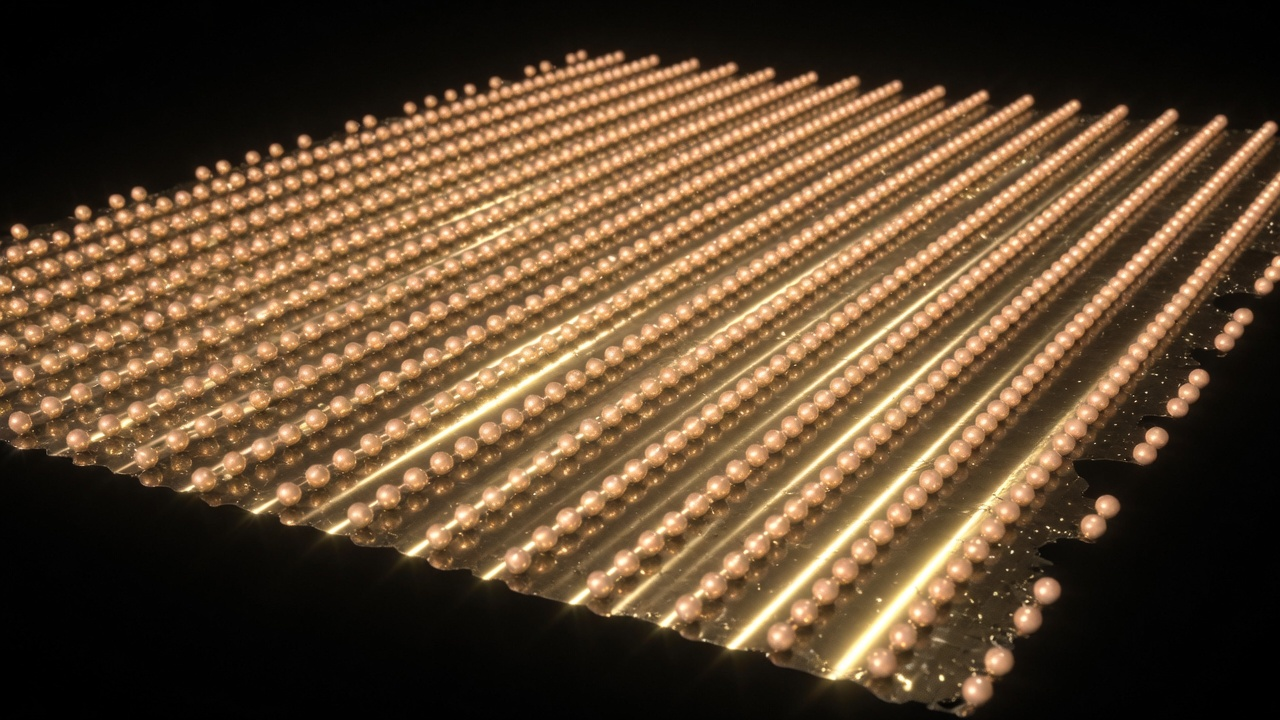
Harvard Wins $12 Million DOE Grant to Fuse Quantum Computing and AI
A new federal grant from the U.S. Department of Energy’s Genesis Mission will fund a Harvard‑led collaboration aimed at marrying quantum error correction (QEC) with artificial‑intelligence techniques. The $12 million award brings together researchers from MIT, Cornell, three national laboratories, and industry partners NVIDIA and Anthropic under the project name Application‑Aware Error Correction Codesign for Scientific Quantum Computing (ASQC).
Why AI‑Driven Error Correction Matters
Quantum computers are notoriously fragile: tiny interactions with the environment cause qubits to lose coherence, leading to computational errors. Recent advances in QEC have shown that, with the right codes, adding more qubits can actually reduce overall error rates, a prerequisite for scaling to useful problem sizes. The Harvard team argues that AI can accelerate this process by learning optimal decoding strategies that traditional software struggles to match.
In an April preprint, the group demonstrated a neural‑network decoder that cut error rates by up to 17 × and ran thousands of times faster than existing decoders. While the preprint is not yet peer‑reviewed, it provides a concrete proof‑of‑concept that machine‑learning models can identify and correct errors in real time, a capability essential for fault‑tolerant quantum computation.
The Collaborative Landscape
The ASQC effort is deliberately interdisciplinary. Harvard’s Joshua and Beth Friedman University Professor Mikhail Lukin—also co‑founder and chief scientist of QuEra Computing—will steer the scientific direction. MIT and Cornell contribute expertise in quantum hardware and algorithm design, while national labs supply access to large‑scale experimental platforms. Industry partners bring complementary strengths: NVIDIA supplies high‑performance GPU infrastructure for training deep networks, and Anthropic offers large‑scale language‑model expertise that can be repurposed for quantum‑state inference.
The collaboration plans to test AI‑designed error‑correction codes on hardware at Harvard, MIT, and QuEra’s neutral‑atom quantum processors. By iterating between simulation, AI model training, and hardware validation, the team hopes to establish a reproducible pipeline for building scientifically useful, fault‑tolerant quantum machines.
Outlook and Impact
If successful, AI‑enhanced QEC could dramatically shorten the time needed to reach logical‑qubit regimes where error rates are low enough for practical algorithms. Lukin envisions a future where quantum computers become “new kinds of telescopes,” probing scientific questions that are currently out of reach—from complex material simulations to high‑energy physics calculations.
The grant also signals a broader policy shift: the DOE is explicitly encouraging partnerships that cross traditional academic‑industry boundaries, recognizing that quantum‑AI integration requires a diverse set of skills and resources. While the funding itself does not guarantee a breakthrough, it provides a focused, well‑resourced platform for tackling one of quantum computing’s most stubborn challenges.
---
The project’s progress will be worth watching, especially as the team moves from preprint results to hardware demonstrations. Continued transparency—through open‑source code, benchmark data, and peer‑reviewed publications—will be key to assessing the real impact of AI on quantum error correction.
Source
Read original sourceWhy we picked this
Accepted from curated QuantumUnzipped source (relevance scoring disabled).