IBM quantum computer solves problem classical computers can’t in just 15 minutes
IBM and University of Chicago demonstrated a 15‑minute quantum computation using 70 logical qubits that outpaces the best classical simulations.
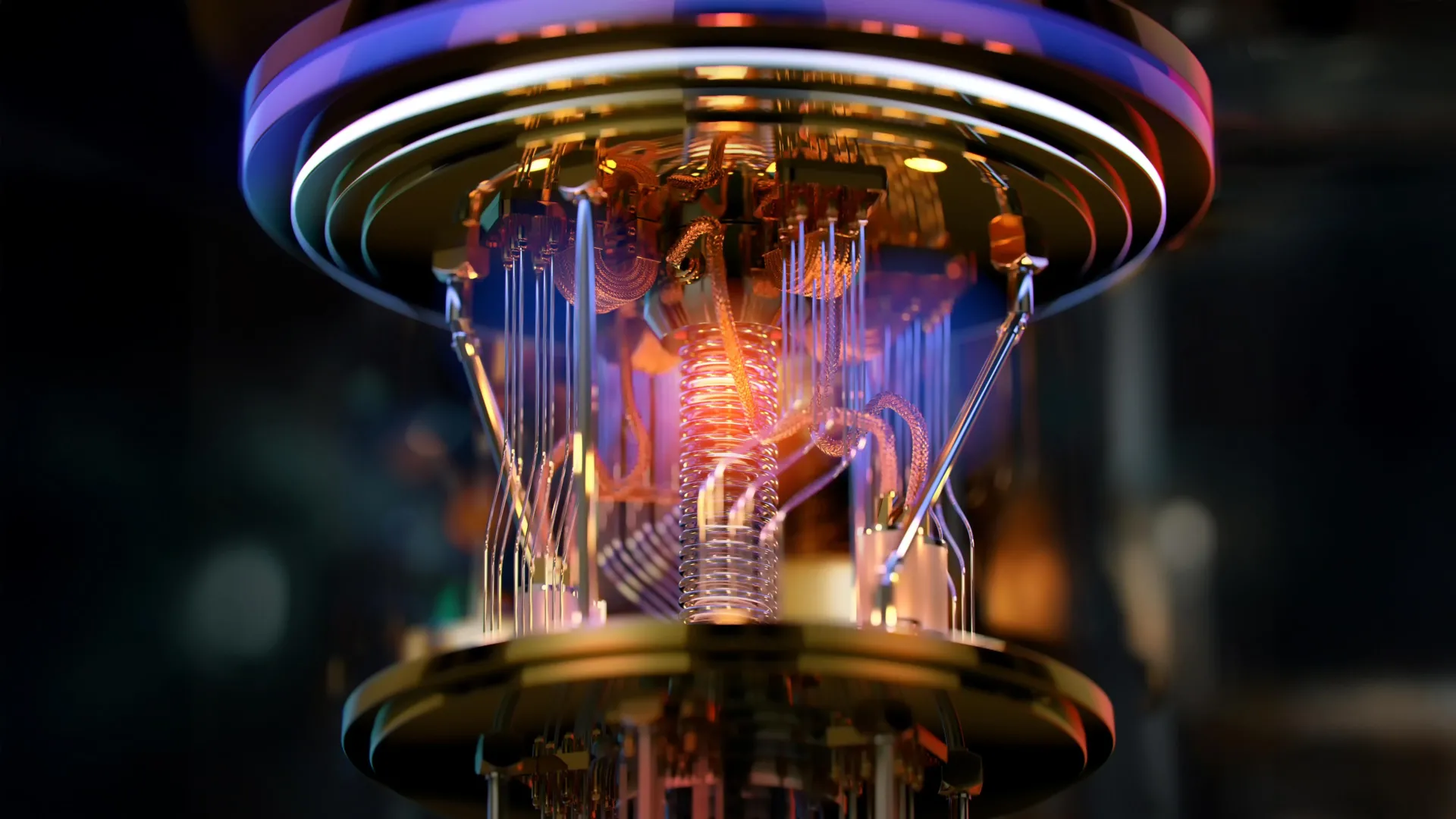
IBM’s 15‑Minute Quantum Advantage
IBM, together with researchers from the University of Chicago, has reported a landmark experiment in which a quantum processor completed a highly complex calculation in roughly 15 minutes—an effort that leading classical simulation methods cannot practically reproduce. The work, described in the pre‑print Sampling hard circuits with verifiably high fidelity, also introduces a verification technique that quantifies confidence in the result, addressing a long‑standing obstacle for quantum advantage claims.
Structured Circuits with Built‑In Error Detection
Traditional quantum‑advantage demonstrations rely on random‑circuit sampling (RCS), which makes it difficult to verify outcomes when classical reproduction is infeasible. IBM’s team replaced the fully random approach with a mathematically structured circuit family that retains the same computational hardness while allowing errors to be detected during execution. This design lets the researchers bound the fidelity of the final quantum state without needing to re‑simulate the entire computation.
70 Logical Qubits and Ten‑Fold Error Reduction
The experiment employed 70 error‑corrected logical qubits, encoded across thousands of physical qubits. Over the course of the run the system performed 2,415 logical two‑qubit gates and 468 logical T‑gates, a scale that surpasses previous logical‑qubit demonstrations. By encoding the computation, the logical error rate was reduced by an order of magnitude relative to the underlying physical error rate, enabling the processor to maintain high fidelity throughout the lengthy operation.
Why Classical Simulators Falter
The authors benchmarked several state‑of‑the‑art classical simulation techniques and found that reproducing the same circuit would require impractically long runtimes, far exceeding the 15‑minute quantum execution. While the task does not yet solve a specific real‑world problem, it satisfies the two core criteria for quantum advantage: (1) a problem beyond practical classical reach, and (2) a statistically verifiable result.
Implications and Next Steps
Jay Gambetta, IBM Research Director, framed the result as a transition into a “quantum‑advantage era,” emphasizing that reliable error correction and result verification are essential for future practical applications. The team has made the circuit specifications and raw data publicly available via the Quantum Advantage Tracker, inviting the broader community to explore and extend the work.
The demonstration marks one of the largest logical‑qubit experiments to date and showcases a viable path toward trustworthy, large‑scale quantum computing. As hardware scales and verification methods mature, such experiments will increasingly bridge the gap between theoretical speedups and practical, industry‑relevant solutions.
--- The article is based on the ScienceDaily release dated 23 Nov 2026 and the associated arXiv pre‑print (Martiel et al., 2026).
Hype check
RealThe paper provides a concrete, peer‑reviewed (arXiv) demonstration with 70 logical qubits and a 15‑minute runtime, matching the headline claim.
- Peer-reviewed paper, or press release only?Paper — arXiv pre‑print cited in the brief
- Error-corrected (logical) qubits, or physical qubits only?Logical / not a qubit claim — 70 logical qubits explicitly reported
- A new milestone, or a rebrand / restatement?New — First demonstration of 70 logical qubits achieving quantum advantage
- Independent confirmation?Not yet — No external replication mentioned in the input
- Does the headline claim match what the source shows?Matches — Headline accurately reflects the 15‑minute quantum computation claim
An editorial assessment of the claim as reported, not a judgment of the company or researchers. How we rate hype →
Source
Read original sourceWhy we picked this
Accepted from curated QuantumUnzipped source (relevance scoring disabled).