IBM Unveils Meter-Scale Superconducting L-Couplers: Connecting Dual 120-Qubit Processors with 99% State Transfer Fidelity
IBM demonstrated meter‑scale superconducting L‑couplers linking two 120‑qubit processors with 99 % state‑transfer fidelity, marking a key step toward modular fault‑tolerant quantum computers.
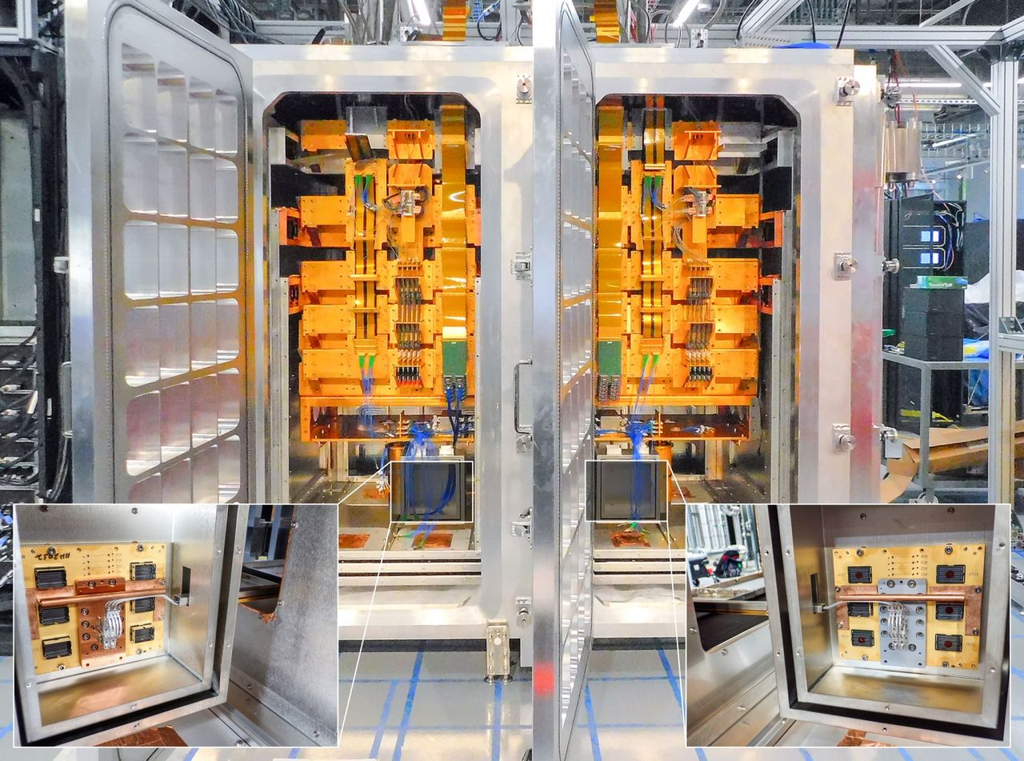
IBM’s Meter‑Scale L‑Couplers Bridge Dual 120‑Qubit Processors
IBM Quantum has unveiled a new interconnect architecture—meter‑scale superconducting L‑couplers—that links two full‑scale 120‑qubit Nighthawk R1 processors inside a shared dilution refrigerator. The prototype achieves an average quantum state‑transfer fidelity of 99.00 % (peaking at 99.29 %) and supports distant two‑qubit CZ gates with a mean fidelity of 94.75 %. This engineering milestone demonstrates that high‑coherence links can be assembled post‑mounting, survive multiple thermal cycles, and operate simultaneously without cross‑talk, laying the physical groundwork for IBM’s planned fault‑tolerant processor, IBM Quantum Starling, slated for 2029.
---
1. Architecture and Key Engineering Choices
- Physical Link: Each L‑coupler consists of an 80 cm aluminum‑aluminum coaxial cable with low‑density PTFE dielectric, operating near 5 GHz. Measured internal quality factors (Qi) average 0.94 × 10⁶, with a single test cable reaching 2.0 × 10⁶.
- Perpendicular Indium Joins: To avoid the perimeter‑consuming wire‑bond approach, IBM introduced a perpendicular cable‑to‑chip mating geometry. Spring‑loaded fixtures press indium‑to‑indium bonds onto the chip surface at room temperature after the processors are secured inside the cryostat. The connections survived three full thermal cycles without measurable degradation.
- Magnetic Shielding: Cooling aluminum cables through their superconducting transition can trap ambient magnetic flux, reducing Qi by a factor of six in a 14 Gauss field. IBM mitigated this by jacketing the coax lines in multi‑layer high‑permeability braids, preserving Qi near 10⁶ in operational environments.
- Coupler Circuitry: Dedicated, frequency‑tunable “L‑qubits” and inductive RF‑SQUID couplers (i2m) provide the link. A negative geometric mutual inductance makes the off‑state coupling first‑order flux‑insensitive, suppressing idle‑dephasing.
---
2. Performance Benchmarks
| Metric | Result | |--------|--------| | State‑Transfer Fidelity | Mean 99.00 % (best 99.29 % ± 0.07 %) | | Distant CZ Gate Fidelity | Mean 94.75 % (best 96.42 % ± 0.28 %) | | Multipartite Entanglement | 4‑qubit GHZ across chips: 77.2 % raw (91.7 % mitigated); 6‑qubit GHZ ring: 67.7 % raw (90.9 % mitigated) |
The dominant error source for state transfer is dephasing of the L‑qubits, accounting for ~77 % of the total error budget. Distant CZ gates combine two state transfers, three local CZ operations, and four single‑qubit gates; the two transfers alone contribute ~53 % of the gate error.
---
3. Trade‑offs and Path Forward
While on‑chip transmon gates routinely exceed 99.5 % fidelity, the distant CZ fidelity of ~95 % reflects the architectural overhead of using auxiliary L‑qubits as buffers. These L‑qubits were fabricated without the full suite of coherence‑optimizing steps to accelerate development, resulting in dephasing times that dominate the error budget. IBM projects that integrating L‑coupler junctions directly into native lattice qubits and extending L‑qubit coherence to ~100 µs could reduce state‑transfer errors below 10⁻³, pushing distant CZ fidelities above 99 %.
From a fault‑tolerant perspective, modular architectures based on quantum LDPC or bicycle codes can tolerate inter‑module link error rates an order of magnitude higher than intra‑module gates while still achieving substantial reductions in physical qubit overhead. The demonstrated 99 % transfer fidelity therefore meets the practical thresholds for near‑term modular error‑correction schemes.
---
4. Strategic Implications for Modular Quantum Computing
IBM’s L‑coupler system addresses a long‑standing bottleneck: the mechanical and thermal constraints of connecting large superconducting chips. By moving the interconnect to a perpendicular, post‑assembly configuration, the design frees chip perimeter for dense 2‑D lattices and enables scalable packaging inside a shared cryostat.
The successful operation of four simultaneous links, each surviving repeated cooldowns, validates the feasibility of a distributed quantum processor where multiple 100‑plus‑qubit modules communicate over meter‑scale links. This modularity is central to the Starling roadmap, which envisions a fault‑tolerant processor built from interconnected modules rather than a monolithic chip.
---
Closing Thoughts
IBM’s meter‑scale superconducting L‑couplers represent a concrete step from laboratory‑scale, few‑qubit interconnect experiments to production‑grade, multi‑module quantum hardware. Achieving 99 % state‑transfer fidelity and demonstrating multipartite entanglement across modules shows that the physical layer needed for modular fault‑tolerant quantum computing is within reach. Continued improvements in L‑qubit coherence and tighter integration of coupler circuitry are expected to close the fidelity gap with on‑chip gates, bringing the vision of scalable, distributed quantum supercomputers closer to reality.
Source
Read original sourceWhy we picked this
Accepted from curated QuantumUnzipped source (relevance scoring disabled).