IEEE Quantum Week 2026
IEEE Quantum Week 2026 highlighted Quantinuum’s advances in quantum hardware, software, and research, underscoring the move toward commercial quantum computing.
IEEE Quantum Week 2026: Where Theory Meets Impact
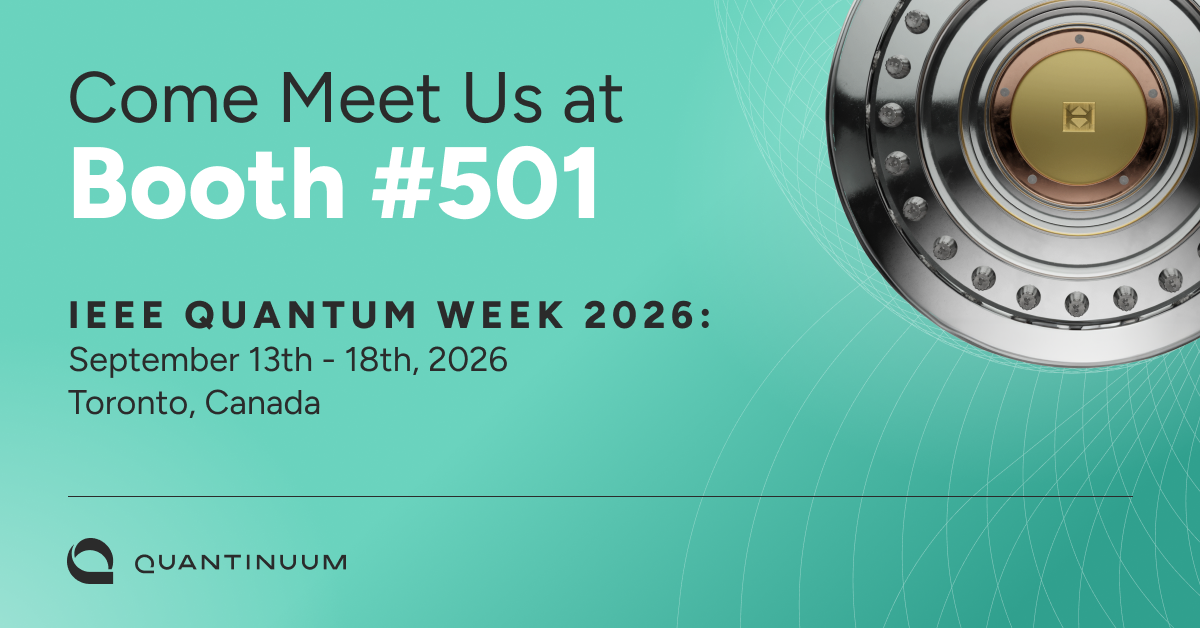
IEEE Quantum Week 2026, held from September 13‑18 in Toronto, Canada, was a convergence of ideas and technology that pushed the boundaries of quantum computing. The event highlighted Quantinuum’s latest hardware, software, and research initiatives, and showcased how the industry is moving from proof‑of‑concept experiments to real‑world applications.
1. Hardware that Drives the Future
Quantinuum’s flagship systems, System Model H1 and System Model H2, represent a leap in qubit architecture. H1 uses a linear layout, while H2 adopts a racetrack design that improves qubit connectivity and reduces error rates. The Helios Hardware‑as‑a‑Service offering gives customers flexible access—on‑premise, in the cloud, or hybrid—making high‑performance quantum machines available to a broader audience. The company’s accelerated roadmap, unveiled during the week, outlines milestones for scaling qubit counts, integrating error‑correction codes, and delivering commercial‑grade reliability.
2. Software Stack for Real‑World Workloads
Quantinuum’s Guppy language, hosted in Python, enables developers to program next‑generation quantum computers with a familiar syntax. Complementing Guppy, TKET offers gate‑level circuit optimization, while Lambeq explores the intersection of quantum theory and natural language. The Quantum Origin QRNG provides cryptographic‑grade randomness, and InQuanto accelerates quantum‑chemical simulations for complex molecules. The beta Nexus platform consolidates these tools into an all‑in‑one interface, streamlining the workflow from algorithm design to execution.
3. Research, Education, and Community
The week’s sessions spanned a wide spectrum of topics—from AI‑driven circuit synthesis to fault‑tolerant compilation. Keynote speakers, including Quantinuum’s CEO Dr. Rajeeb Hazra, emphasized the need for shared benchmarks and logical performance metrics to guide the next era of error correction. Workshops on QGenAI, Q3‑Control, and AI for circuit optimization highlighted the synergy between generative AI and quantum hardware.
Beyond the conference, Quantinuum’s InQuanto Summer School in Cambridge brought together researchers from chemistry and quantum computing to build a shared language and practical skill set. The program’s success underscores the importance of interdisciplinary training for translating quantum theory into commercial solutions.
4. Looking Ahead
IEEE Quantum Week 2026 demonstrated that quantum computing is no longer confined to laboratories. With robust hardware, a mature software stack, and a growing ecosystem of researchers and developers, the industry is poised to deliver tangible benefits in materials science, cybersecurity, and AI. Quantinuum’s integrated approach—combining hardware, software, and services—positions it as a leader in the transition to fault‑tolerant, commercial quantum computing.
TL;DR: IEEE Quantum Week 2026 showcased Quantinuum’s cutting‑edge quantum hardware, software, and research, highlighting the company’s role in accelerating the shift from experimental prototypes to real‑world quantum applications.
Source
Read original sourceWhy we picked this
Accepted from curated QuantumUnzipped source (relevance scoring disabled).