In ‘Quantum 101’ Session, WTO Trade Officials Hear Quantum Encryption Window May Close Within Five Years
WTO officials were warned that current encryption protecting global trade could be broken by quantum computers within five years, prompting calls for international standards and rapid migration to quantum‑safe cryptography.
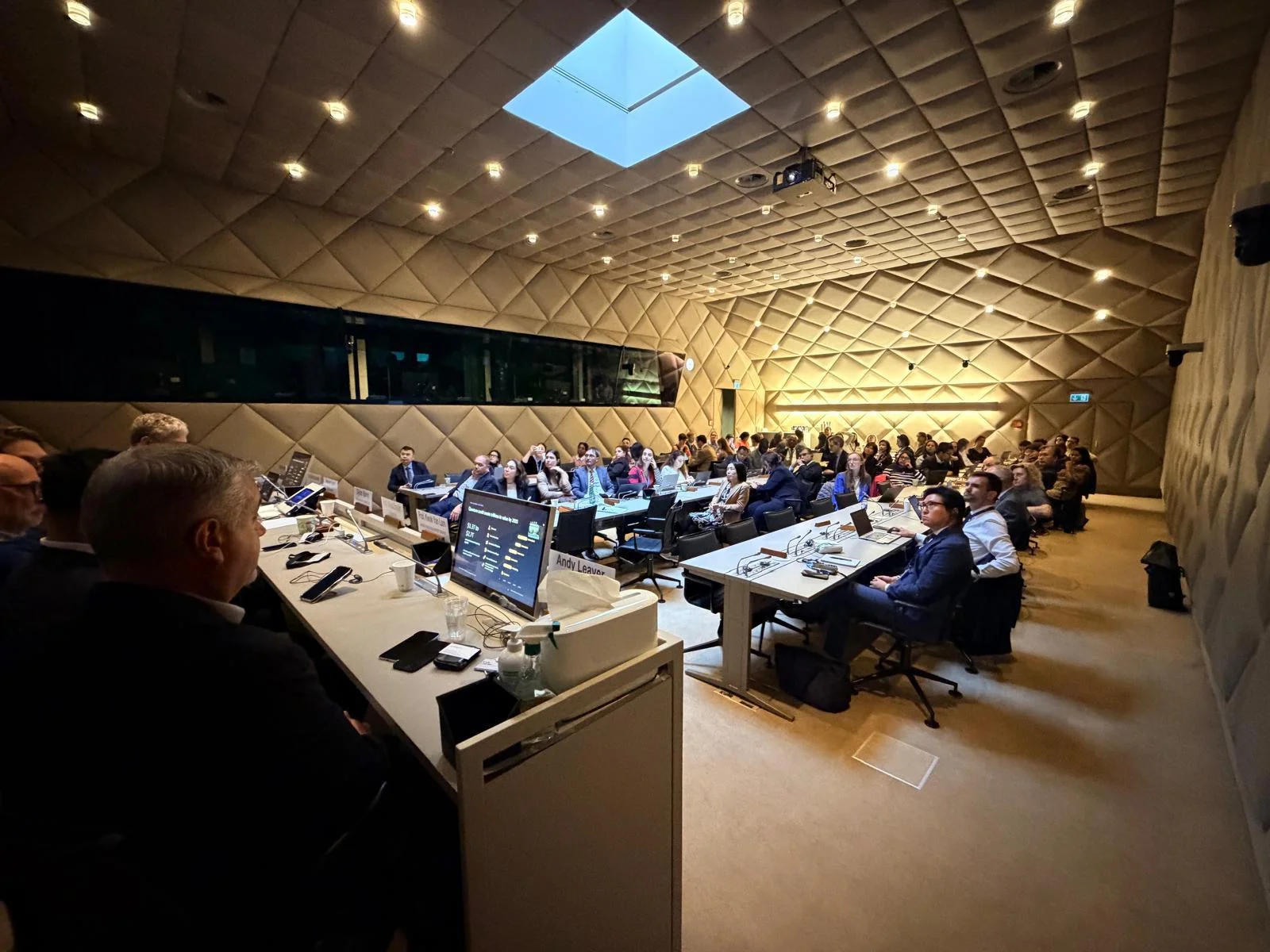
Quantum Encryption: A Five‑Year Deadline for Global Trade
The World Trade Organization’s recent “Quantum 101” session in Geneva highlighted a looming security gap: quantum computers could render today’s encryption obsolete in as little as five years. Delegates from dozens of member nations heard from industry leaders, academics, and government representatives about the stakes for trade finance, customs filings, e‑signatures, and cross‑border payments, and left with a clear mandate to start defining what “quantum‑safe” means for the multilateral trading system.
---
1. Why Encryption Matters for Trade
Miriam Shtilman‑Lavovski of Tal Ventures opened the discussion by emphasizing that trust in international commerce is built on encryption. Payments, letters of credit, customs data, and digital signatures all rely on cryptographic protocols that assume classical computers cannot efficiently solve certain mathematical problems. If a sufficiently powerful quantum computer can break those assumptions, data transmitted today becomes vulnerable to future decryption – the classic “harvest now, decrypt later” scenario.
Shtilman‑Lavovski noted that government spending on quantum research exceeds $60 billion, with the majority concentrated in five countries, and that private investment totals roughly $18 billion. The concentration of funding mirrors the concentration of quantum patents—about 90 % originate from just eleven nations—raising concerns about a “quantum divide” that could create a two‑tier financial system where only some banks are quantum‑safe.
---
2. The Technical Threat and a Proven Remedy
Klaus Ensslin, professor of physics at ETH Zurich and head of the Swiss National Quantum Commission, reminded the audience that current security rests on unproven assumptions. While no mathematical proof guarantees the safety of today’s algorithms, quantum‑key‑distribution (QKD) offers a mathematically proven alternative and has been commercially available for about a quarter of a century.
Ensslin estimated a three‑to‑five‑year horizon for a quantum computer capable of breaking widely used public‑key schemes such as RSA and ECC. He stressed that quantum computers will complement, not replace, classical machines, meaning the transition will require layered defenses rather than a single technological leap.
---
3. Policy Responses and Industry Action
Andy Leaver, CEO of Arqit, framed the migration to quantum‑safe systems as a bottom‑up overhaul of the security stack. He cited the U.S. Executive Order 14412 (June 2026), which mandates federal systems to adopt post‑quantum cryptography by December 2030 and ties compliance to supply‑chain eligibility. The European Union is reportedly drafting similar requirements.
Leaver also highlighted the synergy between AI and quantum research, noting that AI tools are now being used to probe weaknesses in candidate post‑quantum algorithms. This cross‑disciplinary pressure is accelerating both standard‑setting and commercial deployment of quantum‑resistant solutions.
---
4. Toward a Shared Definition of “Quantum‑Safe”
Kwok Yan Lam of Nanyang Technological University stressed the need for a common vocabulary across borders and sectors. Without agreed‑upon definitions, standards, and interfaces, trade finance systems cannot reliably interoperate with banking networks that may adopt different quantum‑safe protocols.
Lam called for international coordination on best practices, drawing parallels to existing WTO work on technical barriers to trade and supply‑chain security. He warned that fragmented standards could exacerbate the quantum divide and hinder the smooth flow of goods and services.
---
5. What Comes Next for the WTO?
Panel moderator Dylan Barry fielded questions about the impact of quantum computing on AI data‑center investments, concluding that AI‑related capex remains a higher priority for most delegations over the next five years. Nonetheless, the WTO’s role could evolve to facilitate multilateral dialogue, support capacity‑building for smaller economies, and help draft global standards for quantum‑safe trade infrastructure.
In closing, Swiss deputy permanent representative Hervé Lohr identified services, technical barriers, development, and supply‑chain security as key WTO domains where quantum considerations will surface, and urged members to develop a shared lexicon for “quantum safe.”
---
Practical Takeaways
- Start inventorying all cryptographic assets used in trade‑related processes and assess their quantum vulnerability.
- Engage with national quantum strategies to align timelines for post‑quantum migration with international trade obligations.
- Participate in standard‑setting bodies (e.g., ISO/IEC, NIST) to help shape interoperable quantum‑safe protocols.
- Invest in quantum‑key‑distribution pilots where high‑value transactions demand the strongest guarantees.
- Monitor policy developments in major economies, especially the U.S. and EU, to anticipate compliance deadlines.
The WTO’s “Quantum 101” session was a first step, but the five‑year window is closing fast. Coordinated action now can prevent a future where the backbone of global commerce is exposed to quantum‑enabled attacks.
Source
Read original sourceWhy we picked this
Accepted from curated QuantumUnzipped source (relevance scoring disabled).