Josephson amplifier creates honeycomb, square lattices
Researchers used a Josephson parametric amplifier to generate 191‑mode microwave continuous‑variable cluster states in honeycomb and square lattice geometries.
Microwave Cluster States Take a Lattice Turn
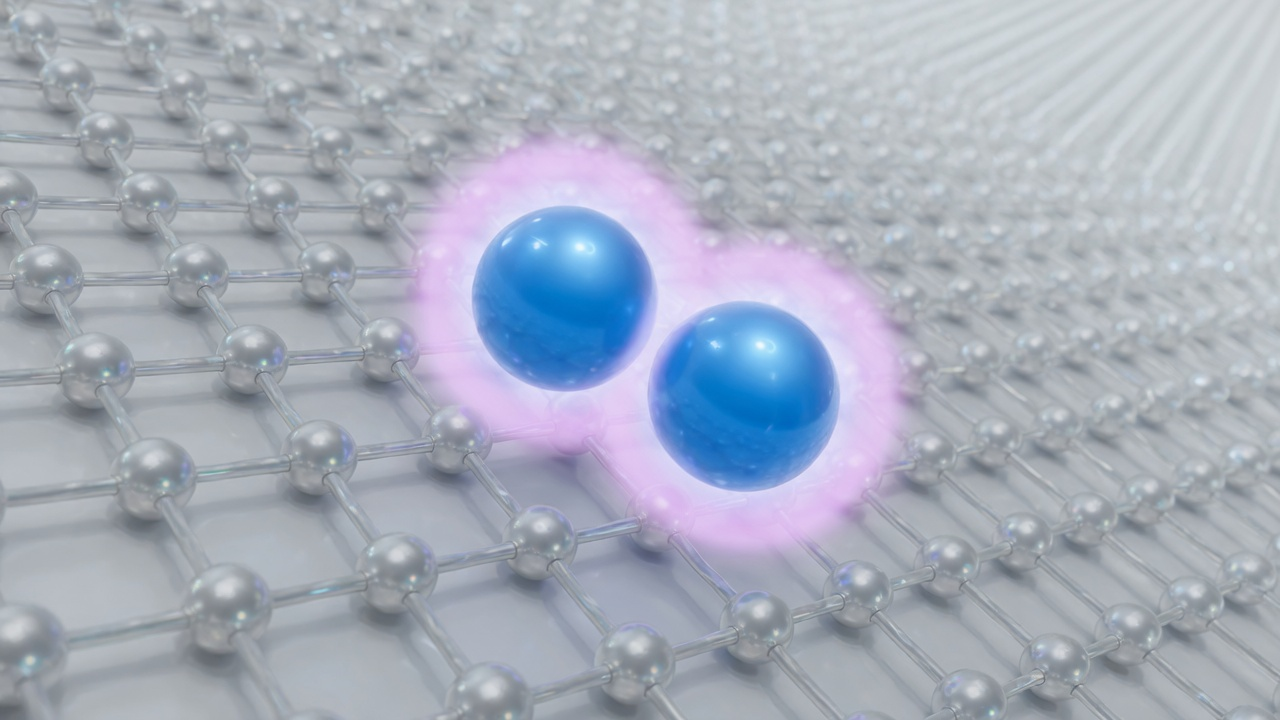
A team led by Fabio Lingua, Michele Cortinovis, J. C. Rivera Hernández and David B. Haviland at KTH Royal Institute of Technology (in collaboration with Politecnico di Milano) has demonstrated the experimental creation of two‑dimensional continuous‑variable (CV) cluster states spanning 191 microwave frequency modes. By driving a Josephson parametric amplifier (JPA) with carefully engineered pump tones, the researchers sculpted the entanglement graph into either a honeycomb or a square lattice, marking a clear step toward scalable measurement‑based quantum computation in the microwave domain.
---
Engineering Lattice Geometry with Pump Tones
The core of the experiment is a JPA operated near twice its resonant frequency. The team injected a sum of coherent tones—three tones for the honeycomb lattice and four tones for the square lattice. Adjusting the frequencies, amplitudes, and phases of these pumps controls the interference between mixing products, which in turn determines which microwave modes become correlated. A specific phase shift (π) on one pump tone suppresses diagonal connections, refining the square lattice’s geometry. This pump‑driven interference enables the creation of non‑trivial graph topologies without changing the hardware layout.
---
Verifying Entanglement with Nullifier Squeezing
To confirm the quality of the generated states, the authors performed a nullifier test, measuring the variance of specific linear combinations of quadratures. They reported ‑1.2 dB of squeezing in the nullifiers for both lattice types—a clear signature of strong quantum correlations across the 191 modes. The covariance matrix, assembled from averaged quadrature products, was used to compute the adjacency matrix that defines the graph structure. Analysis showed negligible hidden entanglement (no significant correlations beyond the intended graph) at the optimal squeezing level, reinforcing the fidelity of the engineered states.
---
Scaling Up from Prior Work
Earlier work from the same group demonstrated a 94‑mode CV cluster state with ‑1.4 dB squeezing. The present experiment more than doubles the mode count and adds the ability to switch between distinct lattice topologies on a single platform. This scalability is crucial because two‑dimensional lattices, especially square lattices, are known to be universal resources for measurement‑based quantum computation.
---
Outlook: Toward Microwave‑Based Quantum Processors
The ability to program lattice geometry via pump parameters opens a pathway to tailor‑made quantum resources for specific algorithms. In superconducting circuits, where microwave photons are the natural carriers, such CV cluster states could be integrated with existing qubit architectures, providing a hybrid route to fault‑tolerant computation. Future work will likely focus on increasing squeezing depth, reducing loss, and interfacing the CV resource with discrete‑variable qubits.
---
Practical take‑away: The experiment proves that a single JPA can generate large‑scale, configurable CV cluster states, offering a versatile building block for next‑generation quantum processors that operate in the microwave regime.
Hype check
RealThe paper presents a concrete 191‑mode CV cluster state with measured -1.2 dB squeezing and lattice control, backed by a DOI reference.
- Peer-reviewed paper, or press release only?Paper — DOI link to the published paper is provided
- Error-corrected (logical) qubits, or physical qubits only?Logical / not a qubit claim — Not a qubit‑count claim; focuses on CV modes
- A new milestone, or a rebrand / restatement?New — 191 modes and lattice control exceed prior results
- Independent confirmation?Not yet — No external replication mentioned in the input
- Does the headline claim match what the source shows?Matches — Headline accurately reflects the creation of honeycomb and square lattices
An editorial assessment of the claim as reported, not a judgment of the company or researchers. How we rate hype →
Source
Read original sourceWhy we picked this
Accepted from curated QuantumUnzipped source (relevance scoring disabled).