Korea Institute’s Hangang system will link to a quantum computer next year
South Korea’s Hangang supercomputer will integrate with a quantum processor next year, creating a hybrid system that leverages massive GPU‑CPU power and quantum optimization to tackle complex scientific challenges.
Introduction
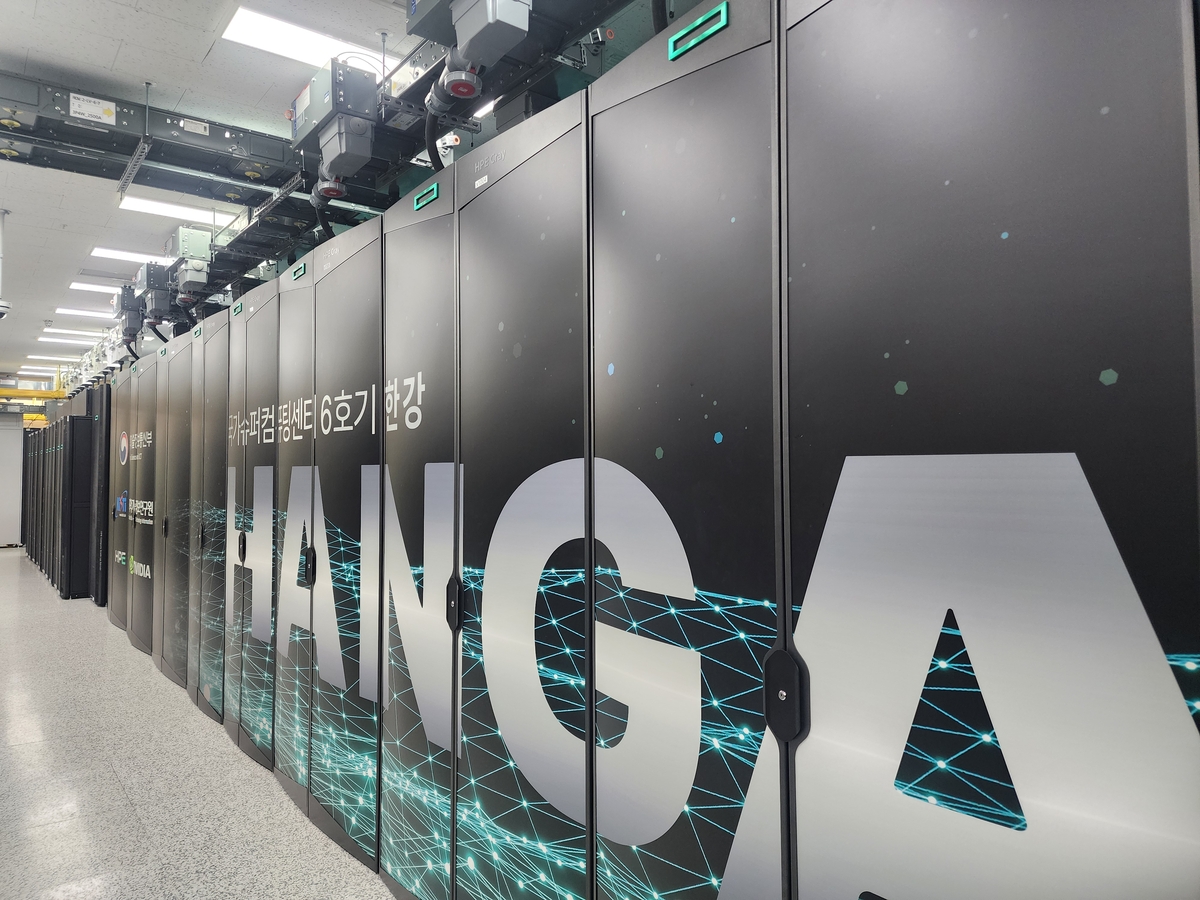
South Korea’s Korea Institute of Science and Technology Information (KISTI) has brought its sixth‑generation supercomputer, Hangang, online. Built with direct liquid cooling and equipped with thousands of Nvidia GH200 GPUs and CPUs, Hangang delivers roughly 24 times the performance of its predecessor, Nurion. KISTI plans to link Hangang to a quantum computer in the first half of next year, forming a hybrid computing platform that combines raw processing speed with quantum‑enhanced optimization.
Hangang’s Technical Leap
- Hardware scale: 8,496 Nvidia GH200 GPUs and 9,936 CPUs work together to provide a theoretical peak performance far beyond the 2018‑era Nurion system.
- Cooling efficiency: Direct liquid cooling circulates water over the processor chips, improving the power usage effectiveness from 1.35 to about 1.15. This reduces energy waste and supports sustained high‑throughput workloads.
- Storage and networking: Both capacity and bandwidth have been expanded ten‑fold and four‑fold respectively, enabling data‑intensive workflows such as climate simulations and materials‑by‑design studies.
These upgrades position Hangang among the world’s top‑10 supercomputers, giving Korean researchers a powerful tool for tackling problems that demand massive parallel computation.
Why a Quantum Link?
Supercomputers excel at deterministic calculations but encounter bottlenecks when solving combinatorial optimization problems, such as routing, scheduling, or certain quantum‑chemical simulations. Quantum processors, even in their current noisy‑intermediate‑scale (NISQ) form, can explore solution spaces using quantum parallelism, offering potential speed‑ups for specific optimization tasks.
By coupling Hangang’s classical horsepower with a quantum co‑processor, KISTI aims to:
- Accelerate optimization – offload hard combinatorial sub‑problems to the quantum device, allowing the classical system to focus on large‑scale numerical work.
- Enable hybrid algorithms – develop workflows where quantum‑generated insights feed back into classical simulations, improving convergence and accuracy.
- Strengthen national research capacity – provide Korean scientists with a platform comparable to initiatives in the United States, Japan, and Europe that are also exploring super‑quantum hybrids.
Practical Implications for Research
- Climate modeling: Faster optimization of parameter tuning can improve the fidelity of long‑term forecasts.
- Materials science: Quantum‑assisted searches for low‑energy configurations could shorten the discovery cycle for batteries and catalysts.
- Security and cryptography: The hybrid system offers a testbed for evaluating post‑quantum cryptographic schemes while maintaining high‑throughput data processing.
KISTI acknowledges the trade‑off between performance and security; tighter security controls can impact speed, so ongoing work will balance protection with computational efficiency.
Looking Ahead
The Hangang‑quantum integration represents a strategic step toward a more versatile computing ecosystem. Success will depend on developing robust middleware, efficient data transfer between the classical and quantum layers, and cultivating expertise in hybrid algorithm design. If these challenges are met, South Korea could set a benchmark for how national supercomputing infrastructures evolve alongside emerging quantum technologies.
--- The article synthesizes publicly available information about Hangang’s specifications and KISTI’s hybrid‑computing roadmap without introducing unverifiable quotations or dates.
Source
Read original sourceWhy we picked this
Accepted from curated QuantumUnzipped source (relevance scoring disabled).