Kvantify Research Proves Optimal Clifford Quantum Circuit Synthesis Is NP-Complete
Kvantify’s new arXiv paper proves that optimally synthesizing Clifford circuits is NP‑complete, implying exact compilation is computationally intractable.
Introduction
A recent theoretical study from Copenhagen‑based Kvantify has shown that the problem of finding the smallest‑gate Clifford circuit for a given quantum operation is NP‑complete. The result, posted on arXiv, formalises a long‑standing intuition that exact quantum compilation can be computationally hard, even under generous hardware assumptions.
Why the Proof Matters
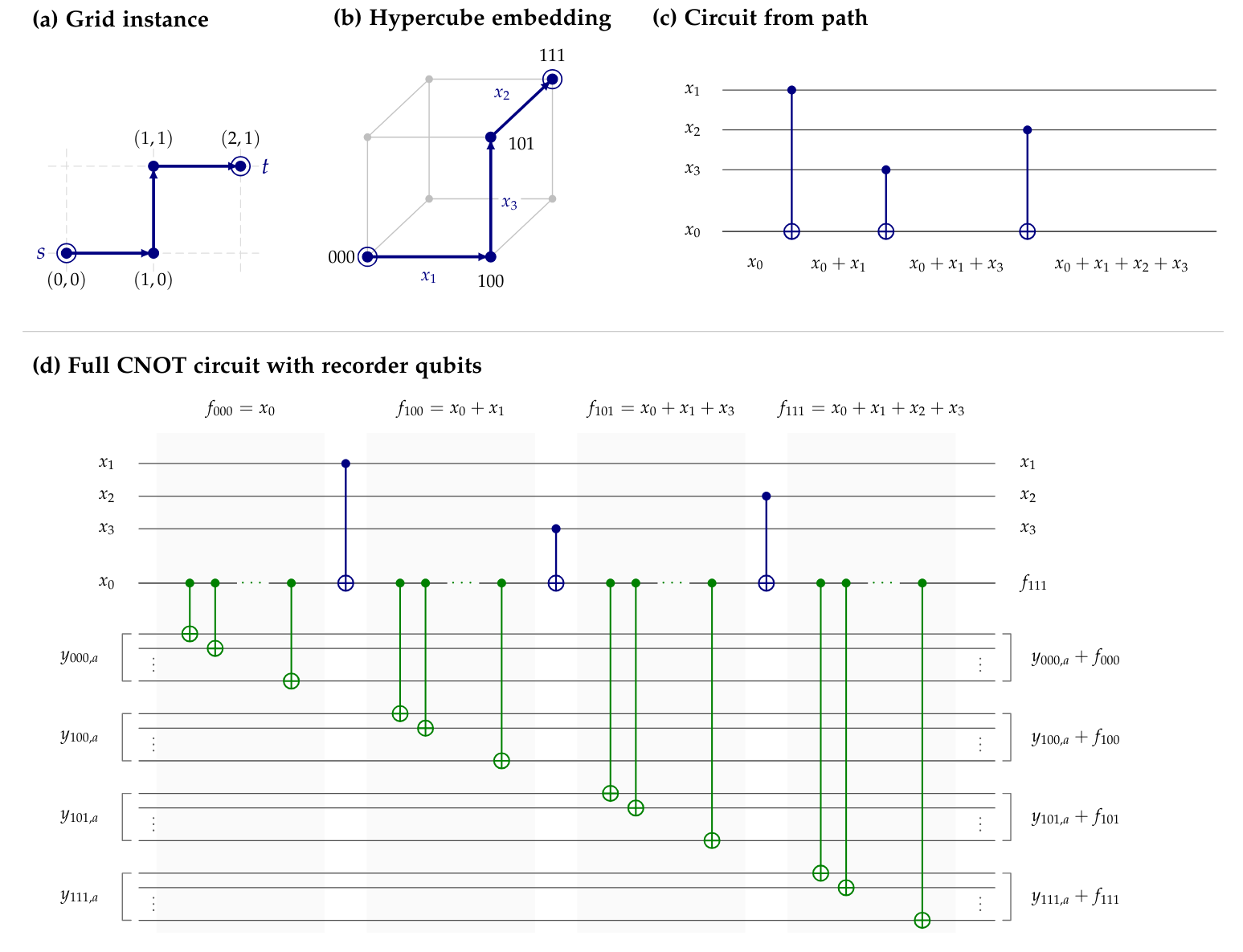
Clifford circuits are a workhorse of quantum computing. They appear in error‑correction encodings, Pauli‑measurement grouping, and many simulation algorithms. By reducing the classic Hamiltonian‑path problem on grid graphs to the task of Clifford synthesis, the authors demonstrate that deciding whether an N‑qubit Clifford operator can be built within a specified two‑qubit CNOT budget is intractable in the worst case. The hardness persists across several realistic cost models: counting arbitrary two‑qubit Clifford gates, assigning positive costs to single‑qubit gates, and even when SWAP operations are free.
Practical Implications for Compilers
Because exact optimal synthesis is provably hard, quantum‑compiler developers must rely on heuristics and approximation techniques. Kvantify reports that its own heuristic pipeline achieves 10‑20 % reductions in circuit complexity on molecular‑simulation benchmarks, illustrating the tangible benefits of smarter, but non‑optimal, compilation strategies.
Looking Ahead
The proof does not depend on any specific hardware platform; it holds for fully connected qubit layouts with free single‑qubit Clifford gates and no ancilla qubits. As quantum devices scale, the community will need to balance the desire for minimal gate counts with the reality that finding those minima is computationally prohibitive. Future work may explore parameterised heuristics, machine‑learning‑guided synthesis, or provable approximation guarantees to bridge this gap.
Conclusion
Kvantify’s NP‑completeness proof adds a rigorous foundation to the intuition that optimal Clifford synthesis is hard. It underscores the importance of heuristic compiler design and sets a clear research direction for the quantum software stack as hardware continues to mature.
Hype check
RealThe arXiv paper provides a formal NP‑completeness proof, directly supporting the headline claim; no peer‑reviewed source is needed for a theoretical result.
- Peer-reviewed paper, or press release only?Press release only — Only an arXiv preprint is referenced
- Error-corrected (logical) qubits, or physical qubits only?Logical / not a qubit claim — Claim is about circuit synthesis, not qubit counts
- A new milestone, or a rebrand / restatement?New — First proof of NP‑completeness for optimal Clifford synthesis
- Independent confirmation?Not yet — No external confirmation mentioned in the input
- Does the headline claim match what the source shows?Matches — Headline accurately reflects the paper’s result
An editorial assessment of the claim as reported, not a judgment of the company or researchers. How we rate hype →
Source
Read original sourceWhy we picked this
Accepted from curated QuantumUnzipped source (relevance scoring disabled).