Liquid metals pass the test for linking quantum modules at 15 millikelvin
Researchers demonstrate that gallium‑based liquid‑metal interconnects reliably link superconducting quantum modules at 15 mK, enabling reusable, plug‑and‑play hardware.
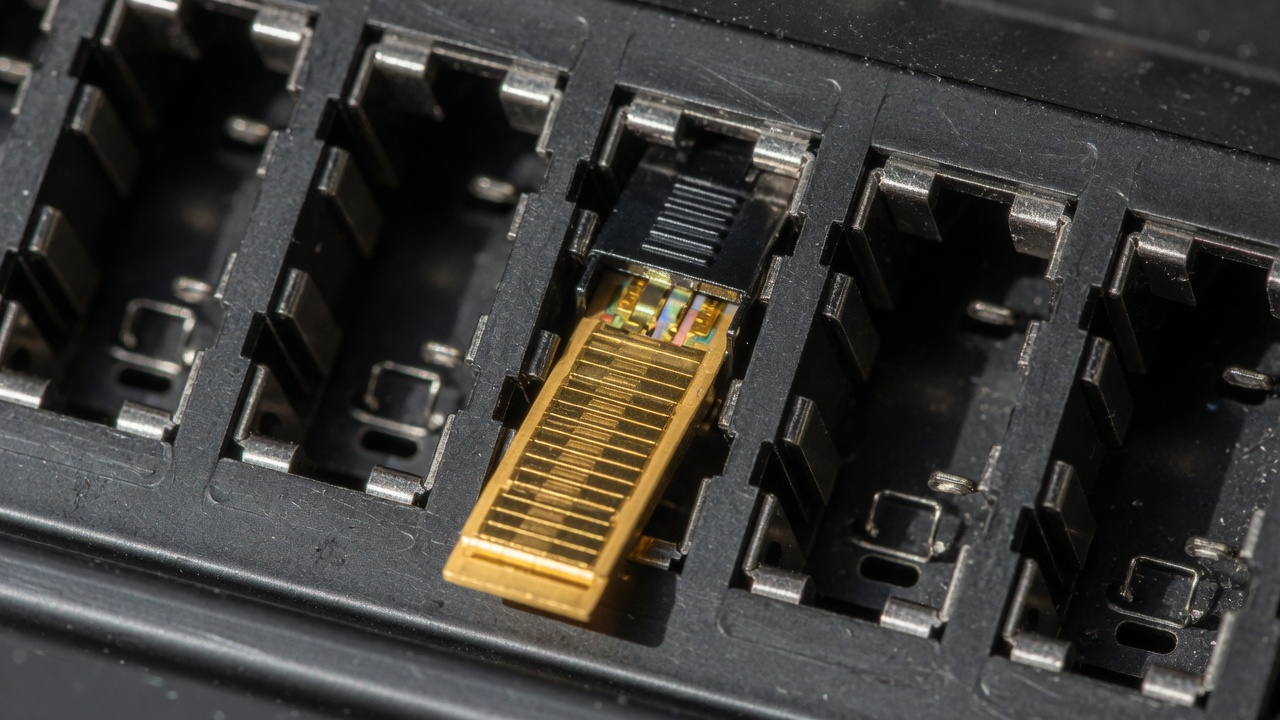
A Cryogenic Bridge for Modular Quantum Processors
A joint team from Boston University and IBM Quantum has shown that micro‑scale liquid‑metal interconnects can maintain high‑quality microwave performance at 15 millikelvin – colder than interstellar space. By using a gallium‑based alloy, the researchers created reconfigurable superconducting links that survive repeated thermal cycles, opening a practical path toward modular quantum processors.
Why Interconnects Matter
Superconducting qubits are exquisitely sensitive to loss and noise. Traditional wire‑bond or flip‑chip connections add fabrication complexity and limit the ability to replace faulty modules without discarding an entire chip. A modular architecture, where individual qubit “tiles” can be swapped in and out, would dramatically improve yield and reduce downtime, but only if the connections remain lossless at the sub‑kelvin temperatures required for quantum coherence.
Liquid Metal as a Plug‑and‑Play Solution
The team fabricated micron‑scale channels filled with a gallium‑indium‑tin alloy. At 15 mK the liquid metal becomes superconducting, providing a low‑impedance path for both signal and ground lines. Key observations include:
- Stable quality factors comparable to conventional coplanar waveguide resonators, even after three full thermal cycles between room temperature and 15 mK.
- Negligible frequency shift when modules are detached, re‑aligned, and re‑bonded, thanks to the self‑aligning nature of the liquid metal and the matching pad geometry.
- Kinetic inductance signatures that match theoretical predictions, indicating that the β‑phase tantalum layer beneath the metal does not introduce unexpected loss mechanisms.
These results suggest that liquid‑metal bridges can be reused without degrading the microwave performance essential for high‑fidelity qubit control and readout.
Implications for Scalable Quantum Hardware
If the approach scales to larger arrays, designers could build quantum processors from interchangeable tiles, each containing a handful of qubits, resonators, and control circuitry. Faulty tiles could be swapped out at room temperature, avoiding costly re‑fabrication of an entire wafer. Moreover, the minimal footprint of the interconnects leaves more real estate for qubits and routing, a critical advantage as chip sizes grow.
Future work will need to quantify loss mechanisms under higher drive powers and explore long‑term reliability over dozens of cycles. Nonetheless, the present study establishes a solid experimental foundation for modular superconducting architectures.
---
The findings appear in the paper “Reconfigurable superconducting quantum circuits enabled by micro‑scale liquid‑metal interconnects” (DOI: http://link.aps.org/doi/10.1103/yc7d-rybf).
Hype check
RealThe paper provides peer‑reviewed data showing stable microwave performance of liquid‑metal links at 15 mK, confirming the headline claim; no external replication is reported but the result is concrete.
- Peer-reviewed paper, or press release only?Paper — DOI link to APS journal article
- Error-corrected (logical) qubits, or physical qubits only?Logical / not a qubit claim — Claim does not involve qubit‑count metrics
- A new milestone, or a rebrand / restatement?New — First demonstration of reusable cryogenic liquid‑metal interconnects
- Independent confirmation?Not yet — No outside verification mentioned in the brief
- Does the headline claim match what the source shows?Matches — Headline accurately reflects the reported test at 15 mK
An editorial assessment of the claim as reported, not a judgment of the company or researchers. How we rate hype →
Source
Read original sourceWhy we picked this
Accepted from curated QuantumUnzipped source (relevance scoring disabled).