Malaria Parasite Caught in the Act of Breaking and Entering
New cryo‑electron microscopy images reveal how malaria parasites build a transient molecular doorway to slip into red blood cells, opening avenues for novel interventions.
Malaria Parasite Caught in the Act of Breaking and Entering
Introduction The malaria‑causing parasite Plasmodium has long been a master of stealth, slipping into red blood cells (RBCs) without leaving a trace. Recent cryo‑electron microscopy work has finally visualized the fleeting “moving junction” – a ring of protein anchors that creates a temporary portal in the host membrane. Understanding this molecular doorway not only satisfies a century‑old curiosity but also points to new strategies for blocking infection.
The Moving Junction: A Molecular Doorway
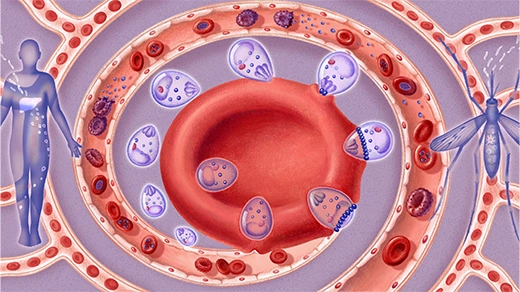
When a merozoite (the invasive stage of Plasmodium) approaches an RBC, it deploys a ring of four protein components that embed in the cell’s lipid bilayer. These proteins act like a gasket, generating electrostatic forces that push lipids aside, locally inverting membrane curvature. The result is a narrow, self‑closing aperture through which the parasite can slide. Within seconds the junction collapses, sealing the membrane behind the invader.
Key observations from the new images:
- Four‑protein anchor complex: Cryo‑EM resolved each subunit, showing how they interlock to form a rigid yet flexible ring.
- Electrostatic remodeling: Charged surfaces on the proteins repel lipid head groups, creating a pressure gradient that deforms the membrane.
- Transient lipid sheath: Some displaced lipids re‑assemble around the parasite, forming a protective coat that may shield it from host defenses.
These details confirm long‑standing hypotheses about the moving junction and provide a concrete structural template for drug design.
From Invasion to Remodeling
Once inside, Plasmodium does not simply sit idle. The parasite rapidly remodels its new home:
- Hemoglobin digestion: Specialized proteases break down the cell’s hemoglobin, providing nutrients while releasing toxic heme that the parasite detoxifies.
- Surface protein switching: The parasite expresses a repertoire of adhesive proteins that periodically change, helping it evade immune detection and causing the characteristic “knobs” that make infected RBCs stick to vessel walls.
- Cytoplasmic expansion: The merozoite transforms into a trophozoite, extending flexible arms that allow it to navigate the crowded intracellular environment.
These changes turn a simple oxygen‑carrying bag into a bustling factory that supports parasite growth and prepares for the next round of invasion.
Implications for Treatment
The moving junction’s protein complex is now a tangible target. Inhibitors that block any of the four anchor proteins could prevent the formation of the portal, stopping invasion outright. Such a strategy would differ from traditional antimalarials that target metabolic pathways after the parasite has entered the cell, potentially reducing the risk of resistance.
Additionally, the structural insights may inform vaccine design. Presenting the junction proteins in a stable, immunogenic form could train the immune system to recognize and neutralize the parasite before it even attempts entry.
Looking Ahead
The breakthrough underscores how advances in imaging— from Laveran’s rudimentary light microscope to today’s cryo‑EM— have driven malaria research forward. By catching Plasmodium in the act of “breaking and entering,” scientists have opened a new front in the fight against a disease that still claims hundreds of thousands of lives each year.
Practical Takeaway Researchers now have a detailed blueprint of the parasite’s entry mechanism. Drug developers should prioritize screening compounds that disrupt the moving junction’s protein interactions, while vaccine teams can explore junction‑based antigens. Continued investment in high‑resolution microscopy will likely reveal further vulnerabilities in the parasite’s life cycle, bringing us closer to eradicating malaria.
Source
Read original sourceWhy we picked this
Accepted from curated QuantumUnzipped source (relevance scoring disabled).