Marcus theory and Marcus practice
Rudy Marcus, a 91‑year‑old professor, taught a transformative chemistry course, developed the widely used Marcus theory of electron transfer, and continued to mentor and explore science well into his 90s, leaving a legacy of curiosity and lifelong learning.
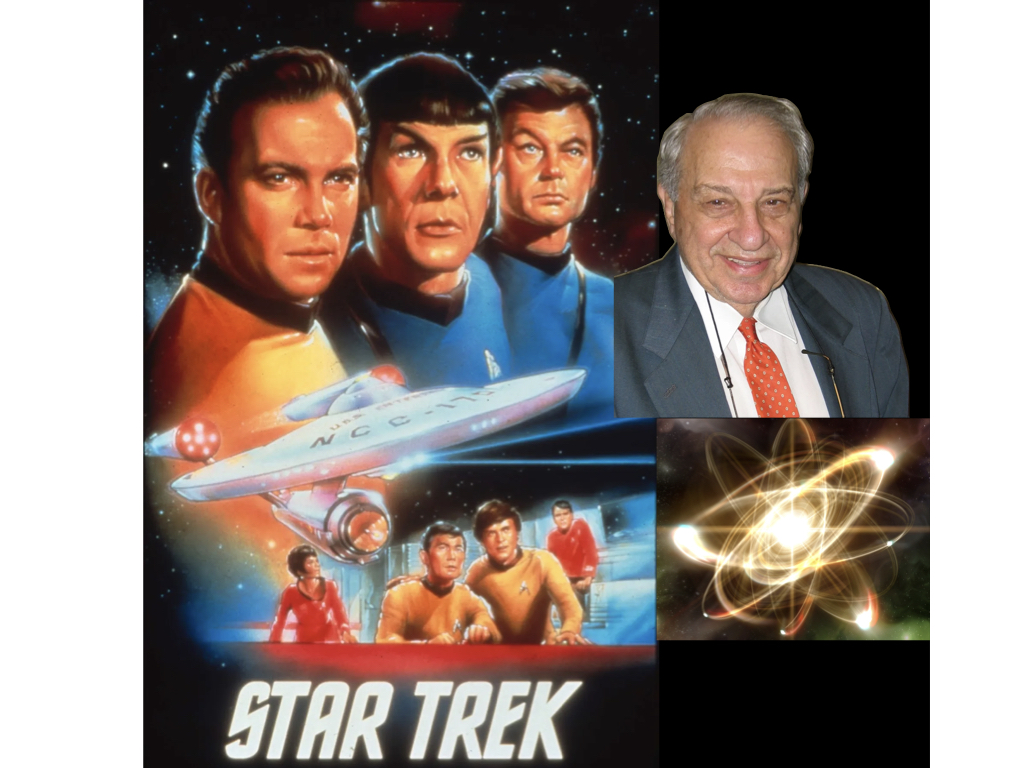
Marcus Theory and Marcus Practice
The story of Rudy Marcus is one of lifelong curiosity, humility, and a relentless drive to teach. At 91 he was still running a graduate‑level chemistry course, and at 98 he was coordinating a research group over Zoom. His legacy lives on in two intertwined ways: the Marcus theory that predicts electron‑transfer rates, and the Marcus practice of keeping science alive through mentorship and exploration.
1. A Classroom that Revived History
When I enrolled in Chemistry 166 during my second spring of PhD, I expected a modern, jargon‑heavy curriculum. Instead, Rudy began with Boltzmann’s H‑theorem, the first published argument for the second law of thermodynamics. Re‑deriving it felt like holding a lace collar worn by Queen Elizabeth I—an intimate encounter with the past. He then guided us through the Fokker–Planck and Langevin equations, the mathematical backbone of Brownian motion, and the fluctuation–dissipation theorem, which links equilibrium correlations to nonequilibrium responses.
The course was a masterclass in re‑derivation. Every result was rebuilt from scratch, not just quoted from a textbook. This approach left a lasting imprint: whenever I face a complex integral in statistical mechanics, I recall Rudy’s step‑by‑step treatment. The final project—quantum master equations—was a natural extension of the themes we had explored, and it later appeared in a Quantum Frontiers post.
2. The Essence of Marcus Theory
Rudy’s most celebrated contribution is the Marcus theory of electron transfer. While the original article is concise, its implications are profound: it provides a quantitative framework for predicting how quickly an electron can hop between two molecules. The theory balances two opposing forces—electrostatic reorganization and electronic coupling—to determine the activation energy of the transfer.
What makes Marcus theory remarkable is its universality. It applies to a wide range of systems, from biochemical redox reactions to photovoltaic devices. The theory’s predictive power stems from its elegant use of free‑energy landscapes and the assumption that nuclear motions can be treated classically while electronic transitions remain quantum mechanical.
Although I have not yet mastered the mathematical details, I can appreciate how Marcus theory bridges chemistry and physics. It exemplifies how a simple, well‑posed model can unlock understanding across disciplines.
3. The Practice of Lifelong Mentorship
Rudy’s influence extended far beyond the lecture hall. Even after the course ended, he remained an active collaborator, asking for updates on quantum information theory—a field he did not directly work in. In 2022, when I reached out to send him a holiday card, he replied that he was still working from home, meeting twice a week with a small research group. At 98, he was coordinating research, mentoring students, and exploring new ideas.
His speech at a wedding in honor of a young applied‑physics PhD student is a testament to his enduring enthusiasm. He urged the groom to keep exploring, reminding him that “plenty of science remains to be done.” This simple advice encapsulates the Marcus practice: a commitment to curiosity, learning, and the mentorship of the next generation.
4. A Legacy for the Future
Rudy Marcus passed away in July, just five days before his 103rd birthday. His death was a loss to the scientific community, but his legacy lives on in the students he taught and the theories he developed. For those of us who have benefited from his teaching, the next step is to practice what he taught: to re‑derive, to question, and to mentor.
In my own research, I aim to re‑imagine 19th‑century thermodynamics through the lens of quantum information theory—a field I call quantum steampunk. By combining historical insight with modern tools, I hope to honor Rudy’s spirit of exploration.
Closing Thoughts
Rudy Marcus showed that age is no barrier to learning or teaching. His life reminds us that science is a conversation across generations. Whether through the elegant equations of Marcus theory or the everyday practice of mentoring, his impact endures. The next generation of scientists can learn from his example: keep asking questions, keep re‑deriving, and keep sharing knowledge.
---
TL;DR: Rudy Marcus, a 91‑year‑old professor, taught a transformative chemistry course, developed the widely used Marcus theory of electron transfer, and continued to mentor and explore science well into his 90s, leaving a legacy of curiosity and lifelong learning.
Source
Read original sourceWhy we picked this
Accepted from curated QuantumUnzipped source (relevance scoring disabled).