Multi-mode beams offer a new way to test quantum operations
Compound multi‑mode beams let researchers directly compare photon‑addition and photon‑subtraction operations, revealing beam‑type‑dependent pathways to generate nonclassical light for quantum technologies.
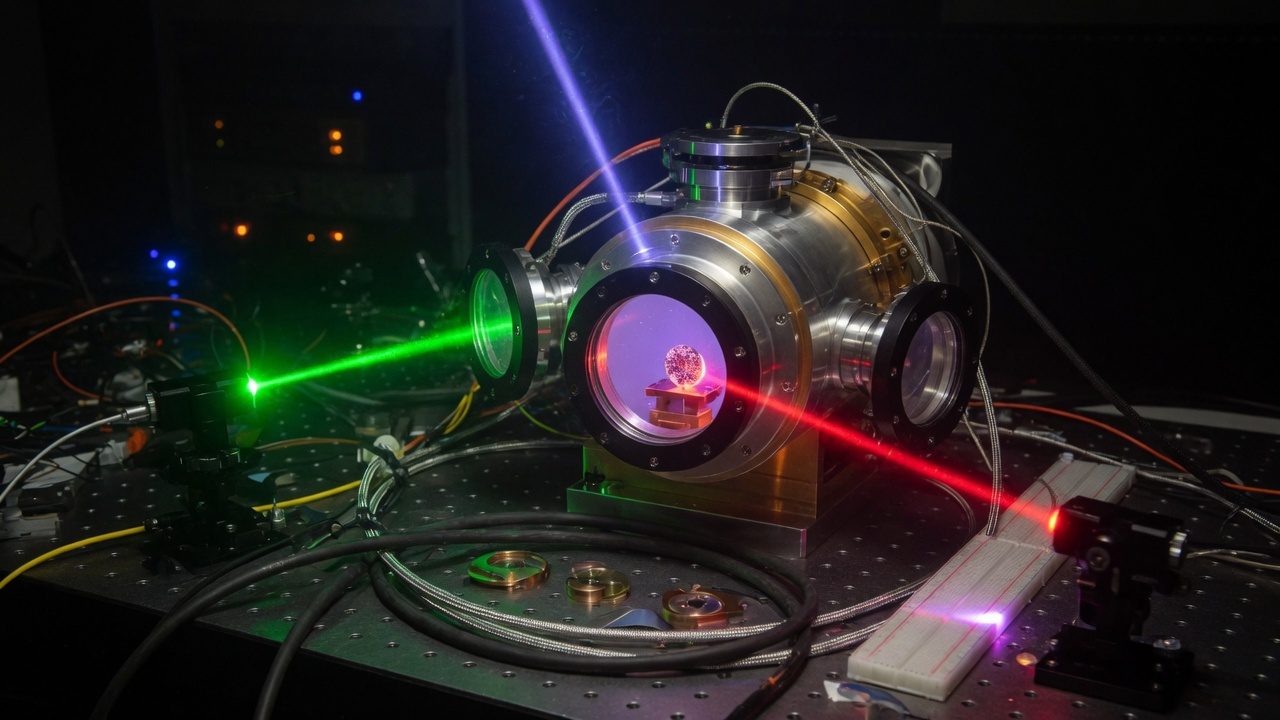
Multi‑Mode Beams: A Versatile Testbed for Quantum Operations
Recent work from Ivy Delaney, Kishore Thapliyal and colleagues at the University of Oslo demonstrates how compound multi‑mode beams can simulate a range of quantum operations on a single, adaptable light source. By adding or subtracting up to twenty photocounts, the team provides a systematic, quantitative comparison of photon‑addition versus photon‑subtraction across three representative optical fields: multi‑mode twin beams, thermal states, and sub‑Poissonian states. The results clarify which technique best enhances nonclassicality for each beam type, offering a practical guide for designing quantum‑communication, metrology, and information‑processing protocols.
---
1. Why Compound Beams Matter
Traditional experiments often require distinct light sources for each quantum operation, making direct performance comparisons difficult. Compound beams are built from elementary experimental blocks detected within simultaneous detection windows, creating correlated structures that mimic the statistical properties of more complex quantum states. This approach yields a single, highly tunable source that can be reconfigured on‑the‑fly to emulate photon‑addition, photon‑subtraction, or other operations without changing the underlying hardware.
Key advantages:
- Broad intensity range – beams can be adjusted over two orders of magnitude, enabling tests from near‑vacuum to relatively bright regimes.
- Temporal multiplexing – weak twin beams are measured in successive windows, reproducing the statistics of multi‑photon processes in real time.
- Scalability – the method works with spatially‑resolved photon‑number‑resolving detectors, making it compatible with existing laboratory setups.
---
2. Photon Addition vs. Subtraction: Beam‑Specific Insights
Twin Beams (Entangled Multi‑Mode States)
- Photon subtraction outperforms addition, delivering higher non‑Gaussian character (τₚ > 0.5) at low mean photon numbers per mode.
- Temporal photon‑pair correlations enable nearly ideal addition when post‑selection is applied, but subtraction remains the more robust route for enhancing entanglement.
Thermal States (Classical‑Like Light)
- Photon addition is the dominant strategy, converting a classical intensity distribution into a distinctly nonclassical one.
- Adding up to twenty photons shifts the photon‑number statistics sufficiently to cross the non‑Gaussian threshold.
Sub‑Poissonian States (Already Nonclassical)
- Both addition and subtraction can increase nonclassicality, but addition yields a larger τₚ increase when the initial mean photon number is very low.
- The effect tapers off as intensity grows, highlighting the importance of operating in the low‑photon regime.
These findings overturn the notion of a universal “best” operation; instead, the optimal technique hinges on the initial beam statistics.
---
3. Practical Implications for Quantum Technologies
- Quantum Communication – Tailoring photon‑addition/subtraction to the channel’s source (e.g., twin‑beam entanglement distribution) can improve security margins and error‑rate performance.
- Quantum Metrology – Enhancing nonclassicality in thermal‑like probe beams via photon addition may boost sensitivity in low‑light sensing applications.
- State Engineering – The ability to toggle between addition and subtraction on the same hardware simplifies the preparation of bespoke quantum states for algorithms or error‑correction tests.
Moreover, the compound‑beam framework can be extended to real‑time protocol testing, where post‑selection mimics ideal photon‑number‑resolving detection without requiring perfect hardware.
---
4. Looking Ahead
The authors suggest that temporal compound beams could be integrated with spatially‑resolved detectors to scale the method to higher‑dimensional multimode systems. Funding from the EU’s Horizon Europe programme underscores the strategic interest in versatile quantum‑state manipulation tools.
As quantum information science moves toward larger, more complex networks, having a single, reconfigurable source for benchmarking operations will become increasingly valuable. Compound multi‑mode beams provide exactly that—a flexible laboratory platform that bridges the gap between theoretical proposals and experimentally viable quantum technologies.
---
In short, compound multi‑mode beams turn the challenge of comparing quantum operations into a straightforward experimental routine, revealing the nuanced, beam‑dependent pathways needed to generate the nonclassical light that powers tomorrow’s quantum devices.
Source
Read original sourceWhy we picked this
Accepted from curated QuantumUnzipped source (relevance scoring disabled).