nanoGUNE’s new superinductor could shrink quantum circuits with titanium nitride
nanoGUNE has demonstrated a titanium‑nitride superinductor fabricated within a standard CMOS process, opening a path to more compact quantum circuits.
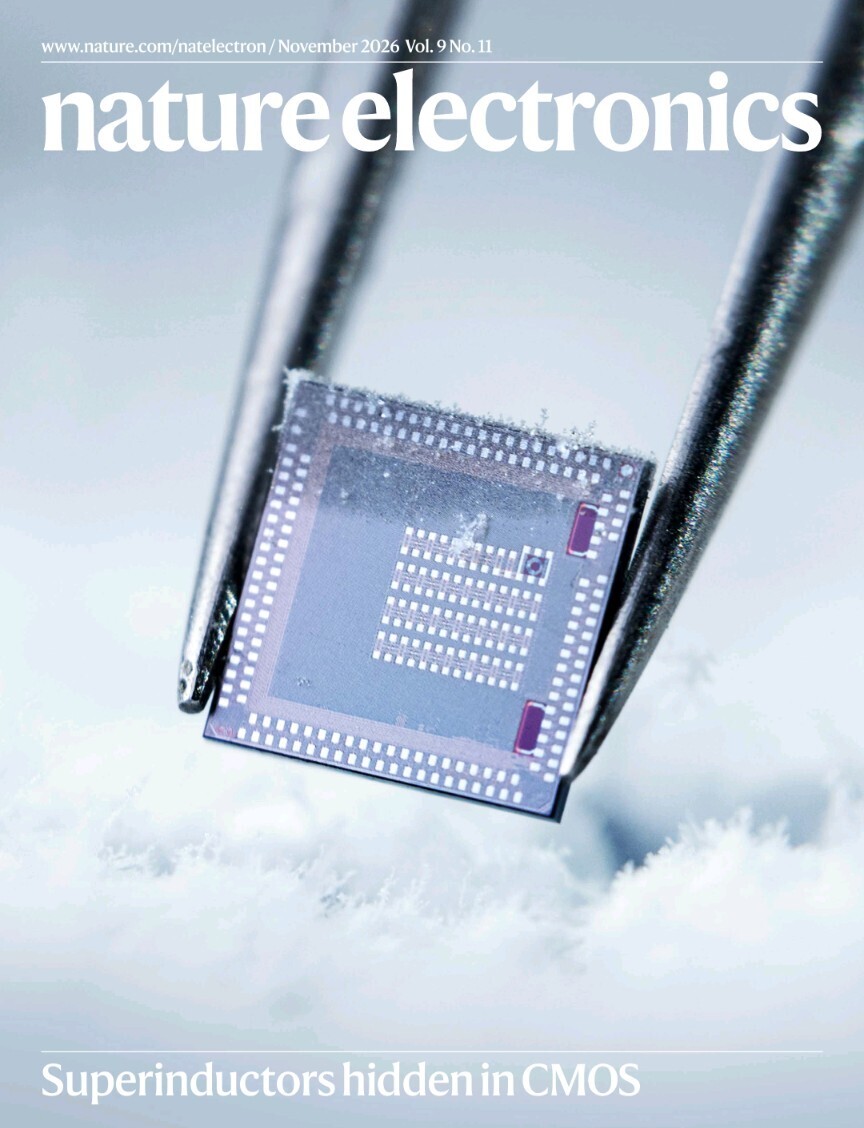
A CMOS‑compatible Superinductor for Quantum Circuits
Researchers at the Centre for Integrated Nanotechnology (CIC) of nanoGUNE, together with collaborators from Quantum Motion, the London Centre for Nanotechnology, Imperial College London and the University of Cambridge, have reported a new type of superinductor built directly in a commercial complementary metal‑oxide‑semiconductor (CMOS) process. The work, highlighted on the cover of Nature Electronics, shows that titanium nitride (TiN) can provide the high kinetic inductance needed for a non‑linear superinductor while remaining compatible with the silicon‑based fabrication steps used for conventional microelectronics.
---
Why Superinductors Matter
Superinductors are circuit elements with an inductance so large that their impedance exceeds the resistance quantum at microwave frequencies. In superconducting quantum hardware they replace bulky spiral inductors, enabling:
- Reduced footprint – a single TiN strip can replace millimetre‑scale planar coils.
- Higher sensitivity – the large inductance boosts the impedance of radio‑frequency single‑electron transistors, improving charge‑sensing performance.
- Better integration – embedding the element in a standard CMOS flow means it can be co‑fabricated with control electronics, potentially lowering interconnect complexity.
---
The Technical Innovation
Titanium nitride is known for its high kinetic inductance, a property that arises from the inertia of Cooper pairs in a superconductor. By depositing a thin TiN film within a typical CMOS back‑end‑of‑line (BEOL) stack, the team created a compact, non‑linear inductive element without resorting to exotic materials or dedicated superconducting foundries. The resulting device was incorporated into a radio‑frequency single‑electron transistor (RF‑SET) that demonstrated a compact footprint and high charge sensitivity, meeting the performance requirements for quantum‑readout applications.
---
Implications Beyond Quantum Computing
While the immediate motivation is superconducting qubit readout, the authors point out broader uses:
- Radio astronomy – low‑noise, high‑impedance receivers could benefit from on‑chip superinductors.
- Cryogenic electronics – power‑efficient cryoelectronic circuits may leverage the same TiN technology.
- Quantum sensing and simulation – compact inductive elements can improve the coupling of quantum sensors to their environments.
The ability to fabricate these components in a mainstream CMOS line could accelerate the transition from laboratory‑scale prototypes to scalable quantum processors, where chip area and interconnect density are critical bottlenecks.
---
Looking Ahead
nanoGUNE’s team plans to push the technology toward faster spin‑state readout, targeting sub‑microsecond timescales. If successful, the combination of CMOS‑compatible superinductors with existing superconducting qubit architectures could streamline the integration of control electronics, reduce packaging overhead, and ultimately help shrink the overall size of quantum processors.
---
The development underscores how materials engineering—here, exploiting TiN’s kinetic inductance—can unlock new design space for quantum hardware, especially when it aligns with the massive manufacturing ecosystem of CMOS.
Hype check
RealThe paper in Nature Electronics provides a peer‑reviewed demonstration of a TiN superinductor fabricated in a commercial CMOS process; the claim matches the reported result.
- Peer-reviewed paper, or press release only?Paper — Nature Electronics article is peer‑reviewed
- Error-corrected (logical) qubits, or physical qubits only?Logical / not a qubit claim — Claim does not involve qubit counts
- A new milestone, or a rebrand / restatement?New — First CMOS‑compatible superinductor reported
- Independent confirmation?Not yet — No external replication mentioned
- Does the headline claim match what the source shows?Matches — Headline accurately reflects the Nature Electronics report
An editorial assessment of the claim as reported, not a judgment of the company or researchers. Checked against: nanogune.eu. How we rate hype →
Source
Read original sourceWhy we picked this
Accepted from curated QuantumUnzipped source (relevance scoring disabled).