National University of Defense Technology designs robust quantum gates
Researchers at the National University of Defense Technology have demonstrated path‑optimizable non‑cyclic geometric gates that maintain >98% fidelity during ion shuttling, offering a scalable solution for quantum charge‑coupled device architectures.
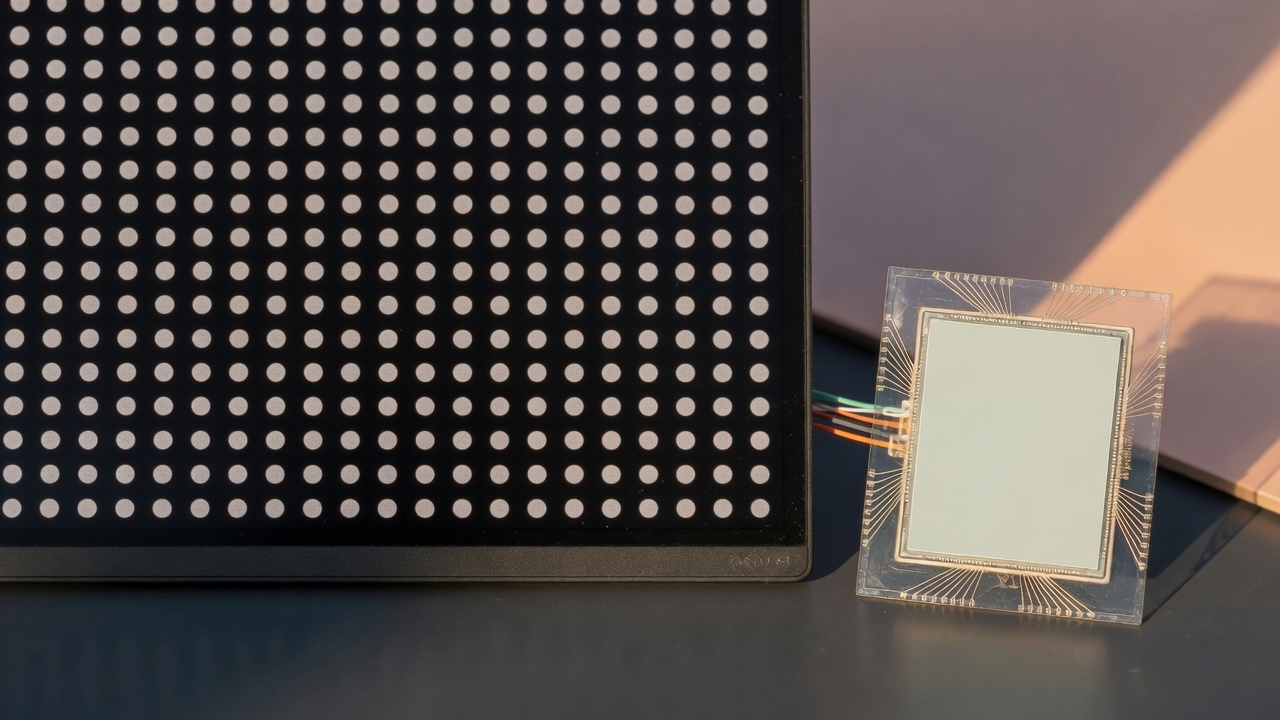
Robust Geometric Gates for Ion‑Shuttling Quantum Processors
A twelve‑person team from the National University of Defense Technology in Changsha, China, has experimentally validated a new class of geometric quantum gates designed for the quantum charge‑coupled device (QCCD) architecture. By employing a path‑optimizable non‑cyclic geometric scheme, the researchers achieved single‑qubit gate fidelities above 98 % even while ions were actively shuttled between processing zones—a significant improvement over conventional dynamical gates that lose performance under the same conditions.
Overcoming Shuttling‑Induced Errors
In QCCD systems, trapped‑ion qubits must be physically moved to different zones for storage, manipulation, and readout. This transport introduces frequency offsets and dynamic noise that degrade gate fidelity. The team addressed this challenge by allowing the gate to follow a family of possible evolution paths rather than a single fixed trajectory. During experiments, a controllable magnetic‑field gradient of roughly 11.7 Gauss m⁻¹ simulated severe detuning errors, yet the geometric gates retained fidelity levels of 0.9775 ± 0.0014 across a detuning range of –0.23 to +0.28 Ω. By contrast, traditional dynamical gates dropped sharply outside a narrow zero‑detuning window.
Path‑Optimizable Non‑Cyclic Geometry
The core of the approach lies in a non‑adiabatic, non‑cyclic geometric protocol where the accumulated phase depends only on the global path geometry, not on the precise timing of control fields. The researchers imposed the constraint \(\kappa0 + \kappa\tau = \pi\) and kept the Rabi frequency \(\Omega\) constant, enabling systematic selection of the optimal trajectory for the prevailing noise environment. This flexibility resulted in several‑fold error reduction compared with dynamical counterparts, as verified through benchmark experiments on a room‑temperature planar chip trap.
Scaling to Multi‑Ion Crystals
A key milestone of the study is the demonstration of robust gate performance in a system of up to 33 qubits. As the ion crystal size grew, the geometric gate’s advantage not only persisted but improved, suggesting that the method scales favorably with system size. The authors note occasional collision‑induced losses in larger crystals, but the overall fidelity trend points toward a viable path for building larger, error‑resilient quantum processors.
Practical Implications for QCCD Architectures
The reported gates can be integrated into existing QCCD setups without extensive recalibration, effectively providing a “plug‑and‑play” primitive for quantum logic. Because the geometric scheme inherently suppresses dynamic noise, it reduces the need for complex magnetic‑field optimization or frequent frequency retuning during ion transport. This simplification could lower experimental overhead and accelerate the development of scalable trapped‑ion quantum computers.
Looking Ahead
While the current work focuses on single‑qubit rotations (\(Rx\) and \(Ry\)), the authors propose extending the geometric framework to two‑qubit entangling operations, which face similar shuttling‑induced challenges. Achieving a complete, detuning‑resilient gate set would mark a decisive step toward fault‑tolerant QCCD processors capable of handling the noise environments expected in practical quantum algorithms.
---
The findings illustrate how geometric control techniques can bridge the gap between laboratory‑scale demonstrations and the larger, more complex ion‑trap systems required for real‑world quantum computing.
Source
Read original sourceWhy we picked this
Accepted from curated QuantumUnzipped source (relevance scoring disabled).