NQCP Spins Out Pelagic Systems to Commercialize Real-Time Hardware Calibration Software
Pelagic Systems, spun out of the Novo Nordisk Foundation Quantum Computing Programme, aims to commercialize FPGA‑based real‑time calibration software that dramatically speeds up quantum processor tuning and monitoring.
Introduction
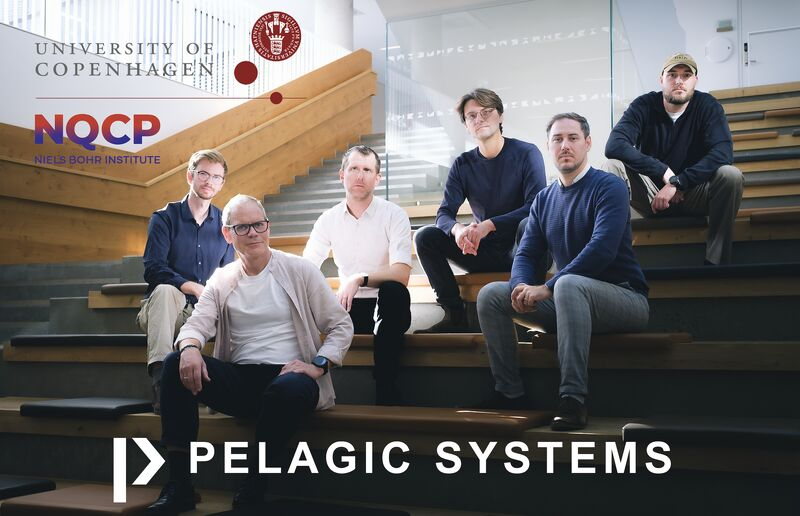
The Novo Nordisk Foundation Quantum Computing Programme (NQCP) at the University of Copenhagen has launched Pelagic Systems, a startup focused on bringing real‑time hardware calibration and characterization software to the broader quantum‑computing market. Built on superconducting‑qubit experiments and backed by non‑dilutive funding from Innovation Fund Denmark, the platform tackles a key bottleneck: the latency and manual effort required to keep quantum processors stable during operation.
Real‑Time FPGA Control Loops
Traditional quantum‑hardware workflows rely on a host CPU to collect measurement data, process it, and then send updated pulse parameters back to the instrument rack. This round‑trip can take around 250 ms, limiting the ability to respond to fast drifts in qubit frequency, coherence times (T₁), or readout fidelity. Pelagic Systems moves the estimation and feedback steps onto the FPGA controller itself. In laboratory tests on superconducting hardware, the on‑board pipeline can:
- Measure T₁ and other relaxation parameters in under 10 ms.
- Perform recalibration sweeps in 9.8 ms, an order of magnitude faster than host‑mediated loops.
- Track rapid noise dynamics, enabling adaptive multi‑qubit gate sequences.
By embedding the decision‑making logic directly in the hardware, the system reduces latency, minimizes downtime, and opens the door to continuous, automated tuning.
Extensible Quantum Characterization Framework
Beyond low‑latency control, Pelagic’s software stack offers an extensible experimental runtime and automated Quantum Characterization, Verification, and Validation (QCVV) tools. These components are designed to be hardware‑agnostic, allowing integration with a variety of control electronics and qubit modalities. The platform’s modular architecture supports:
- Plug‑and‑play drivers for different FPGA families.
- APIs that can be adapted to neutral‑atom, trapped‑ion, or other emerging qubit technologies.
- Automated workflows for routine calibration, error‑budget analysis, and performance reporting.
Commercial Positioning and Scaling Challenges
Pelagic Systems enters the market at a time when quantum hardware is moving from isolated academic prototypes to multi‑qubit, production‑grade systems that require continuous, automated tuning. The company’s immediate value proposition is clear for superconducting testbeds, where on‑FPGA calibration can cut system downtime dramatically. However, scaling to third‑party labs and commercial partners introduces several hurdles:
- Hardware Diversity – Commercial quantum labs use a range of FPGA platforms and control electronics. Pelagic must demonstrate seamless integration across these varied ecosystems.
- Qubit Modality Differences – Neutral‑atom arrays and trapped‑ion processors have distinct calibration needs (optical alignment, RF trap frequencies, etc.). Extending the real‑time approach to these modalities will require additional sensor and algorithm development.
- Reliability and Support – Enterprises will expect robust, well‑documented software with long‑term support contracts, a shift from the research‑focused mindset of the original NQCP project.
Successfully navigating these challenges could position Pelagic as a foundational layer in the emerging quantum‑control stack, much like classical‑hardware drivers are today for high‑performance computing.
Outlook
Pelagic Systems’ launch highlights a growing recognition that software and control engineering are as critical as qubit physics for scaling quantum computers. By delivering sub‑10 ms calibration loops and a flexible QCVV framework, the startup offers a tangible step toward the continuous‑operation paradigm needed for practical quantum advantage. The next few years will reveal how well the platform can generalize beyond its superconducting origins and whether it can become a standard component in the quantum‑hardware supply chain.
--- This article is based on the editorial brief provided and does not contain invented quotations or external references.
Source
Read original sourceWhy we picked this
Accepted from curated QuantumUnzipped source (relevance scoring disabled).