Palm Beach State College and FAU Activate First Operational Segment of Florida’s Statewide Quantum-Safe Network
Palm Beach State College and Florida Atlantic University have launched Florida’s first operational quantum‑safe link, using IonQ’s QKD hardware over dark fiber to protect academic and research data while laying groundwork for a statewide quantum‑secure network and related workforce programs.
Introduction
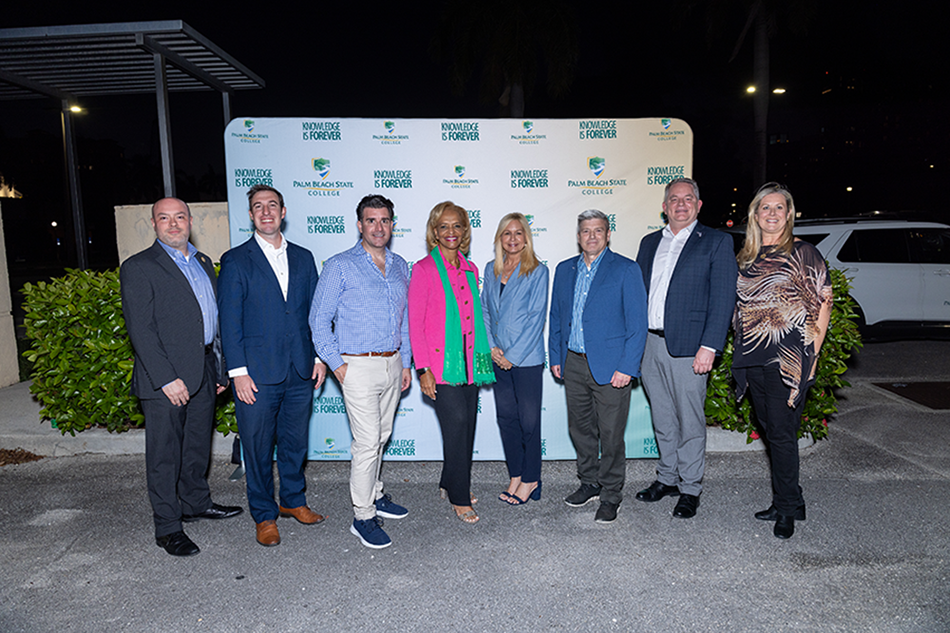
Palm Beach State College (PBSC) and Florida Atlantic University (FAU) have turned a key piece of Florida’s quantum‑security roadmap into reality. By activating a live quantum‑key‑distribution (QKD) link between PBSC’s downtown West Palm Beach campus and FAU’s Boca Raton campus, the partners have created the first operational segment of a statewide quantum‑safe network. The deployment, funded in part by a $1 million defense‑infrastructure grant and built on Florida LambdaRail’s dark‑fiber backbone, demonstrates how academic institutions can lead the transition to post‑quantum security.
How the quantum‑safe link works
The operational link relies on IonQ’s trapped‑ion QKD hardware, which generates cryptographic keys at the physical layer and exchanges them over a dedicated dark‑fiber conduit owned by Palm Beach County. Unlike classical key‑exchange methods, QKD detects any eavesdropping attempt because measuring quantum states inevitably alters them. The system’s key‑management software automatically refreshes keys, providing continuous protection for data streams that include research results, patient records, and collaborative academic projects.
Key technical attributes include:
- Dedicated dark fiber: A private, low‑latency conduit that isolates the quantum channel from public internet traffic.
- Hardware‑level intrusion detection: Real‑time monitoring of photon loss and error rates to flag potential attacks.
- Integration with FLR backbone: The link plugs into Florida LambdaRail’s 1,540‑mile fiber network, positioning it as a hub for future expansion across the state’s 13 university members.
Expanding the quantum corridor
The PBSC‑FAU link is the first mile of a planned ~100‑mile quantum‑secure corridor that will eventually stretch from Palm Beach County down to Miami‑Dade County. Within the next three months, additional nodes are slated to connect Miami Dade College and FAU’s John D. MacArthur campus in Jupiter. These extensions will secure data pipelines linking major biomedical research facilities such as the Herbert Wertheim UF Scripps Institute and the Max Planck Florida Institute for Neuroscience.
The broader rollout is anchored by a Master Service Agreement between IonQ and Florida LambdaRail, announced at eMerge Americas 2026. The agreement outlines a phased deployment strategy, with each new node adding redundancy and extending the reach of quantum‑safe communications across South Florida’s research ecosystem.
Building a quantum‑ready workforce
Infrastructure alone does not guarantee adoption; skilled personnel are essential. PBSC is leveraging the network launch to expand its academic offerings through a new Quantum Innovation Center, funded with nearly $7 million in state and private support. The center will host a Quantum Systems Certification Program launching in Spring 2027 and a two‑year Associate in Science degree in quantum technology. These programs are designed with an articulation pathway to FAU’s four‑year quantum‑focused degrees, creating a clear pipeline from technician training to advanced research roles.
By aligning curriculum with the operational needs of the network—such as QKD hardware maintenance, key‑management software administration, and dark‑fiber network engineering—PBSC aims to produce graduates who can immediately support the expanding quantum‑safe corridor and similar initiatives nationwide.
Practical implications for stakeholders
- Academic researchers gain immediate protection for sensitive data, reducing the risk of future decryption by quantum computers.
- Healthcare partners can transmit patient information across campuses with confidence that privacy regulations will remain met in a post‑quantum world.
- State policymakers receive a tangible example of how defense‑grade funding can accelerate quantum‑security infrastructure while simultaneously fostering workforce development.
- Industry collaborators such as IonQ and Florida LambdaRail benefit from a real‑world testbed that validates the scalability of their technologies.
Conclusion
The activation of the PBSC‑FAU quantum‑safe link marks a pivotal step for Florida’s ambition to become a leader in quantum‑secure communications. By coupling cutting‑edge QKD hardware with a strategic expansion plan and a robust educational pipeline, the initiative not only safeguards today’s data but also prepares the state’s talent pool for the quantum challenges of tomorrow. As additional nodes come online, the emerging South Florida quantum corridor will serve as a model for other regions seeking to blend research, security, and workforce development into a cohesive quantum‑future strategy.
Source
Read original sourceWhy we picked this
Accepted from curated QuantumUnzipped source (relevance scoring disabled).