Quanfluence Raises $10 Million to Build Photonic Quantum Computer
Quanfluence raises $10 million to build a full‑stack photonic quantum computer, targeting early processors by 2027 and scalable systems by 2029, signaling India’s push into indigenous quantum hardware.
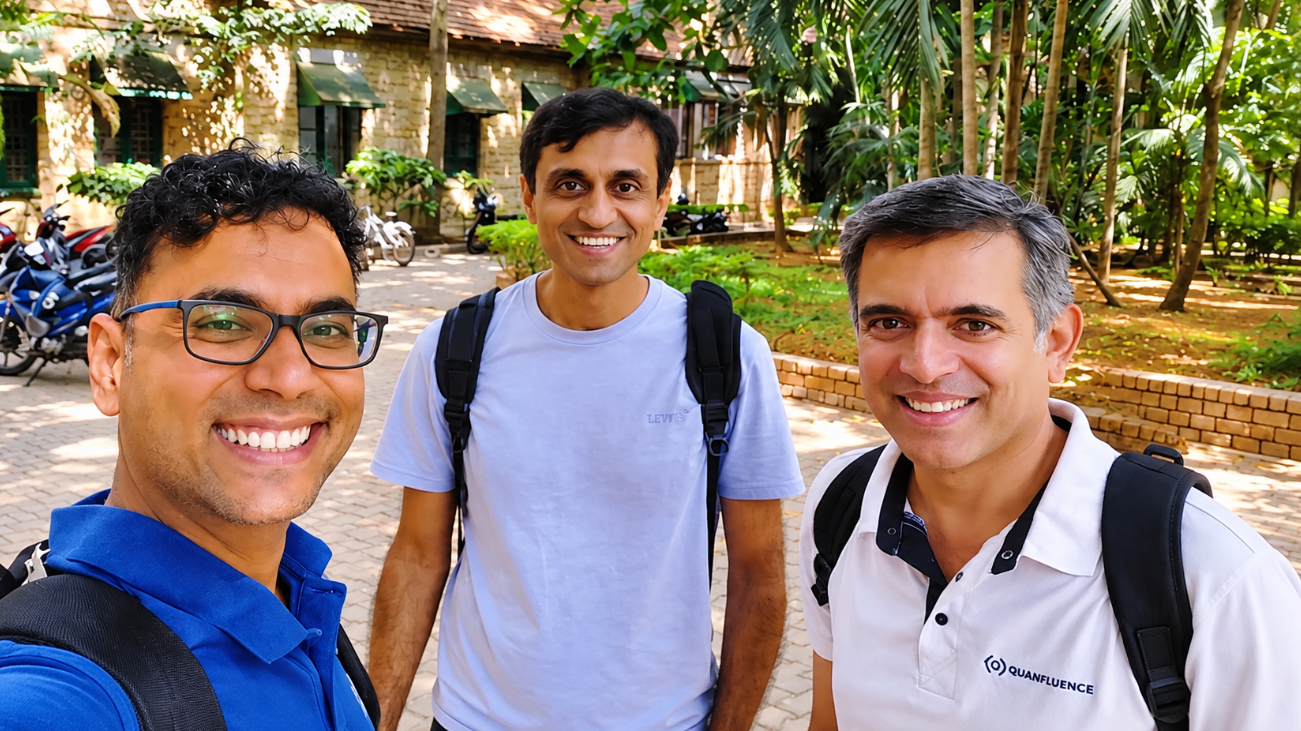
Quanfluence’s $10 M Boost: Building India’s First Full‑Stack Photonic Quantum Computer
In a bold move that signals India’s growing ambition in quantum technology, Bengaluru‑based Quanfluence has closed a $10 million funding round led by venture firm Chiratae Ventures, with Pi Ventures and Rainmatter by Zerodha also joining. The capital will be used to assemble a full‑stack photonic quantum computer—combining custom photonic chips, control electronics, and software—targeting early processors by 2027 and scalable machines by 2029.
Why Photonics? The Case for Scalable Quantum Hardware
Quanfluence’s founders—Sujoy Chakravarty, Ravi Mehta, Biman Chattopadhyay, Aditi Vaidya, and professors from IIT Madras and IISER Mohali—brought a semiconductor‑IP pedigree to quantum optics. Their strategy hinges on photonics, which offers several advantages over trapped‑ion or superconducting platforms:
- Room‑temperature operation – Unlike superconducting qubits that require dilution refrigerators, photonic qubits can be generated and routed at ambient conditions, reducing infrastructure costs.
- High‑speed interconnects – Light travels at the speed of light, enabling faster gate operations and lower latency for quantum algorithms.
- Integration potential – Photonic integrated circuits (PICs) can host thousands of optical components on a single chip, paving the way for dense qubit arrays.
The company has already demonstrated key building blocks: low‑loss chip‑to‑fiber coupling, quantum‑state generation, and photonic Ising machines that have moved from lab to product. These milestones give investors confidence that the photonic route can scale beyond proof‑of‑concept.
Building the Stack: From Chips to Software
Quanfluence’s roadmap is a classic “full‑stack” approach. The firm is not just designing qubits; it is engineering the entire ecosystem that turns raw photons into useful computation:
- Photonic Integrated Circuits (PICs) – The team has fabricated multiple PICs featuring waveguides, modulators, and detectors, all fabricated in-house.
- Electronic Integrated Circuits (EICs) – Custom electronics provide precise control signals and readout, tightly coupled to the PICs.
- Control Electronics – Low‑latency, high‑bandwidth drivers synchronize photon generation and measurement across the chip.
- Software Layer – Algorithms and error‑correction protocols are being developed to translate physical qubit operations into meaningful results.
By unifying these layers, Quanfluence aims to deliver a turnkey quantum computer that can be deployed in data centers or research labs without the need for specialized cryogenic infrastructure.
Funding, Partnerships, and the Road Ahead
Chiratae Ventures’ lead investment follows a seed round in 2024, with Pi Ventures returning as a co‑investor and Rainmatter by Zerodha adding a strategic partnership. The capital will fund:
- Hardware scaling – Expanding PICs from current testbeds to early processors with dozens of qubits.
- Manufacturing – Setting up a production line for photonic chips and associated electronics.
- Talent acquisition – Hiring quantum scientists, photonic engineers, and software developers.
- Commercialization – Building a sales and support infrastructure for early adopters.
The company’s founders emphasize pragmatism: they are “de‑risking the massive long‑term hardware challenge with near‑term revenue streams.” Early products, such as the photonic Ising machine, already generate income while the team works toward larger, more general‑purpose systems.
What This Means for India’s Quantum Ecosystem
India has historically been a consumer of deep‑tech hardware developed abroad. Quanfluence’s progress marks a shift toward indigenous design and production. The firm’s success could:
- Attract further investment – Demonstrating a viable photonic path may encourage other VCs to back quantum startups.
- Create jobs – Full‑stack quantum development requires a mix of hardware, software, and systems engineering talent.
- Boost research – Partnerships with IIT Madras and IISER Mohali can spur academic‑industry collaboration.
In short, Quanfluence’s $10 million round is more than a financial milestone; it is a statement that India can build the next generation of quantum computers.
Practical Takeaways for Stakeholders
- Investors – Photonics offers a clear differentiation from other quantum platforms; early funding can capture a share of a potentially large market.
- Researchers – Collaboration opportunities exist with Quanfluence’s PIC and EIC teams for joint publications and technology transfer.
- Businesses – Companies looking to explore quantum solutions should monitor Quanfluence’s product roadmap, as their early processors may soon be available for commercial workloads.
Quanfluence’s journey illustrates that a focused, full‑stack strategy—backed by a strong engineering pedigree and a clear path to commercialization—can accelerate quantum hardware from lab to market.
---
TL;DR: Quanfluence has raised $10 million to build a full‑stack photonic quantum computer, aiming for early processors by 2027 and scalable machines by 2029, marking a significant step for India’s indigenous quantum technology ambitions.
Source
Read original sourceWhy we picked this
Accepted from curated QuantumUnzipped source (relevance scoring disabled).