Quantum Art Research Outlines More Efficient Quantum Approach to Wave Modeling
Quantum Art’s new quantum algorithm leverages known wave physics to dramatically cut the resources needed for large‑scale wave simulations, promising practical quantum advantage for telecom, seismic and engineering applications.
Quantum Art’s Physics‑Driven Quantum Leap in Wave Modeling
Quantum Art, an Israeli full‑stack trapped‑ion quantum computing firm, has unveiled a novel algorithm that reshapes how large‑scale wave simulations are performed. By embedding the immutable rules of wave physics directly into the quantum computation, the method sidesteps the massive overhead that has limited previous quantum approaches. The result is a pathway toward simulating radio, acoustic, radar, and seismic waves across regions far larger than any classical supercomputer can feasibly handle.
---
From Brute‑Force to Physics‑First
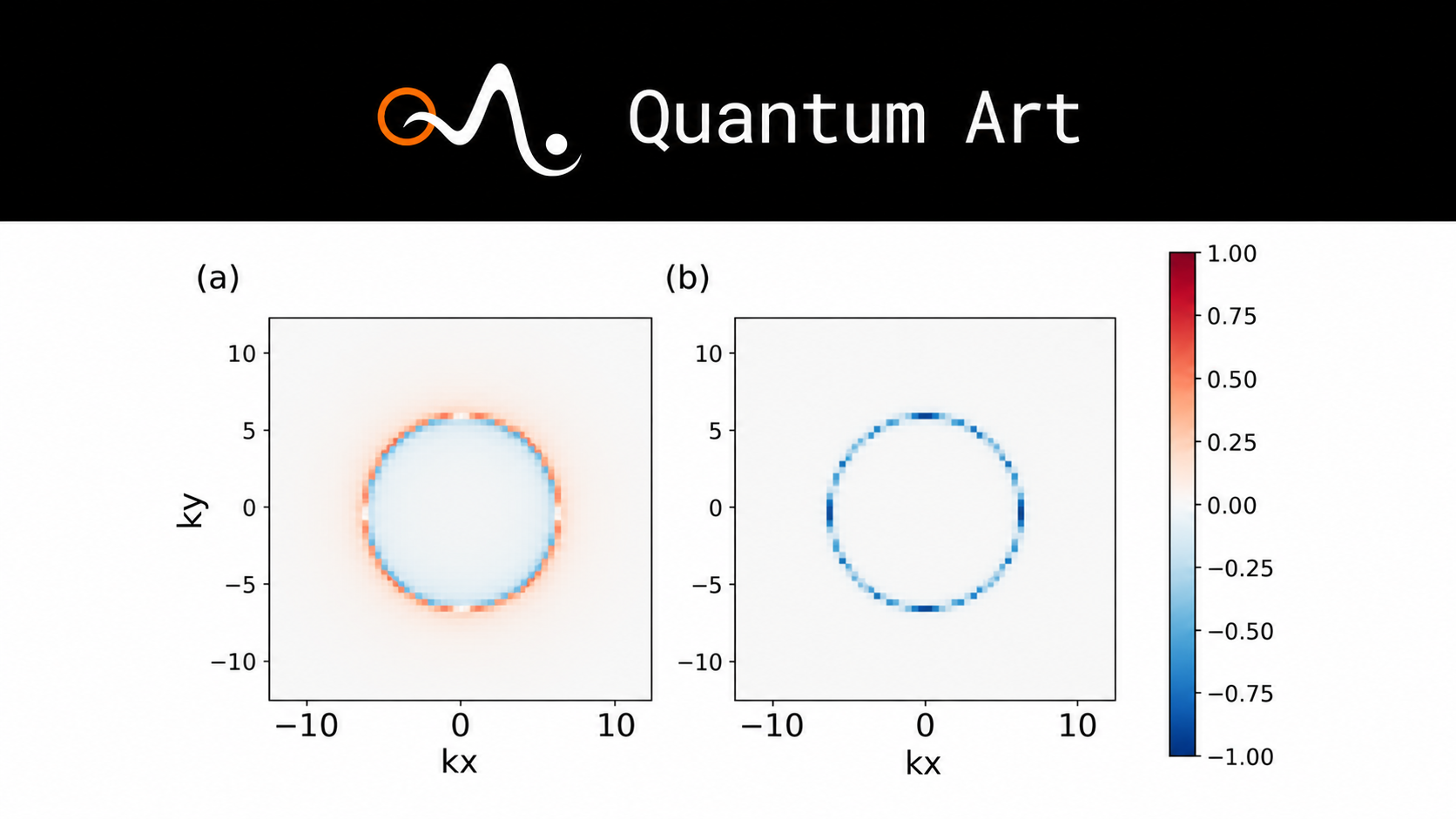
Traditional quantum algorithms treat wave‑propagation problems as generic, high‑dimensional linear systems. They attempt to solve the entire mathematical puzzle, often exploring solution spaces that are physically impossible. In wave physics, a wave of a given frequency travels at a fixed speed in a given medium, meaning that all permissible wave vectors lie on a single circle (or sphere in three dimensions). Anything off that surface violates the dispersion relation and can be discarded a priori.
Quantum Art’s approach flips this paradigm. Instead of asking the quantum processor to search the full space, the algorithm constructs the allowed wave‑vector surface directly and places each source on it. The quantum circuit then assembles the final field from these physically valid components. This is analogous to walking straight to the correct bookshelf rather than scanning every page of a library.
---
Why It Matters for Real‑World Industries
- Telecommunications – Accurate, kilometre‑scale radio‑wave maps are essential for network planning and interference mitigation. Classical grids would need 10¹⁸‑10²¹ points to achieve centimetre‑level precision, a scale beyond today’s supercomputers. Quantum Art estimates that roughly 100 qubits could capture the same detail.
- Seismic Modeling – Predicting how seismic waves travel through heterogeneous earth layers informs hazard assessment and oil‑field exploration. The new method keeps computational effort roughly constant as the modeled region expands, enabling mountain‑range‑scale simulations.
- Structural and Materials Engineering – Engineers can evaluate stress‑wave propagation in complex structures without sacrificing resolution, leading to safer designs and faster material discovery.
---
Practical Outlook and Remaining Challenges
The algorithm’s promise hinges on two technical pillars:
- Hardware Scalability – Quantum Art’s trapped‑ion qubits, multi‑qubit gates, and dynamically reconfigurable multi‑core architecture must continue to improve in fidelity and qubit count. Current estimates place the sweet spot at around 100 logical qubits for the largest simulations discussed.
- Error Mitigation – By compressing circuit depth, the company’s hardware design reduces error accumulation, a crucial factor for maintaining the algorithm’s advantage as problem size grows.
While the theoretical resource savings are compelling, practical deployment will require sustained progress in error‑corrected quantum processors. Nonetheless, the research demonstrates a clear route to quantum advantage that does not rely on brute‑force amplitude amplification but on physics‑guided problem reduction.
---
Looking Ahead
Quantum Art’s work exemplifies a broader trend: using the underlying physics of a problem to streamline quantum computation. By aligning hardware design and algorithmic strategy with the natural constraints of wave phenomena, the company sets a template that could extend to other domains—such as fluid dynamics or quantum chemistry—where conserved relationships dictate feasible solution spaces.
For stakeholders in telecom, geophysics, and engineering, the key takeaway is that quantum‑enhanced wave modeling may move from speculative to actionable within the next few hardware generations. Keeping an eye on hardware roadmaps, benchmark studies, and early pilot collaborations will be essential to capitalize on this emerging capability.
---
The insights above are drawn from Quantum Art’s recent research presentation and press release, reflecting the company’s ongoing effort to translate deep‑tech breakthroughs into practical tools for industry.
Source
Read original sourceWhy we picked this
Accepted from curated QuantumUnzipped source (relevance scoring disabled).