Quantum could solve AI energy drain, says tech founder
Diraq’s eight‑qubit silicon quantum computer is being field‑tested in a Sydney data centre, but its ability to curb AI’s energy use remains unproven.
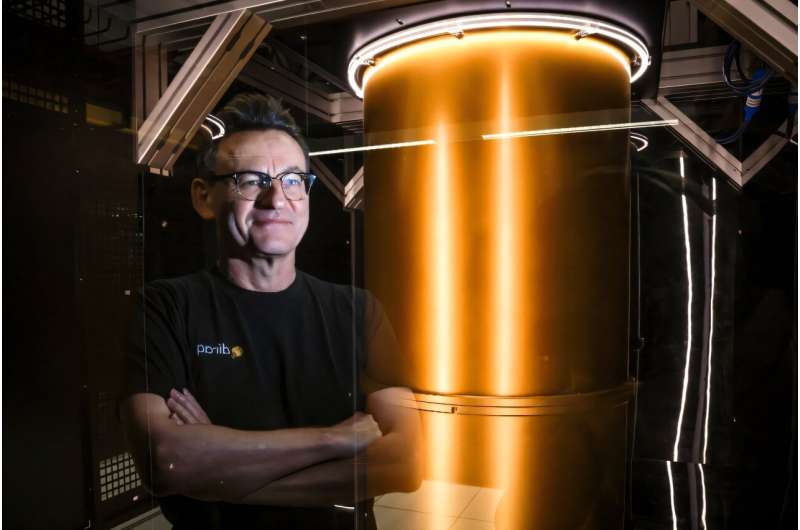
Quantum Field Test in a Data Centre
Australian startup Diraq has placed a small silicon‑based quantum processor inside a commercial data centre in Sydney. The system, which houses eight physical qubits and draws under 20 kW of power, is the first of its kind to be operated alongside conventional servers in a real‑world environment. Diraq’s founder, Andrew Dzurak, says the device demonstrates that quantum hardware can run at modest power levels and could eventually relieve the massive electricity demand of AI workloads.
What the Prototype Can Do Today
- Eight physical qubits on a silicon chip, cooled by an integrated cryogenic system.
- Power consumption below 20 kW, comparable to a small rack of classical servers.
- Field‑testing in an Equinix data centre, providing early data on reliability, integration, and operational overhead.
The current machine is not error‑corrected; it operates with raw physical qubits and therefore cannot yet run fault‑tolerant algorithms. No benchmark results or performance metrics for AI tasks have been published, and the claim that it will “solve” AI’s energy drain is speculative.
Roadmap and Ambitions
Diraq outlines an aggressive scaling plan:
| Target Year | Qubit Count (Physical) | Intended Power Use | |-------------|------------------------|-------------------| | 2029 | 150 000 | ~200 kW | | 2031 | 2 000 000 | ~200 kW |
If achieved, such a system could meet DARPA’s 2033 benchmark for cost‑effective quantum advantage. However, the roadmap hinges on breakthroughs in qubit yield, error rates, and large‑scale integration that have not yet been demonstrated in peer‑reviewed literature.
Potential Impact on AI Energy Consumption
Dzurak argues that many AI problems are “better suited to quantum calculations,” implying that quantum processors could replace power‑hungry classical clusters. While quantum algorithms (e.g., for optimisation or sampling) may offer asymptotic speed‑ups, practical energy savings depend on:
- Error‑corrected logical qubits that can run deep circuits reliably.
- End‑to‑end software stacks that translate AI workloads into quantum‑friendly forms.
- Demonstrated cost‑per‑operation that beats specialised classical accelerators.
At present, Diraq’s eight‑qubit device cannot address these criteria, so any claim of immediate AI energy relief is premature.
Outlook
The field test is a noteworthy engineering milestone—showing that silicon quantum chips can be housed in a commercial data centre and operate with modest power. It provides valuable data for scaling efforts and for the broader quantum‑AI dialogue. Nevertheless, the headline promise of solving AI’s energy crisis remains unsubstantiated until larger, error‑corrected systems are built and benchmarked against real AI workloads.
--- The article is based on an AFP interview and a Phys.org news release; no peer‑reviewed study or independent verification was cited.
Hype check
PartlyThe story reports a prototype eight‑qubit silicon processor and a scaling roadmap, but the headline overstates its current ability to solve AI energy problems; no peer‑reviewed data or independent validation is provided.
- Peer-reviewed paper, or press release only?Press release only — Only AFP interview and press release, no paper cited
- Error-corrected (logical) qubits, or physical qubits only?Physical only — Eight qubits are physical, not error‑corrected
- A new milestone, or a rebrand / restatement?New — First field test of silicon quantum computer in a data centre
- Independent confirmation?Not yet — No external confirmation or replication mentioned
- Does the headline claim match what the source shows?Overstated — Headline claims solving AI energy drain, evidence only shows a prototype
An editorial assessment of the claim as reported, not a judgment of the company or researchers. Checked against: phys.org. How we rate hype →
Source
Read original sourceWhy we picked this
Accepted from curated QuantumUnzipped source (relevance scoring disabled).