Quantum Physics Can Verify a Person’s Location, NIST Researchers Show
NIST researchers experimentally demonstrated quantum position verification, showing quantum physics can confirm a person’s physical location.
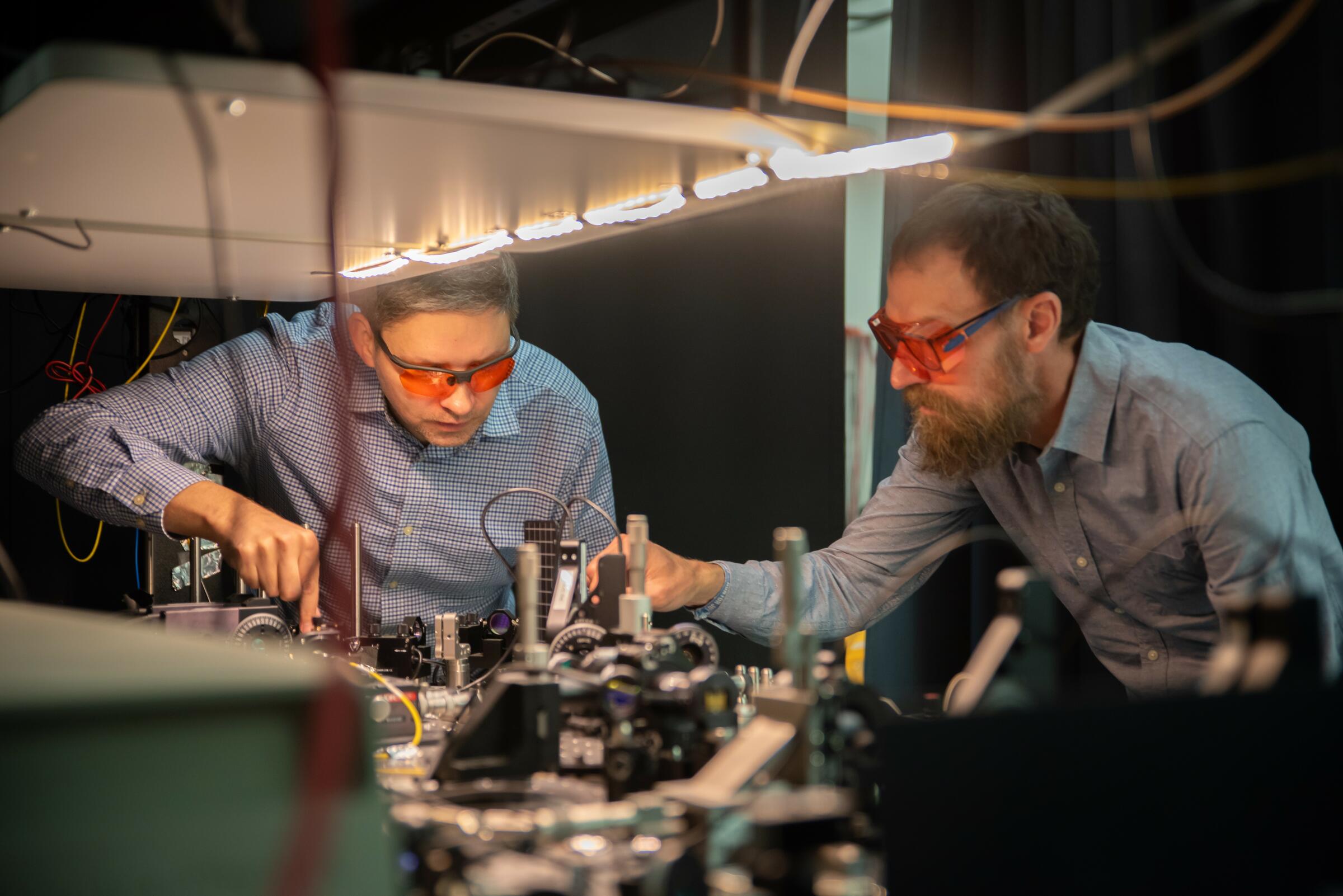
Quantum Position Verification: A New Way to Anchor Digital Security
In a landmark experiment published in Nature, scientists at the National Institute of Standards and Technology (NIST) have shown that the quirks of quantum mechanics can be used to verify a person’s exact location. The work, led by physicists Krister Shalm and Scott Glancy, implements a protocol called quantum position verification (QPV) that could one day protect critical infrastructure, financial transactions, and personal data by tying access to a physical place.
How the Experiment Works
The team built two trusted stations 195 meters apart on the NIST campus and placed a “prover” somewhere between them. The verifiers generated entangled photon pairs, kept one photon and sent the other to the prover. Random numbers were transmitted simultaneously to the prover, who measured the photon’s polarization according to those numbers and reported the result back. By timing the round‑trip communication and checking the correlation of the measurements against a loophole‑free Bell test, the verifiers could confirm that the prover was indeed at the claimed location. Any attempt to cheat—by copying the quantum information or spoofing the timing—breaks the Bell correlations and is immediately detected.
Why It Matters
Current authentication methods rely on passwords, tokens, or biometric data that can be stolen or spoofed remotely. QPV ties access to a physical point in space, making remote impersonation fundamentally impossible under the laws of quantum physics. Potential applications include:
- Secure financial transfers – ensuring a wire‑transfer command originates from a verified office location.
- Critical‑infrastructure protection – allowing only on‑site personnel to control power‑grid or water‑treatment systems.
- Privacy for health records – guaranteeing that only users physically present at a clinic can retrieve sensitive data.
While the demonstration is a proof‑of‑concept, the researchers note that scaling the technique to real‑world networks will require advances in quantum communication hardware, such as high‑fidelity entanglement distribution over long distances.
Technical Enablers
Several NIST‑developed technologies were crucial:
- Superconducting nanowire single‑photon detectors with near‑unity efficiency, ensuring the Bell test could be passed.
- A fast, bright source of entangled photons that the team pioneered a decade ago.
- Precise timing and low‑loss optical fiber links to keep the communication latency within the required bounds.
These components together allowed the experiment to be repeated millions of times in minutes, providing statistically robust verification.
Looking Ahead
The authors stress that practical deployment is still a decade or more away, as large‑scale quantum networks must be built and integrated with existing security infrastructures. Nevertheless, the work establishes a concrete, experimentally verified foundation for location‑based quantum authentication, opening a new frontier where digital security is anchored to the immutable laws of physics.
--- For more details, see the Nature paper “Quantum position verification with remote untrusted devices” (Nov 18 2026) and the NIST news release.
Hype check
RealThe paper in Nature provides a concrete, peer‑reviewed demonstration of quantum position verification; the claim matches the reported experiment.
- Peer-reviewed paper, or press release only?Paper — Published in Nature as cited in the release
- Error-corrected (logical) qubits, or physical qubits only?Logical / not a qubit claim — Not a qubit‑count claim; focus is on position verification
- A new milestone, or a rebrand / restatement?New — First complete experimental demonstration of QPV
- Independent confirmation?Not yet — No external replication mentioned in the input
- Does the headline claim match what the source shows?Matches — Headline accurately reflects the experiment described
An editorial assessment of the claim as reported, not a judgment of the company or researchers. Checked against: nist.gov. How we rate hype →
Source
Read original sourceWhy we picked this
Accepted from curated QuantumUnzipped source (relevance scoring disabled).