Quantum Physics Can Verify a Person’s Location, NIST Researchers Show
NIST researchers have experimentally demonstrated quantum position verification, using entangled photons to confirm a person’s physical location.
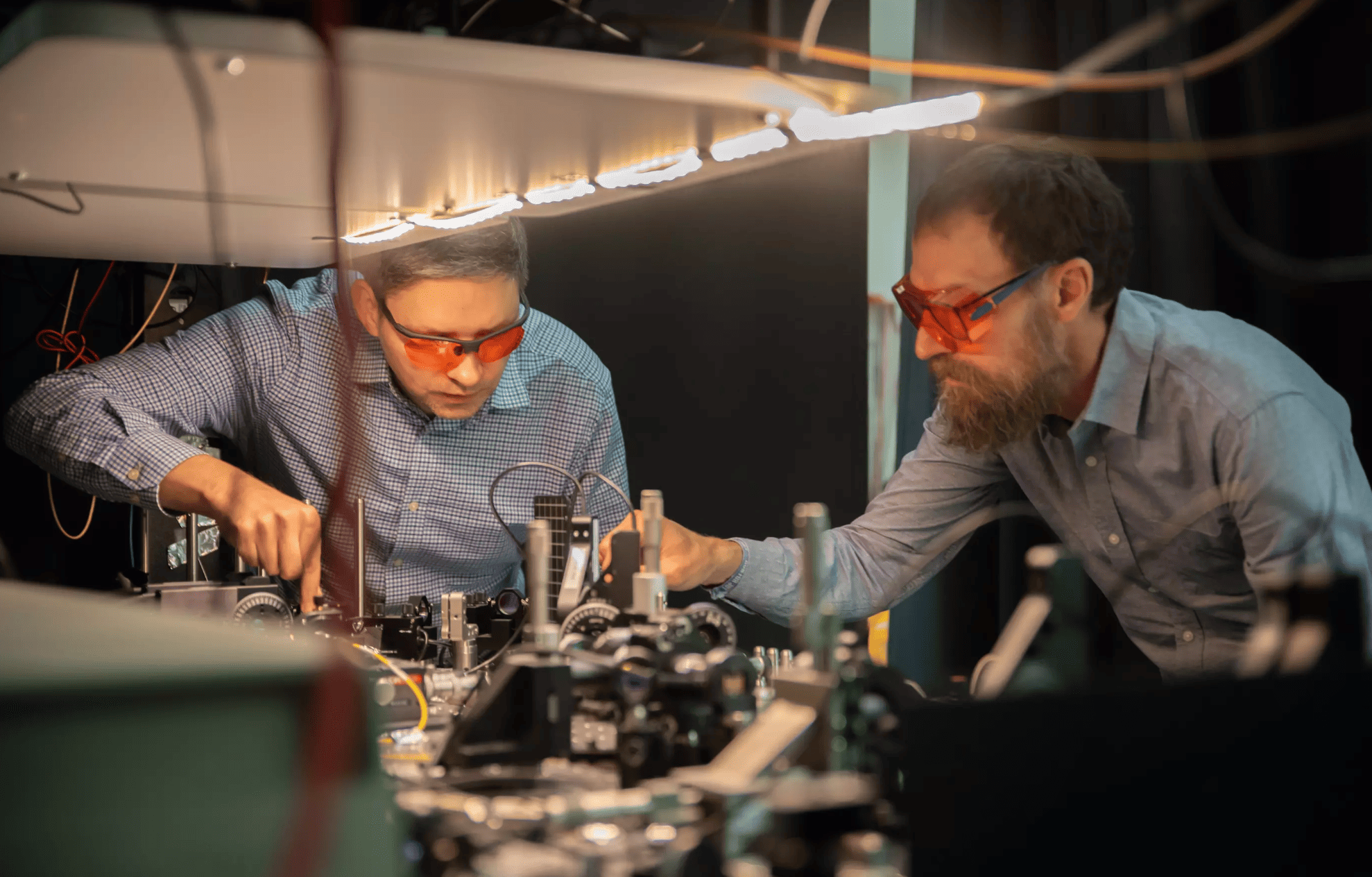
Quantum Position Verification: A First‑of‑Its‑Kind Demonstration
In a landmark experiment reported in Nature, scientists at the National Institute of Standards and Technology (NIST) and collaborators have shown that quantum mechanics can be used to verify a person’s exact location. By exploiting entangled photons and a loophole‑free Bell test, the team built a protocol that closes security gaps present in earlier quantum‑based location‑verification schemes.
How the experiment works
Two trusted stations, placed 195 m apart on the NIST campus, acted as verifiers. They generated pairs of entangled photons and sent one photon of each pair to a third party—the prover—who was positioned somewhere between the stations. Random numbers were transmitted to the prover, who used them to choose a measurement basis for the incoming photon’s polarization. The prover then measured the photon and instantly reported the result back to both verifiers.
Because the random numbers arrive simultaneously at the prover’s claimed location, any attempt to cheat by pre‑computing responses or by colluding with distant partners would either violate the no‑cloning theorem or introduce a detectable timing delay. The verifiers measured the correlation between their retained photons and the prover’s reported results. A successful, loophole‑free Bell test confirmed that the correlations exceeded any classical explanation, proving that the prover must have been at the expected position.
Why this matters for security
Traditional authentication relies on digital credentials that can be stolen or spoofed. Quantum position verification (QPV) ties access to a physical location, making remote impersonation far more difficult. Potential applications include:
- Financial transactions – ensuring that high‑value wire transfers originate from a secure terminal within a bank’s headquarters.
- Critical infrastructure – preventing remote commands to power grids, water treatment plants, or nuclear facilities.
- Healthcare data – guaranteeing that only on‑site personnel can retrieve sensitive patient records.
While the experiment proves the concept, practical deployment will require large‑scale, high‑fidelity quantum networks capable of distributing entangled photons over long distances. NIST and industry partners are already working on the necessary quantum‑communication infrastructure, but widespread use is likely more than a decade away.
The road ahead
The researchers stress that the current demonstration is a proof‑of‑principle. Scaling QPV to real‑world scenarios will demand advances in:
- Quantum repeaters to extend entanglement distribution beyond a few hundred meters.
- Low‑loss optical fibers and integrated photonic chips for robust, field‑deployable hardware.
- Standardized protocols that can interoperate across different quantum‑network providers.
Future work will also explore how QPV can be combined with post‑quantum cryptography to create layered security solutions that protect against both classical and quantum attacks.
Bottom line
NIST’s successful demonstration of quantum position verification marks a significant step toward anchoring digital security in the physical world. By proving that entangled photons can reliably certify a person’s location, the study opens a new frontier for protecting high‑value transactions and critical infrastructure—provided that the supporting quantum‑network technology matures in the coming years.
Hype check
RealThe paper in Nature provides a concrete, peer‑reviewed demonstration of QPV, accurately reflected in the headline.
- Peer-reviewed paper, or press release only?Paper — reported in Nature
- Error-corrected (logical) qubits, or physical qubits only?Logical / not a qubit claim — not a qubit‑count claim
- A new milestone, or a rebrand / restatement?New — first complete demonstration of QPV
- Independent confirmation?Not yet — no external confirmation cited
- Does the headline claim match what the source shows?Matches — headline accurately describes the experiment
An editorial assessment of the claim as reported, not a judgment of the company or researchers. How we rate hype →
Source
Read original sourceWhy we picked this
Accepted from curated QuantumUnzipped source (relevance scoring disabled).