Quantum’s Real Triumph Is the Atomic Clock
Atomic clocks and other quantum sensors are delivering reliable, real‑world benefits today, even as hype around quantum computing outpaces practical deployment.
Quantum’s Real Triumph: The Atomic Clock
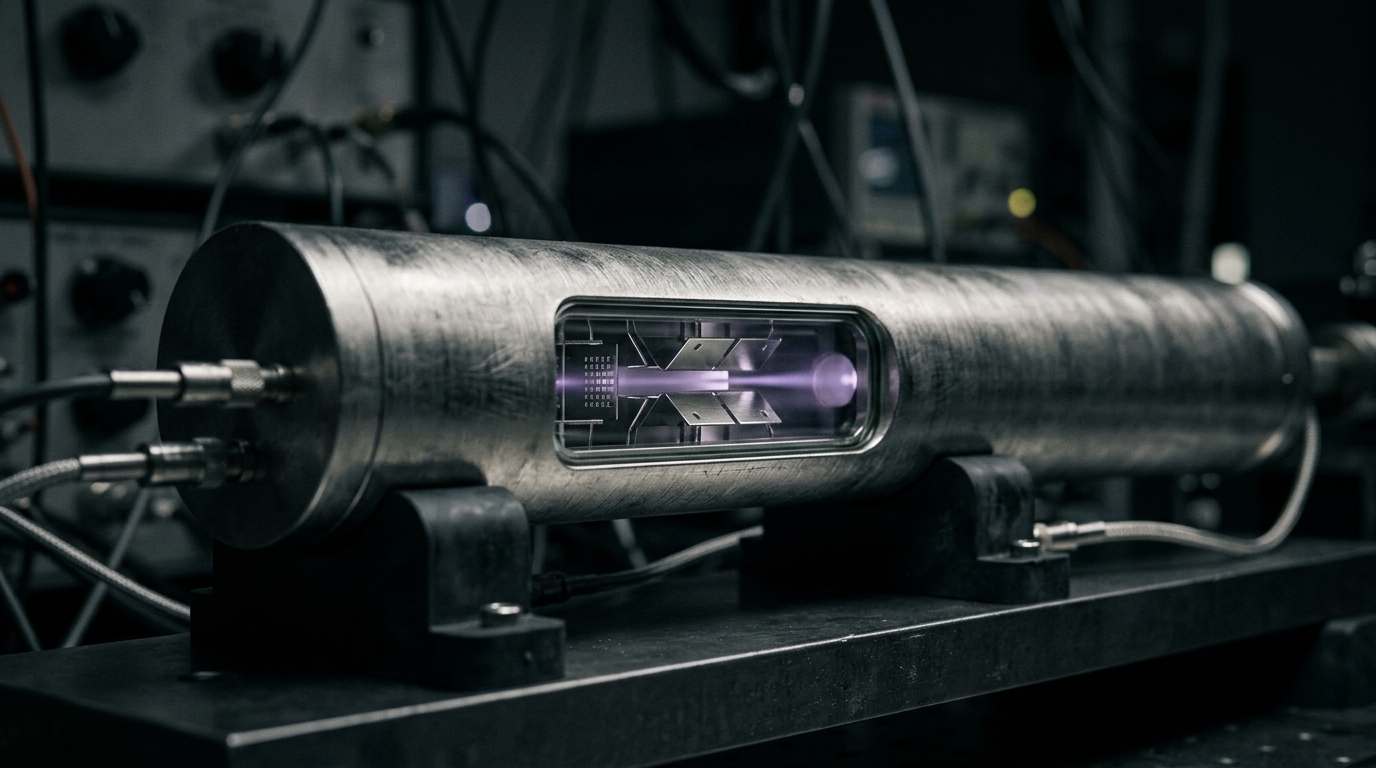
Quantum technology often conjures images of massive, error‑corrected computers, but the most tangible impact comes from a far simpler device – the atomic clock. By keeping time with the precision of a single atom’s natural frequency, these clocks provide a stable reference that can improve navigation, sensing, and timing systems without relying on satellite signals.
A Submarine Test Shows the Power of Pure Timekeeping
In October 2025 a Royal Navy uncrewed submarine carried Infleqtion’s Tiqker optical clock on a trial dive. The vessel could not determine its position underwater – GPS does not penetrate the sea – but the clock’s extraordinary stability allowed the onboard navigation suite to remain accurate for far longer between surface intervals. The experiment highlighted a modest yet vital role for quantum technology: holding perfect time when external references are unavailable.
Quantum Sensing Beyond the Hype
While quantum computers still await robust error correction, quantum sensors have been quietly commercial for years. Every GPS satellite relies on atomic clocks that stay within a billionth of a second, and countless phones and cars depend on that timing. The market is now expanding because satellite jamming and spoofing have created demand for navigation that does not depend on GPS.
How Atomic Clocks Work
Atoms act like identical tuning forks. Each species has fixed energy‑level spacings; when light of the exact frequency hits the atom, it transitions between levels. A clock locks a laser to that frequency, defining the second as 9,192,631,770 cycles of the cesium transition. Because nature fixes the number, the clock does not drift like a quartz crystal.
Real‑World Quantum Sensors
- Medical and mobility: Bosch forecasts mid‑single‑digit‑billion‑euro revenues by the late 2020s for diamond‑based magnetic sensors and optically pumped magnetometers that enable wearable brain‑activity scanners.
- Geophysics: French firm Exail sells cold‑atom gravimeters that detect gravity changes at the part‑per‑billion level, useful for volcano monitoring and mineral exploration.
- Aerospace: Boeing’s quantum inertial unit demonstrated GPS‑free flight for four hours, potentially shrinking long‑range navigation errors from kilometres to metres.
These examples illustrate that quantum sensors succeed when they are allowed to interact with the world – they measure a single external quantity while shielding everything else.
The Defence‑Driven Navigation Race
Satellite signal loss has surged. European aviation regulators reported a 220 % rise in GPS‑signal‑loss events between 2021 and 2024, and a UK government study estimated a £1.4 billion cost for a single day of navigation outage. This has spurred two competing quantum‑navigation approaches:
- Map‑matching sensors – quantum gravimeters or magnetometers compare measured gravity or magnetic fields against pre‑surveyed maps. Companies like Q‑CTRL claim nautical‑mile‑level accuracy in sea trials.
- Drift‑free inertial units – quantum inertial sensors provide continuous, self‑contained navigation without external references. Boeing’s flight test suggests a ten‑fold improvement over conventional inertial navigation.
Both approaches rely heavily on manufacturer‑provided performance figures, so buyers must treat claims with caution and demand independent verification.
Practical Guidance for Buyers
- Start with mature clocks – Chip‑scale atomic clocks are commercially available and can replace satellite‑derived timing on any platform.
- Treat quantum navigation as a backup – Deploy it alongside GPS, run your own trials, and wait for results from government‑run test ranges before committing to large‑scale integration.
- Watch for fragility – Quantum sensors are exquisitely sensitive; temperature swings, vibration, and stray fields can degrade performance. Robust packaging and field‑testing are essential.
- Monitor the policy landscape – Nations such as the UK have set national targets (e.g., quantum navigation on aircraft by 2030). Public funding can de‑risk early adoption, but commercial readiness may still lag.
Closing Thought
The atomic clock’s quiet triumph demonstrates that quantum technology’s most valuable contribution today is not a futuristic computer, but a reliable, physics‑based timekeeper that strengthens navigation, sensing, and timing across civilian and defence domains. As the market matures, discerning buyers should focus on proven, independently validated performance and view quantum navigation as a resilient complement to, rather than a replacement for, existing satellite systems.
Source
Read original sourceWhy we picked this
Accepted from curated QuantumUnzipped source (relevance scoring disabled).