Quantum sensor research earns Oklahoma State University’s Liu a top physics honor
OSU physics professor Yingmei Liu was named a 2026 APS Fellow for pioneering work on spinor Bose‑Einstein condensates, quantum walks, and Oklahoma’s only programmable quantum simulator that advances quantum sensing.
Introduction
Yingmei Liu, a professor of physics at Oklahoma State University (OSU), has been elected a 2026 Fellow of the American Physical Society (APS). The honor, bestowed on fewer than 0.5 % of eligible members each year, recognizes Liu’s fundamental contributions to the physics of spinor Bose‑Einstein condensates and quantum walks, as well as the development of Oklahoma’s sole programmable quantum simulator.
Breakthroughs in Quantum Simulation
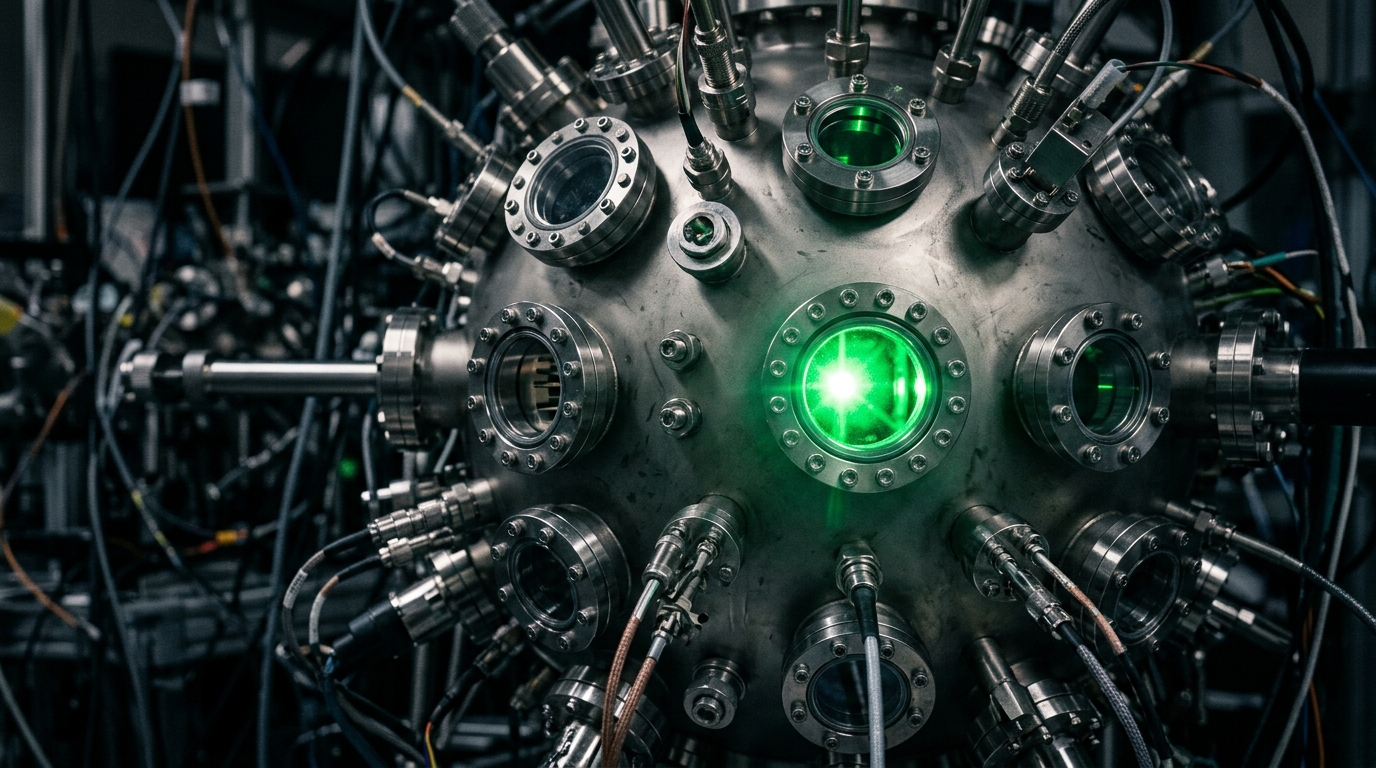
Liu’s research group built a programmable quantum simulator capable of modeling particle interactions that are intractable for classical supercomputers. By accurately reproducing the behavior of tiny quantum particles, the device enables studies of complex many‑body systems, testing of new quantum materials, and exploration of quantum information protocols. The simulator’s performance has already demonstrated advantages in specific calculations, suggesting a pathway toward designing and validating quantum technologies that would otherwise require prohibitive computational resources.
Impact on Quantum Sensing
The simulator builds on Liu’s earlier work with spinor Bose‑Einstein condensates—a state of matter that offers precise control over atomic spin degrees of freedom. Leveraging this control, Liu’s team has created quantum sensors that can locate the origin of weak signals with far greater precision than conventional devices. Potential applications span several domains:
- Medical diagnostics: non‑invasive imaging techniques that could detect disease earlier.
- Resource exploration: more accurate identification of mineral deposits and archaeological sites from satellite data.
- Earth monitoring: detection of subtle magnetic field variations that may improve earthquake prediction.
These sensor concepts illustrate how quantum‑enhanced measurement can translate fundamental physics into real‑world benefits.
Building the Next Generation of Quantum Scientists
Since establishing his research group 17 years ago, Liu has mentored over 30 undergraduate, graduate, and postdoctoral scholars. The lab’s collaborative environment, supported by more than $6 million in research funding, emphasizes hands‑on experience with cutting‑edge quantum hardware and theory. Liu attributes much of the group’s success to this mentorship model, which prepares students to lead future advances in quantum science and technology.
Looking Ahead
The OSU team plans to extend the simulator’s capabilities toward quantum information science, focusing on enhancing the precision of quantum sensing protocols. By integrating the simulator with emerging quantum communication and computation platforms, the group aims to create a versatile testbed for next‑generation quantum devices.
--- Yingmei Liu’s APS fellowship underscores the growing importance of quantum simulation and sensing research in the United States, and highlights OSU’s emerging role as a hub for quantum innovation.
Source
Read original sourceWhy we picked this
Accepted from curated QuantumUnzipped source (relevance scoring disabled).