QuantumCT seeks partners for new quantum sensing projects
QuantumCT’s Phase 3 pilot RFP invites Connecticut academic, startup, and industry teams to partner on quantum‑sensing projects in four priority areas.
Introduction
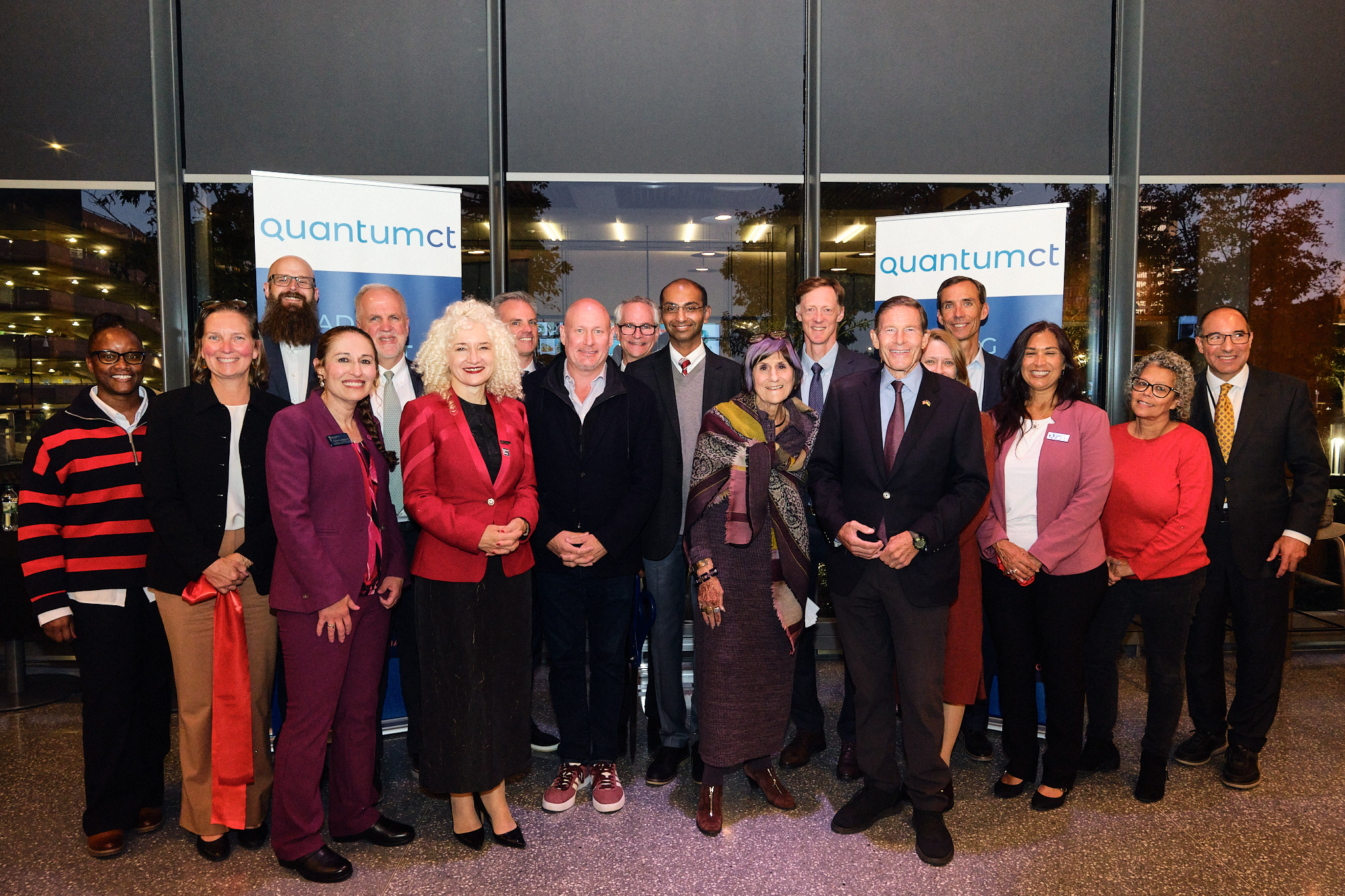
QuantumCT has launched a Phase 3 Pilot Project Request for Proposals (RFP) aimed at accelerating quantum‑sensing research and its transition to real‑world applications. The initiative, announced at a workshop in New Haven on October 28, 2026, seeks collaborative proposals that combine academic expertise, engineering know‑how, and industry resources. By focusing on four strategically chosen challenge areas, QuantumCT hopes to cement Connecticut’s leadership in the emerging quantum‑sensing market.
Why Quantum Sensing Now?
Quantum sensing leverages quantum phenomena—such as superposition, entanglement, and atomic coherence—to achieve measurement precision far beyond classical limits. The technology promises breakthroughs across sectors:
- Navigation: magnetic‑aided inertial systems that operate without GPS.
- Communications: ultra‑sensitive radio‑frequency detection using Rydberg‑atom sensors.
- Distributed Monitoring: networks of synchronized quantum sensors for environmental or security surveillance.
- Biology: probing quantum processes in living systems for medical diagnostics.
These near‑term applications are considered more tractable than full‑scale quantum computing, making them attractive targets for early commercialization and national‑security relevance.
The Four Priority Areas
- Magnetic‑Aided Inertial Navigation – Developing quantum‑grade gyroscopes and accelerometers that can maintain accurate positioning in GPS‑denied environments, a capability critical for autonomous vehicles and defense platforms.
- Rydberg Atom Radio‑Frequency Detection – Creating compact sensors that exploit Rydberg atom transitions to detect weak RF signals, enabling spectrum monitoring and secure communications.
- Quantum‑Enabled Distributed Sensing – Building networks of entangled sensors that share quantum information to improve collective sensitivity, useful for seismic monitoring, climate tracking, and infrastructure health.
- Biological Quantum Processes – Investigating how quantum effects manifest in biological systems and engineering sensors that can read out these signals for drug discovery or health monitoring.
Each focus area was defined in partnership with the RTX Research Center and reflects current bottlenecks—such as device integration, noise mitigation, and scalable readout—that hinder deployment beyond laboratory settings.
How to Participate
The workshop featured fourteen “flash talks” from faculty and industry researchers at UConn, Yale, Raytheon, MITRE, Mesa Quantum, Excite, and others. Participants outlined the specific expertise they need—ranging from chip‑fabrication facilities and high‑performance computing to field‑testing platforms and regulatory guidance. Prospective teams should:
- Align with at least one priority area and articulate a clear path from prototype to demonstrable performance.
- Demonstrate a multidisciplinary composition, blending quantum physics, engineering, software, and commercialization talent.
- Identify in‑kind contributions (e.g., access to specialized equipment, cloud‑based quantum simulators, or test‑bed locations) that strengthen the proposal.
- Submit a concise technical narrative and a realistic budget, following the detailed RFP guidelines on QuantumCT’s website.
Proposals will undergo a peer review by QuantumCT’s expert panel, with selected teams advancing to pilot development, receiving mentorship, and potentially securing follow‑on funding.
Practical Takeaways
- Start early: Engage with potential collaborators now to shape a cohesive proposal before the RFP deadline.
- Leverage existing partnerships: Build on prior UConn‑Yale collaborations that showcased successful joint project models.
- Focus on impact: Emphasize how the sensor solution addresses a concrete market or security need, not just scientific novelty.
- Plan for scalability: Include a roadmap for moving from a lab‑scale demonstrator to a field‑ready system.
By uniting Connecticut’s academic powerhouses, agile startups, and established defense contractors, QuantumCT’s Phase 3 pilot aims to turn quantum‑sensing concepts into deployable technologies. Interested teams should review the full RFP, align their expertise with the four priority challenges, and submit a compelling, partnership‑focused proposal.
Source
Read original sourceWhy we picked this
Accepted from curated QuantumUnzipped source (relevance scoring disabled).