QuTech Launches Quantum Systems Integration Unit to Build Open-Architecture Superconducting Systems
QuTech has created a Quantum Systems Integration Unit to develop open‑architecture superconducting quantum computers using a European supply chain.
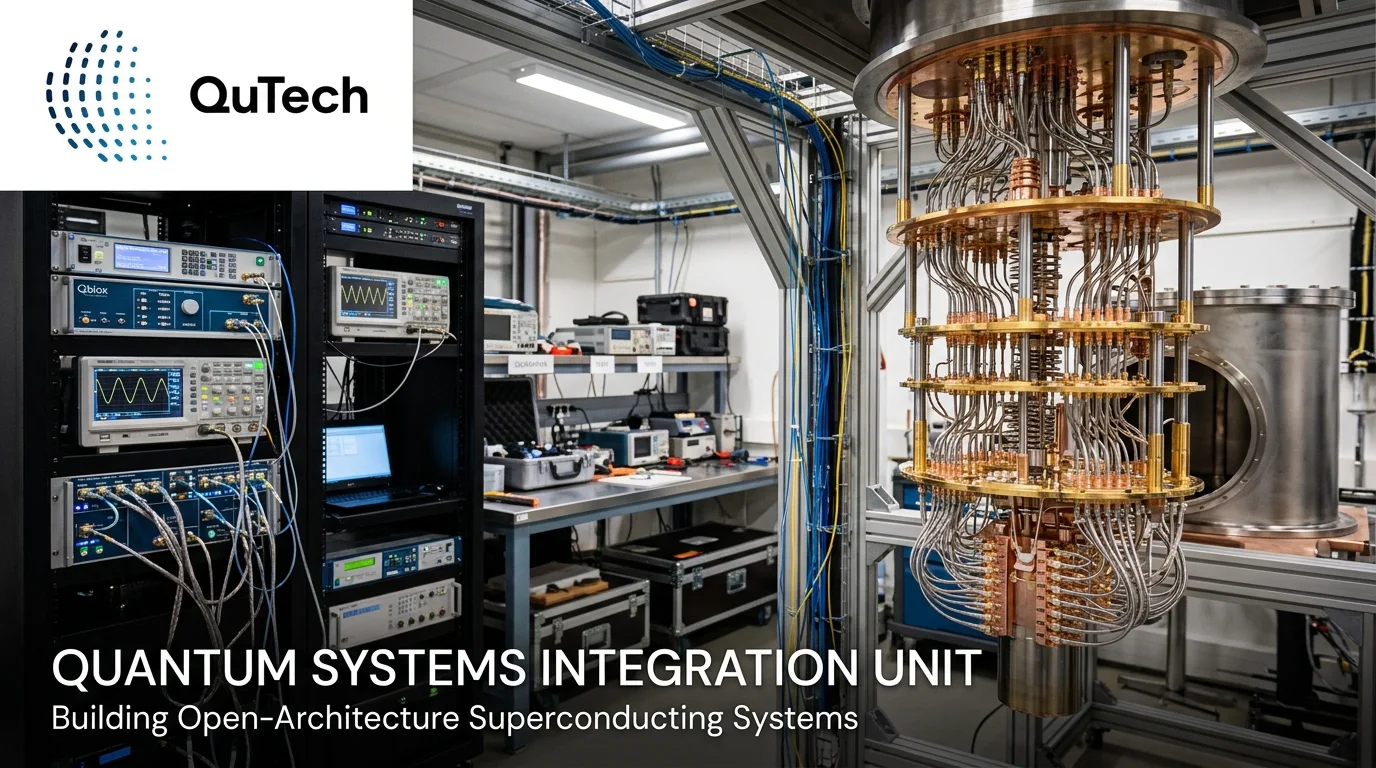
QuTech’s New Quantum Systems Integration Unit
QuTech, the joint quantum research institute of Delft University of Technology and TNO, announced the formation of a dedicated Quantum Systems Integration Unit. The unit’s mission is to design, assemble, and commission full‑stack, open‑architecture superconducting quantum computers that rely on a European‑sourced hardware ecosystem.
Why an Integration Unit Matters
Building a quantum computer is more than fabricating a chip. It requires tight coordination across cryogenics, packaging, microwave wiring, control electronics, automated calibration, compiler software, and cloud access. By centralising these activities, QuTech aims to move from isolated chip‑development projects to repeatable, commercial‑grade systems. The unit will standardise modular interfaces and integration blueprints, laying the groundwork for a spin‑out venture planned for 2028.
Technical Foundations and Partnerships
The new unit builds on five generations of QuTech’s Quantum Inspire processors, including the recently released 17‑qubit Tuna‑17 system (July 2026) and the larger‑scale HectoQubit/2 programme. It will incorporate recent research from the DiCarlo lab on:
- Measurement‑integrated leakage‑reduction units (≈98 % leakage removal, >99 % assignment fidelity)
- Tunable‑coupler designs that suppress spectator‑qubit crosstalk
- Mitigation techniques for ionising‑radiation‑induced error bursts
Key European supply‑chain partners include TNO, QuantWare (QPUs), Qblox (control electronics), Delft Circuits (cryogenic cabling), Orange Quantum Systems (automated calibration), Peak Quantum, and Riverlane (quantum error‑correction decoding). These collaborations ensure that every layer of the stack—from the superconducting chip to the cloud interface—uses components sourced and manufactured within Europe.
Roadmap and Commercial Outlook
During its first year, the unit will:
- Standardise modular system interfaces and publish integration blueprints.
- Create an IP portfolio covering hardware, software, and services.
- Offer turnkey systems and integration‑as‑a‑service to academic and industrial users.
- Prepare for a spin‑out in 2028, targeting high‑performance‑computing deployments and cloud‑based quantum services.
By treating the quantum computer as a holistic product rather than a collection of isolated components, QuTech hopes to accelerate the transition from research prototypes to reliable, scalable machines that can be deployed in European data centres.
What This Means for the European Quantum Landscape
The launch signals a maturing ecosystem in which hardware, software, and supply‑chain considerations are addressed together. It also aligns with broader EU initiatives such as the Quantum Flagship’s OpenSuperQPlus program, reinforcing Europe’s ambition to become a leader in open‑architecture quantum technologies.
---
QuTech’s announcement marks a strategic step toward commercialising superconducting quantum computers, emphasizing integration, standardisation, and a fully European supply chain.
Hype check
Not a research claimThe story reports the creation of an integration unit and related partnerships; there is no technical performance claim to evaluate.
We rate research and technical results only. How we rate hype →
Source
Read original sourceWhy we picked this
Accepted from curated QuantumUnzipped source (relevance scoring disabled).