Researchers Build Photonic Router Using Fewer Phase Shifters
MIT and DTU researchers demonstrated a photonic router that scales with O(N) phase shifters, cutting component count dramatically.
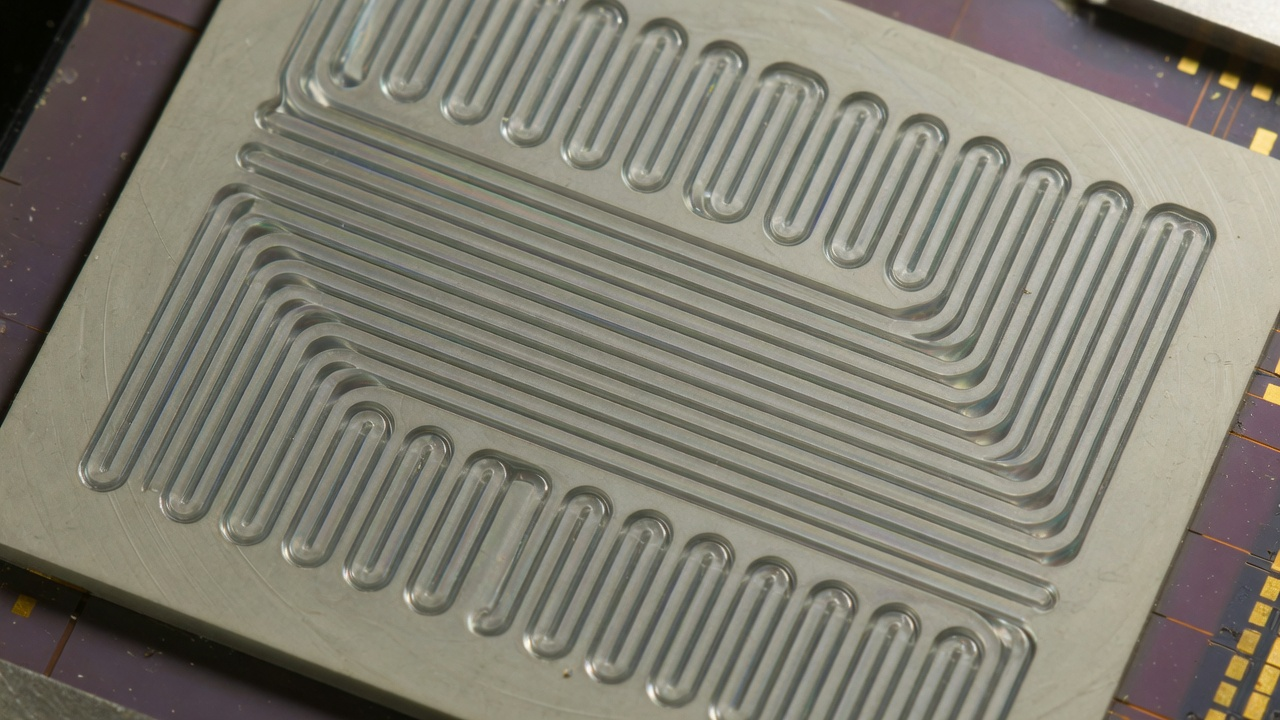
Linear‑Scaling Photonic Router Reduces Component Count
A team from the Massachusetts Institute of Technology and the Technical University of Denmark has introduced a new photonic circuit architecture that routes signals between N inputs and N outputs using only O(N) programmable phase shifters, instead of the traditional O(N²) requirement. The work, described in an arXiv pre‑print, represents a concrete step toward more compact, energy‑efficient optical interconnects for high‑performance computing and modular quantum processors.
How the Architecture Works
The design replaces the universal transformation approach of conventional photonic meshes with a signal‑routing strategy. Light first passes through a passive multimode interferometer that distributes it across multiple channels without interference. A single row of reflective phase shifters—implemented with thin‑film lithium‑niobate electro‑optic modulators—then directs each channel to its desired output. Because the number of shifters grows linearly with the number of ports, the footprint and control complexity shrink dramatically.
Experimental Demonstration
The authors fabricated a 3 × 3 router on x‑cut thin‑film lithium niobate. Key performance figures include:
- Resonance tuning efficiency: 1.92 GHz/V via the Pockels effect
- Electro‑optic bandwidth: 6.2 GHz
- Footprint per phase shifter: ~100 µm²
- Operating voltage: < 5 V
- Extinction ratio: > 11 dB for all output channels
- Sequential routing speed: 10 MHz (limited by test equipment, not the device itself)
These results show that the router can switch states quickly and with low loss, while maintaining a tiny physical size.
Remaining Challenges and Outlook
Although the prototype demonstrates linear scaling and impressive electro‑optic performance, sustained gigahertz‑level throughput remains out of reach. The authors note that the Pockels‑effect‑based modulators face intrinsic RF efficiency and capacitance limits, which must be addressed before the architecture can support continuous high‑speed data streams. Nevertheless, the reduction in component count promises lower power consumption and simpler control electronics—attributes valuable for both classical photonic computing clusters and future quantum‑processor interconnects.
Why This Matters
Current photonic meshes require a quadratic increase in phase shifters, quickly becoming impractical for large‑scale systems. By moving to a linear‑scaling routing scheme, the new architecture could enable:
- Denser photonic integration with fewer control lines
- Reduced static power draw because fewer active elements are needed
- Simpler packaging and thermal management for large‑scale optical networks
If the material‑level challenges are overcome, this approach may become a cornerstone for scalable optical interconnects in next‑generation computing platforms.
---
The work is available as an arXiv pre‑print (arXiv:2610.31757). No peer‑reviewed publication or independent replication has been reported at this time.
Hype check
PartlyThe paper shows a real prototype with linear scaling, but performance claims (e.g., gigahertz operation) are limited by equipment and material constraints, and no external validation is provided.
- Peer-reviewed paper, or press release only?Press release only — Only an arXiv pre‑print is cited
- Error-corrected (logical) qubits, or physical qubits only?Logical / not a qubit claim — Claim does not involve qubit counts
- A new milestone, or a rebrand / restatement?New — Introduces O(N) routing architecture, a novel scaling result
- Independent confirmation?Not yet — No external confirmation or replication mentioned
- Does the headline claim match what the source shows?Matches — Headline accurately reflects the O(N) phase‑shifter claim
An editorial assessment of the claim as reported, not a judgment of the company or researchers. Checked against: arxiv.org. How we rate hype →
Source
Read original sourceWhy we picked this
Accepted from curated QuantumUnzipped source (relevance scoring disabled).