Riken Institute’s work scales up silicon-based quantum processors
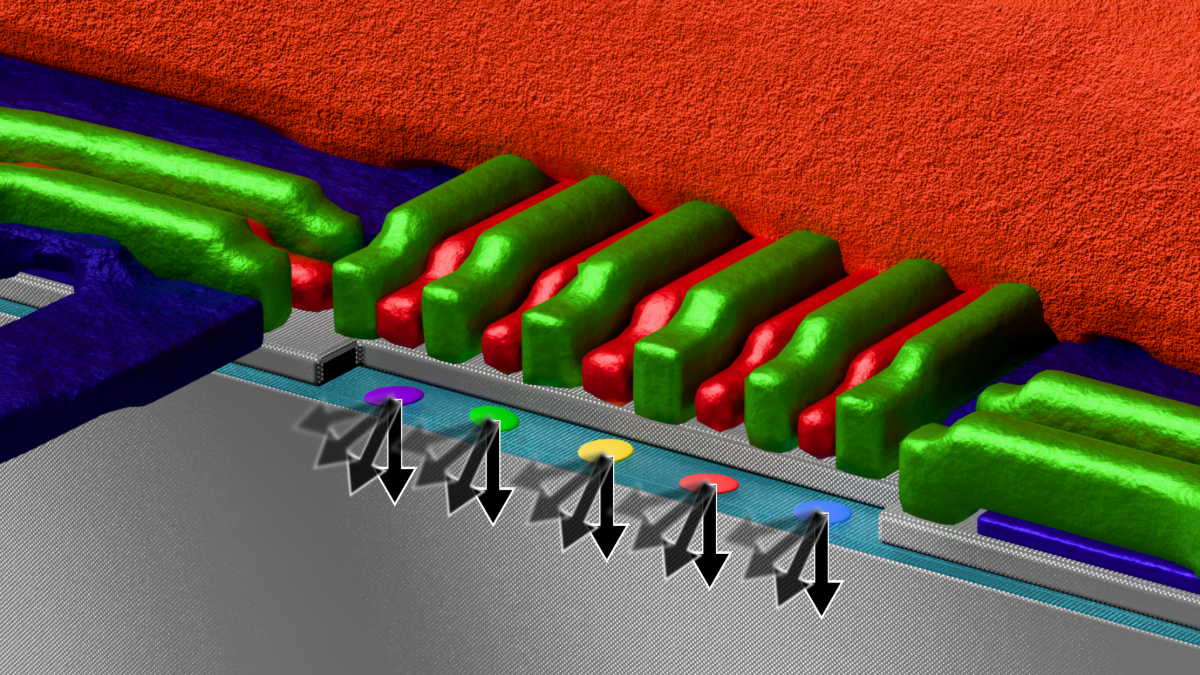
RIKEN researchers demonstrated high‑fidelity, shared‑line control of a five‑qubit silicon spin array, a key step toward scalable silicon quantum processors.
Introduction
Recent work from the RIKEN Center for Emergent Matter Science shows that silicon‑based spin qubits can be operated with high fidelity using a single shared microwave control line. By identifying and correcting the AC Stark shift that degrades parallel operations, the team achieved gate fidelities above 99.99% for up to three simultaneously driven qubits, paving the way for larger, more practical silicon quantum processors.
Tackling the AC Stark Shift
When multiple qubits are driven at once, the microwave field can unintentionally shift each qubit’s energy levels—a phenomenon known as the AC Stark shift. This shift introduces unwanted phase errors that accumulate during gate operations. The RIKEN team pinpointed the Stark shift as the dominant source of error in parallel control of silicon spin qubits. Their solution relies on a pairwise phase‑calibration protocol: instead of calibrating every possible combination of qubits, they measure and compensate the relative phase shifts between each pair of qubits. This approach scales linearly with the number of qubits, dramatically reducing the calibration overhead.
Results: High‑Fidelity Parallel Gates
Using the calibrated shared‑line scheme, the researchers reported:
- Single‑qubit gate fidelities of 99.999% when addressed individually.
- Simultaneous operation of three qubits with fidelities exceeding 99.99%.
- Full five‑qubit operation with fidelities around 99.9%, limited primarily by drive‑induced decoherence rather than calibration errors.
These numbers approach the thresholds required for fault‑tolerant quantum error correction, indicating that silicon spin qubits can meet the stringent performance demands of future quantum computers.
Implications for Scalable Quantum Hardware
Traditional quantum processors allocate a dedicated control line to each qubit, a strategy that quickly becomes untenable as the qubit count grows. The shared‑line architecture demonstrated by RIKEN simplifies wiring, reduces chip area, and lowers fabrication costs—advantages that align well with silicon’s existing semiconductor manufacturing ecosystem. By leveraging established CMOS processes, silicon spin qubits can benefit from the massive industrial infrastructure already in place for classical chips, potentially accelerating the transition from laboratory prototypes to commercial quantum devices.
Remaining Challenges and Outlook
While the calibration protocol effectively mitigates the AC Stark shift, the experiments revealed that drive‑induced decoherence remains a bottleneck when all five qubits are driven simultaneously. This decoherence stems from the higher microwave power needed for concurrent control, which can heat the device and introduce noise. Future work will need to refine device geometry, improve microwave delivery efficiency, and explore pulse‑shaping techniques to further suppress these effects.
Conclusion
The RIKEN study demonstrates that high‑fidelity, parallel control of silicon spin qubits is achievable with a shared microwave line, addressing a critical scalability hurdle. By combining a scalable calibration method with silicon’s manufacturing advantages, this work brings fault‑tolerant silicon quantum processors closer to reality. Continued improvements in device design and control engineering will be essential to push fidelities even higher and to realize the full promise of silicon‑based quantum computing.
Source
Read original sourceWhy we picked this
Accepted from curated QuantumUnzipped source (relevance scoring disabled).