Schrödinger’s unpublished work challenges quantum collapse ideas
A newly transcribed 1940s manuscript shows Schrödinger proposed a subtle hidden‑variable model, revealing his nuanced stance on determinism and challenging the perceived finality of von Neumann’s impossibility proof.
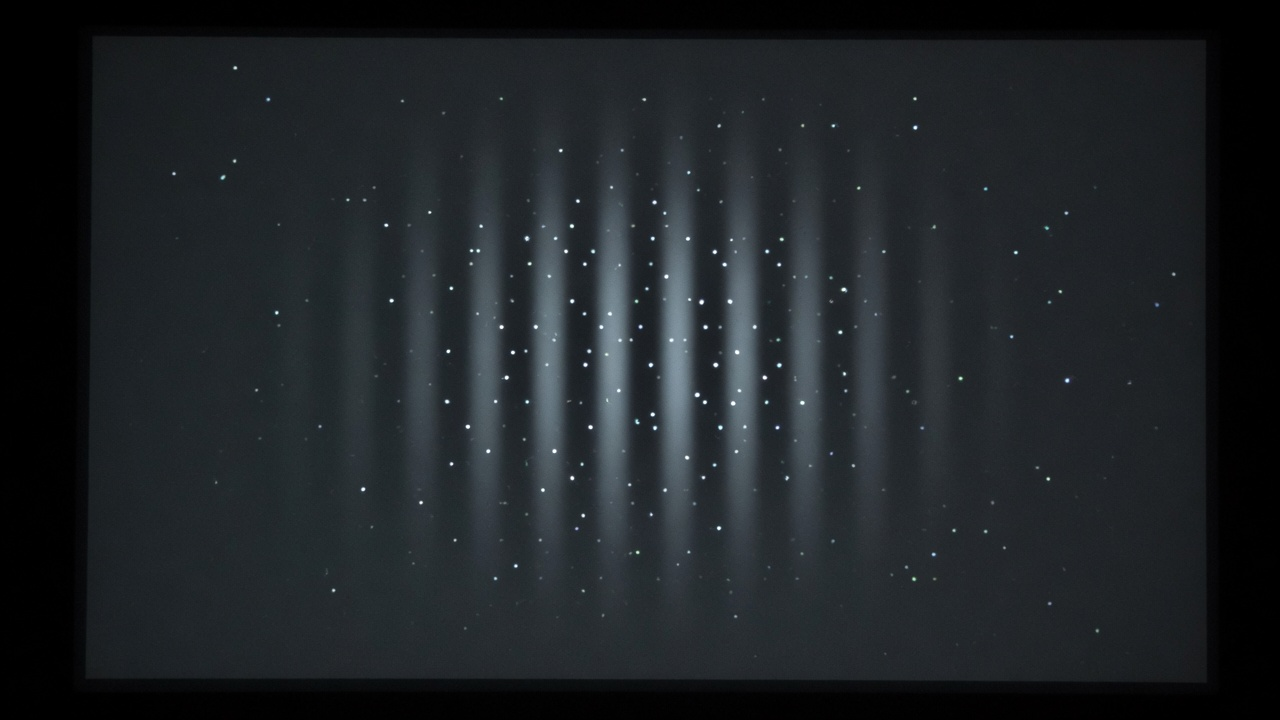
Schrödinger’s Forgotten Hidden‑Variable Manuscript
In a recently unearthed manuscript, Erwin Schrödinger offers a detailed hidden‑variable construction that directly engages with a 1944‑45 debate in Nature over the foundations of quantum mechanics. Far from being a simple endorsement of determinism, the document reveals Schrödinger’s careful skepticism about the prevailing claim that hidden variables were mathematically impossible. The manuscript, now fully transcribed and analyzed by Flavio Del Santo (University of Geneva) and colleagues, provides a fresh historical lens on the early hidden‑variable controversy that predates Bohm’s 1952 causal interpretation.
---
1. Historical Context: The Mid‑1940s Foundations Debate
After von Neumann’s 1932 “no‑go” theorem, many physicists accepted that deterministic hidden variables could not coexist with quantum theory. Yet the early 1940s saw renewed scrutiny, sparked by J.W.T. Whittaker’s critique of Malus’ law and a series of letters in Nature that questioned the assumptions underlying von Neumann’s proof. Schrödinger, then a senior figure in quantum theory, drafted a response that was never published during his lifetime.
The manuscript shows him addressing Whittaker’s argument that a one‑bit hidden variable (only two discrete values) leads to an absurd prediction for light passing through successive polarizers. Schrödinger identified the simplifying assumption of a two‑value hidden parameter as the source of the problem and proposed a more elaborate scheme that could reproduce the statistical outcomes of Malus’ law.
---
2. The Core of Schrödinger’s Model
Schrödinger’s construction introduces a continuous hidden variable \(\lambda\) associated with each photon. When a photon encounters the first polarizer, \(\lambda\) is deterministically transformed according to a rule that depends on the polarizer’s orientation. Crucially, after this interaction the distribution of \(\lambda\) is reshuffled to become uniform again, ensuring that subsequent polarizers see the same statistical ensemble.
Mathematically, the model can be summarized as:
- Initial distribution: \(\lambda\) is uniformly distributed on \([0,2\pi)\).
- Deterministic update: After the first polarizer at angle \(\theta1\), \(\lambda\) is mapped to \(\lambda' = f(\lambda,\theta1)\), a bijective function preserving measure.
- Uniform re‑distribution: A stochastic “reshuffling” step restores the uniform distribution before the second polarizer.
With this two‑step process, the model reproduces the \(\cos^2(\theta1-\theta2)\) dependence of Malus’ law for any number of polarizers, matching quantum predictions without invoking wavefunction collapse.
---
3. Why Schrödinger Was Not a Determinism Advocate
The manuscript makes it clear that Schrödinger’s goal was not to champion a deterministic worldview but to demonstrate that the impossibility proofs of his day were limited by their assumptions. He wrote that the “general argument against all supposed demonstrations of impossibility, such as von Neumann’s,” needed continual re‑examination. By offering a concrete counterexample, he highlighted that a proof valid for a restricted class of hidden‑variable models (e.g., one‑bit variables) does not rule out more sophisticated constructions.
Schrödinger also referenced contemporary philosophical views, noting Bertrand Russell’s caution that physics need not commit to complete determinism. This openness underscores his broader scientific philosophy: skepticism toward sweeping claims of impossibility and a willingness to explore alternative formulations.
---
4. Legacy and Modern Relevance
Although the manuscript remained hidden for decades, its ideas anticipate later developments. David Bohm’s 1952 causal interpretation similarly employed a deterministic hidden variable (the particle’s position) together with a guiding wave, showing that hidden‑variable theories could be mathematically consistent. Schrödinger’s early work therefore represents a missing link in the historical chain that led to renewed interest in deterministic models during the 1950s and beyond.
In contemporary quantum foundations, the manuscript serves as a reminder that debates about determinism versus indeterminism are often shaped by the specific mathematical frameworks chosen. Modern research on contextuality, generalized probabilistic theories, and quantum‑classical hybrids continues to grapple with the same questions Schrödinger raised: how much of quantum statistics can be reproduced by underlying variables, and what assumptions are truly necessary for a no‑go theorem?
---
5. Practical Takeaway for Researchers
For physicists and philosophers working on quantum foundations today, Schrödinger’s manuscript offers two practical lessons:
- Question the scope of impossibility proofs. When a theorem rules out a class of models, examine the underlying assumptions—especially any discretization or symmetry constraints.
- Consider explicit constructions. Even a simple deterministic update rule, as Schrödinger showed, can illuminate where a proof may be too narrow and inspire new model‑building approaches.
---
In short, the newly published transcription of Schrödinger’s hidden‑variable manuscript enriches our understanding of the 1940s foundations debate, showcases his nuanced position on determinism, and provides a concrete example of how subtle changes in model assumptions can reopen seemingly closed doors in quantum theory.
Source
Read original sourceWhy we picked this
Accepted from curated QuantumUnzipped source (relevance scoring disabled).