Scientists reach the ultimate quantum limit on a surface
Researchers at the Max Planck Institute have created an ultra‑clean crystal surface that lets single molecules reach the fundamental Fourier‑limited quantum coherence, opening new routes for molecular quantum technologies.
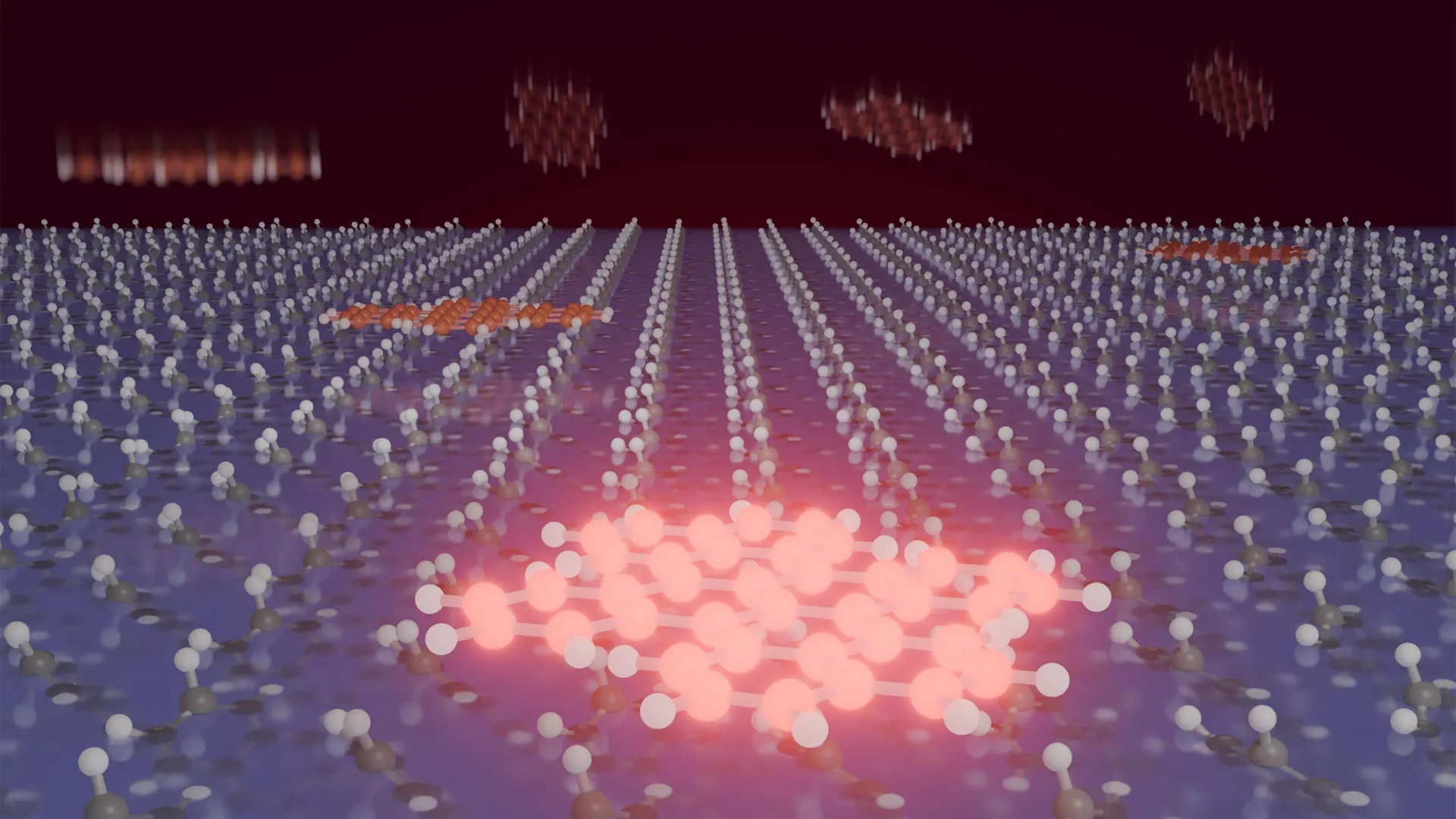
Quantum Coherence at Its Ultimate Limit
Scientists at the Max Planck Institute for the Science of Light (MPL) have demonstrated that individual molecules attached to a specially prepared crystal surface can maintain optical coherence for the maximum time allowed by physics – the Fourier limit. This achievement removes a long‑standing barrier to using surface‑bound quantum emitters in emerging quantum technologies.
Why Surfaces Have Been a Bottleneck
Quantum emitters such as single atoms or molecules are prized for their ability to generate single photons, store quantum information, and act as nodes in quantum networks. To exploit these properties, the emitters must stay stable and isolated from environmental noise for extended periods. While trapping particles in vacuum or embedding them in bulk solids works well, placing them directly on a surface promises unprecedented control: scanning tunnelling microscopy (STM) or atomic‑force microscopy (AFM) tips could “touch” and manipulate the emitters with atomic precision.
In practice, surfaces are rarely clean enough. Ambient contaminants, adsorbed gases, and surface roughness introduce fluctuations that dramatically shorten coherence times—often by orders of magnitude compared to the theoretical limit. Overcoming this noise has been a central challenge for surface‑based quantum optics.
A Clever Cleaning Strategy
The MPL Nano‑Optics team, led by Prof. Vahid Sandoghdar, turned to the natural sublimation of organic crystals. By placing a small crystal inside a cryogenic vacuum chamber, the uppermost layers slowly evaporated, carrying away impurities and leaving a pristine surface. Once the crystal was cooled to a few kelvin above absolute zero, sublimation halted, preserving the cleanliness.
With the surface prepared, the researchers used a miniature oven to deposit individual molecules onto the cold crystal. The molecules settled on the atomically smooth, contaminant‑free plane, providing an environment where external disturbances were minimized.
Reaching the Fourier Limit
Coherence time measures how long a quantum system retains its phase information, a key metric for quantum information processing. The Fourier limit defines the longest possible coherence time based on the natural radiative lifetime of the emitter; any additional dephasing shortens this time.
Spectroscopic measurements of the surface‑adsorbed molecules showed linewidths that matched the Fourier‑limited value. In other words, the molecules behaved as if they were in a perfectly quiet vacuum, despite being bound to a solid surface. This is the first observation of the ultimate quantum limit for surface‑bound emitters.
Implications and Future Directions
Achieving Fourier‑limited coherence on a surface unlocks several promising avenues:
- Nanometer‑Scale Control: Combining the ultra‑clean surface with STM or AFM could allow researchers to position and orient individual quantum emitters with sub‑nanometer precision, enabling deterministic coupling to photonic structures or other quantum systems.
- Tailored Light‑Matter Interactions: The crystal’s influence on molecular energy levels and orientation suggests that surface engineering could be used to tune emission wavelengths, polarization, or even vibrational modes.
- Molecular Quantum Devices: Stable, surface‑bound emitters could serve as building blocks for quantum sensors, on‑chip single‑photon sources, or hybrid quantum‑classical interfaces where molecules interact directly with electronic circuits.
Prof. Sandoghdar notes that the next step is to integrate the clean‑surface technique with high‑resolution microscopy, aiming to manipulate individual emitters while preserving their optimal coherence. Success in this direction would provide unprecedented insight into molecule‑surface interactions and lay the groundwork for scalable molecular quantum technologies.
---
The work, described in a 2026 Science article, represents a milestone in quantum optics by demonstrating that the fundamental coherence limit is attainable for molecules on a surface, a feat previously thought impossible due to surface‑induced noise.
Source
Read original sourceWhy we picked this
Accepted from curated QuantumUnzipped source (relevance scoring disabled).