Sequential realization of Quantum Instruments
A new theoretical framework shows any quantum instrument can be implemented sequentially using reusable ancilla qubits, establishing a lower bound on the product of steps and ancillae.
Introduction
Quantum instruments—measurements that both produce outcomes and transform the post‑measurement state—are central to many quantum algorithms and error‑correction protocols. Implementing them typically requires ancillary qubits that act as temporary helpers, inflating the hardware demand of near‑term devices. In their recent paper, Sequential realization of Quantum Instruments, Soham Sau and Michal Sedlák demonstrate that adaptive mid‑circuit measurements, resets, and classical feed‑forward can be harnessed to reuse a small set of ancilla qubits across multiple measurement steps. Their analysis yields a concrete lower bound on the product of the number of steps (N) and the number of ancilla qubits (n_A), and identifies regimes where this bound is tight.
Adaptive Sequence of Instruments (ASI)
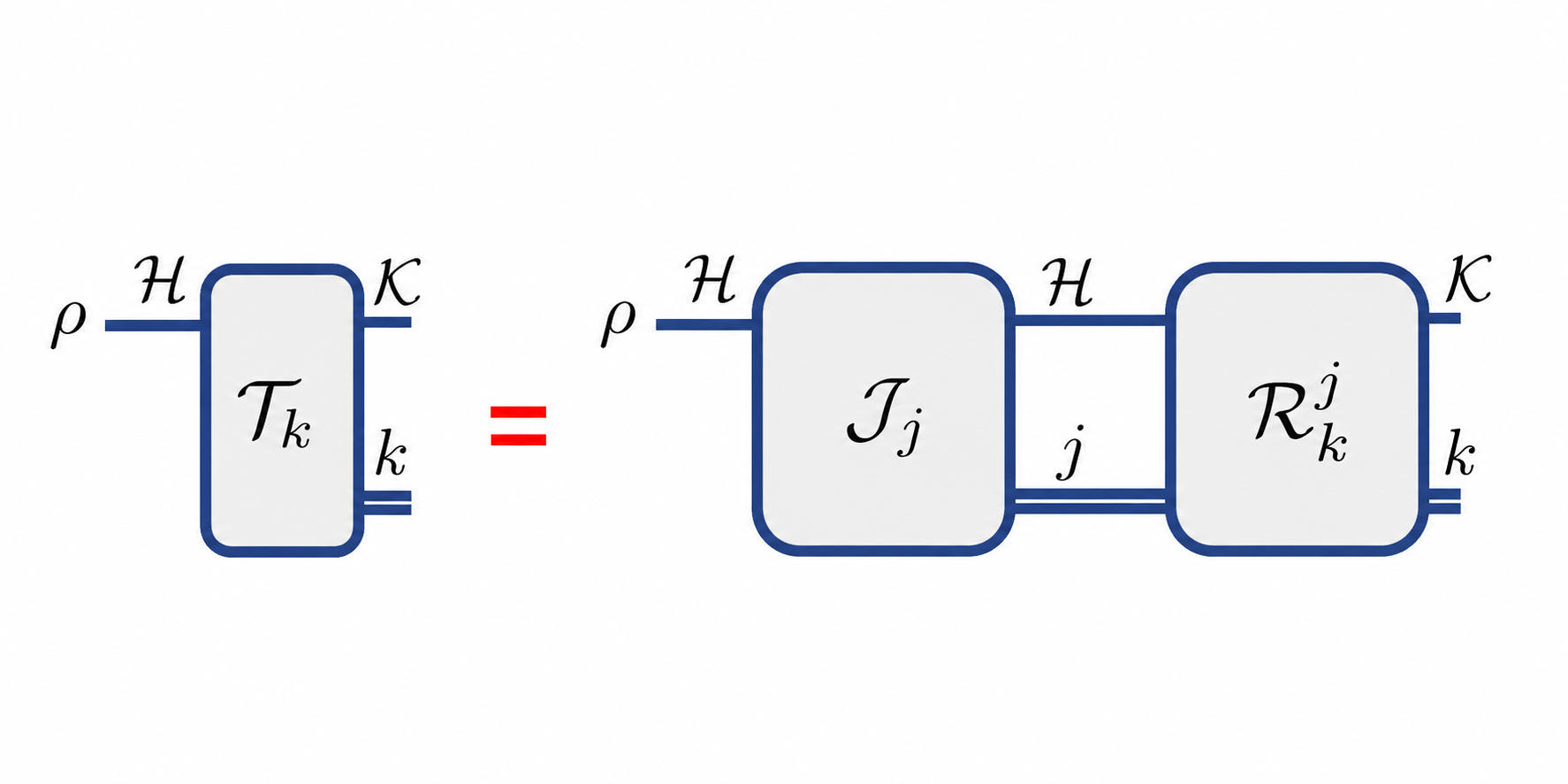
The authors formalize the notion of an Adaptive Sequence of Instruments (ASI), a protocol that interleaves quantum operations, mid‑circuit measurements, and classical processing. By decomposing any instrument into a sequence of simpler operations, the ASI framework shows how to trade off ancilla count against the number of sequential steps. Crucially, for instruments that map n input qubits to m output qubits with m > n, the construction can be realized with only (m‑n) ancilla qubits, re‑measured and reused across the N steps. This overturns the intuition that more complex instruments necessarily need proportionally more ancillary resources.
Lower Bound on the Resource Product
Sau and Sedlák derive an achievable lower bound on the product \(N\cdot n_A\). The bound depends on the instrument’s intrinsic complexity, captured by the rank of its associated Choi matrix. When the bound is saturated, the ASI protocol is provably optimal: any further reduction in ancilla count would require additional measurement steps, and vice‑versa. The paper provides explicit constructions for several families of instruments, illustrating how the bound can be approached in practice.
Practical Implications for Near‑Term Quantum Processors
Dynamic quantum circuits—those that support mid‑circuit measurement, reset, and conditional gates—are now available on several superconducting and trapped‑ion platforms. The ASI framework directly leverages these capabilities, offering a pathway to implement sophisticated measurement‑based subroutines without exceeding the limited qubit budgets of NISQ devices. Potential applications include:
- Adaptive error mitigation, where syndrome extraction can be performed with minimal ancilla overhead.
- Measurement‑based quantum algorithms, such as variational quantum eigensolvers that require intermediate read‑outs.
- Resource‑efficient quantum tomography, where sequential measurements replace large ancilla registers.
Conclusion
The work provides a rigorous, resource‑aware blueprint for realizing arbitrary quantum instruments on hardware constrained by qubit count. By establishing a clear trade‑off between ancilla reuse and measurement depth, it equips experimentalists with actionable guidelines for designing dynamic circuits that make the most of today’s quantum processors.
For a deeper dive, see the full article in Quantum (2026) and the accompanying arXiv preprint.
Hype check
RealThe paper presents a concrete theoretical construction with a provable lower bound, published in a peer‑reviewed journal and supported by an arXiv preprint; no external replication is needed for a theory result.
- Peer-reviewed paper, or press release only?Paper — Published in Quantum, DOI provided
- Error-corrected (logical) qubits, or physical qubits only?Logical / not a qubit claim — Not a qubit‑count claim
- A new milestone, or a rebrand / restatement?New — Introduces a novel ASI framework and resource bound
- Independent confirmation?Not yet — No external confirmation mentioned
- Does the headline claim match what the source shows?Matches — Headline accurately reflects the paper’s content
An editorial assessment of the claim as reported, not a judgment of the company or researchers. Checked against: doi.org. How we rate hype →
Source
Read original sourceWhy we picked this
Accepted from curated QuantumUnzipped source (relevance scoring disabled).