Silicon carbide nanopillars achieve record photon counts for quantum sensors
Chinese researchers have built silicon‑carbide nanopillar arrays that emit up to 2 Mcps, setting a new brightness record for SiC quantum sensors.
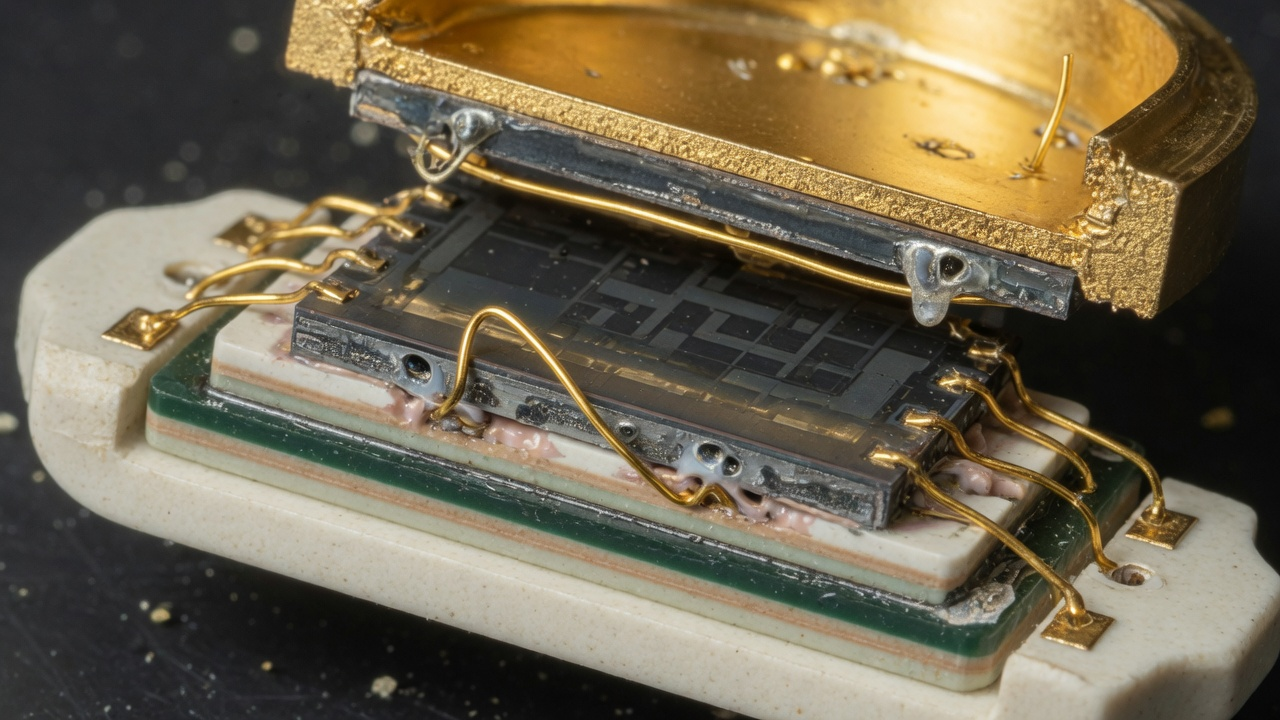
Record‑bright silicon‑carbide nanopillars for quantum sensing
Silicon‑carbide (SiC) color centers have long been touted as a scalable alternative to diamond‑based quantum emitters, but their photon‑collection efficiency has lagged behind. A team from the Laboratory of Spin Magnetic Resonance at the Hefei National Laboratory, part of the University of Science and Technology of China, reports a fabrication workflow that pushes SiC brightness to unprecedented levels. By deterministically placing PL5 and PL6 defects at the core of 4H‑SiC nanopillars, the researchers achieve photon‑count rates of roughly 1 Mcps for PL5 and 2 Mcps for PL6—an order of magnitude higher than bulk SiC crystals, which typically sit near 100 kcps.
---
Deterministic placement and nanophotonic design
The breakthrough hinges on a self‑aligned process that couples localized oxygen‑ion implantation with electron‑beam lithography. After depositing a stack of PMGI‑SF6, PMMA‑A4, and a conductive polymer, nanoscale holes are written into the resist, defining the future nanopillar locations. Subsequent etching creates pillars with a sidewall angle of 78°, while the ion implantation positions the quantum emitters within a 90‑nm‑radius doping region at the pillar core. Finite‑difference time‑domain simulations guided the geometry, optimizing top radius and height for a 0.7‑NA air objective. The result is a uniform array where each pillar exhibits near‑identical brightness, a critical step toward scalable sensor networks.
---
From brightness to functionality: nanoscale NMR
Beyond raw photon flux, the authors demonstrate external nanoscale nuclear‑spin detection using the same nanopillar platform. By probing nearby nuclear spins under ambient conditions, they showcase the array’s suitability for scanning‑probe magnetic resonance imaging and atomic‑force‑microscopy‑based quantum sensors. The near‑infrared emission (≈1040 nm) aligns with the zero‑phonon lines of PL5 and PL6, reducing phototoxicity for biological applications and enabling efficient coupling to optical fibers for remote sensing.
---
Why this matters for quantum technologies
- Scalable manufacturing – SiC wafers are already produced at industrial scale, making the demonstrated process compatible with existing semiconductor fabs.
- Uniform performance – Consistent photon counts across large arrays simplify calibration and improve the reliability of sensor networks.
- Enhanced signal‑to‑noise – Higher count rates directly translate to faster measurement times and lower detection limits for magnetic‑resonance experiments.
Together, these attributes position SiC nanopillar arrays as a practical building block for next‑generation quantum‑enhanced imaging, biomedical diagnostics, and distributed sensing platforms.
---
Outlook
The work, posted on arXiv (see link below), invites further validation from independent labs, especially regarding long‑term stability and integration with on‑chip photonic circuits. If reproduced, the approach could accelerate the transition from laboratory‑scale demonstrations to commercial quantum‑sensor products, offering a cost‑effective alternative to diamond‑NV platforms.
---
For the full preprint and supplementary data, see: https://arxiv.org/html/2611.16252v1
Hype check
PartlyThe record photon counts are reported in an arXiv preprint without peer review; the claim is plausible but lacks external verification.
- Peer-reviewed paper, or press release only?Press release only — Result is only on arXiv, no peer‑reviewed paper cited
- Error-corrected (logical) qubits, or physical qubits only?Logical / not a qubit claim — Not a qubit‑count claim
- A new milestone, or a rebrand / restatement?New — First report of ~1‑2 Mcps from SiC nanopillars
- Independent confirmation?Not yet — No external replication mentioned
- Does the headline claim match what the source shows?Matches — Headline accurately reflects reported photon‑count rates
An editorial assessment of the claim as reported, not a judgment of the company or researchers. Checked against: arxiv.org. How we rate hype →
Source
Read original sourceWhy we picked this
Accepted from curated QuantumUnzipped source (relevance scoring disabled).